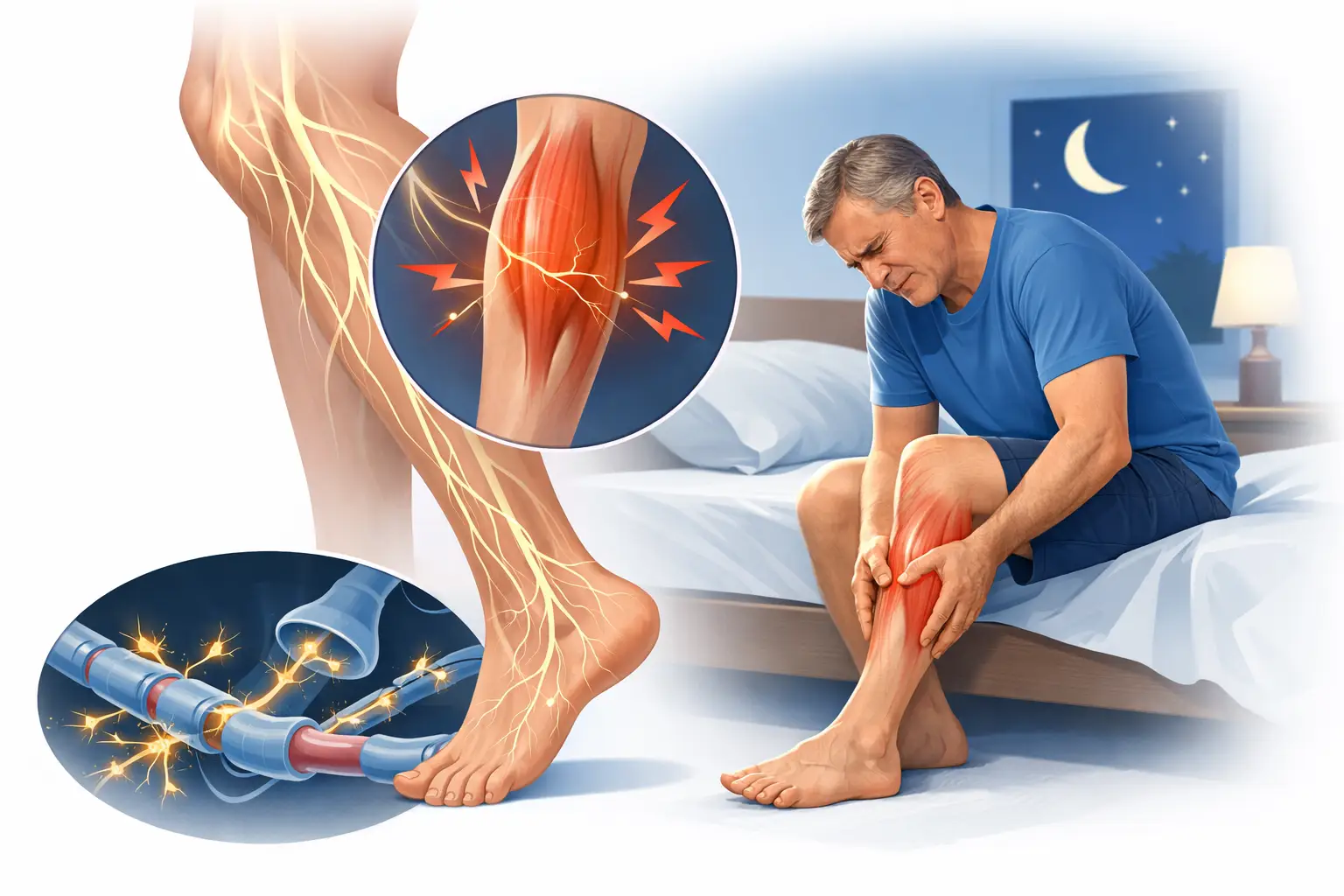
Neuropathy can cause or contribute to muscle cramps in some people, especially when motor nerves are affected. Nerve damage may interfere with normal muscle signaling, which can lead to cramps, twitching, weakness, or muscle fatigue. However, muscle cramps are not always caused by neuropathy. They can also be related to dehydration, mineral imbalance, medications, diabetes, circulation problems, kidney disease, thyroid disease, overuse, or other conditions.
If you have burning feet, tingling, numbness, and sudden leg or foot cramps, the connection can feel confusing. In many cases, the answer to can neuropathy cause muscle cramps is yes – but not always directly, and not in every person.
Neuropathy is a broad term for nerve damage or nerve dysfunction. Muscle cramps are sudden, involuntary contractions that can last seconds or several minutes. The two can overlap because nerves help control muscle movement, sensation, and reflexes. When nerves are irritated, damaged, or not signaling normally, muscles may become more likely to tighten, twitch, or cramp.
That said, cramps are not specific to neuropathy. They can also be linked to dehydration, medication side effects, mineral imbalance, overuse, poor circulation, thyroid problems, and vitamin deficiencies. For adults over 45, that overlap matters. What feels like a simple nighttime cramp may actually be part of a larger pattern involving nerve health, circulation, or nutrition.
Can neuropathy cause muscle cramps or just nerve pain?
Neuropathy is best known for causing numbness, pins-and-needles sensations, burning pain, or electric-shock feelings. But motor nerves and the communication between nerves and muscles can also be affected. When that happens, some people notice cramping, muscle tightness, twitching, weakness, or a heavy, fatigued feeling in the legs and feet.
Cramps can happen for a few different reasons in neuropathy. One is abnormal nerve firing. Damaged nerves may send irregular signals to the muscles, which can trigger sudden contraction. Another is muscle compensation. If weakness or altered sensation changes the way you walk, stand, or use your feet, certain muscles may be overworked and become more cramp-prone. A third factor is reduced activity. People with painful neuropathy often move less, and deconditioned muscles may cramp more easily.
The location can offer clues. Neuropathy-related cramping often shows up in the feet, calves, or toes because peripheral neuropathy commonly affects the longest nerves first. Symptoms may be worse at night, when you are resting and more aware of discomfort.
Why cramps happen when nerves are involved
Healthy nerves send organized signals that tell muscles when to contract and when to relax. When nerves are damaged, that timing can become less precise. Sensory nerves may misfire and produce strange sensations, while motor nerves may contribute to twitching or cramp-like tightening.
This does not mean every cramp is a sign of progressive nerve damage. In some people, cramps are occasional and mild. In others, they happen alongside numbness, burning soles, reduced balance, or weakness. The bigger the symptom pattern, the more important it is to look beyond the cramp itself.
Neuropathy also has many causes, and some of those causes can independently raise cramp risk. Vitamin B12 deficiency is one example. B12 is essential for nerve function, and low levels may contribute to neuropathic symptoms. At the same time, deficiency states can affect overall neuromuscular function and energy metabolism, which may make cramping more likely. Diabetes is another example, since blood sugar issues can contribute to nerve damage as well as dehydration and electrolyte shifts.
Common causes of neuropathy that may also increase cramping
One reason this question is not always straightforward is that neuropathy is often part of a larger clinical picture. Several common contributors can affect both nerves and muscles.
Diabetes is a leading cause of peripheral neuropathy. People with diabetes may experience burning, numbness, stabbing pain, and nighttime cramps. Those cramps may reflect nerve involvement, but hydration status, medications, circulation changes, and muscle fatigue can also play a role.
Vitamin B12 deficiency deserves special attention in adults 45+, especially in those using acid-reducing medications, metformin, or following restrictive diets. Low B12 can contribute to tingling, numbness, poor balance, fatigue, and cognitive changes. Some people also report muscle weakness or cramp-like symptoms. If neuropathy is suspected, checking for reversible contributors such as B12 deficiency is a reasonable part of medical evaluation.
Alcohol overuse, thyroid dysfunction, kidney disease, certain medications, and chemotherapy exposure can also contribute to neuropathy and muscle symptoms. Even statin-associated muscle complaints can muddy the picture, since leg discomfort may not always be neurological.
When muscle cramps may not be from neuropathy
Not every person with cramps has a nerve problem. A cramp that appears after exercise, sweating, prolonged standing, or dehydration may have little to do with neuropathy. Similarly, cramps that improve with stretching, fluid intake, or correcting a medication issue may point elsewhere.
Poor circulation can also be confused with neuropathy. Both can cause leg discomfort, nighttime symptoms, and activity-related pain. But circulation problems more often cause aching, heaviness, cool skin, color changes, or pain with walking that improves with rest. Neuropathy, by contrast, more often causes tingling, burning, altered sensation, or sensitivity to touch.
Restless legs syndrome is another look-alike. Some people describe it as cramping, but it is usually more of an urge to move the legs than a true sustained muscle contraction.
This is why symptom clusters matter more than any single complaint. A brief calf cramp after yard work means something different than repeated foot cramps paired with numb toes and burning soles.
Signs the cramping may be related to neuropathy
Certain patterns make a nerve-related explanation more plausible. One is the presence of sensory changes such as tingling, numbness, burning, or reduced ability to feel temperature. Another is symmetry. Peripheral neuropathy often affects both feet first, then may move upward.
Nighttime worsening is common. So is a stocking-like distribution, meaning symptoms are strongest in the toes, feet, and lower legs. Muscle weakness, balance issues, tripping, or trouble feeling the floor under your feet can add to concern.
If cramps happen together with foot pain, altered sensation, or a history of diabetes, B12 deficiency risk, alcohol misuse, or chemotherapy, neuropathy becomes more relevant to discuss with a clinician.
What to ask your doctor about
A medical review is especially important if cramps are frequent, painful, getting worse, or affecting sleep and walking. The goal is not just to label the symptom, but to identify what is driving it.
A clinician may ask when the cramps started, whether they occur at rest or with movement, and whether you also have numbness, weakness, burning, or balance changes. They may review medications, blood sugar history, alcohol intake, thyroid status, kidney function, and nutrient concerns such as vitamin B12.
Testing depends on the situation. It may include a neurological exam, blood work, and sometimes nerve testing. If there is concern for circulation problems, vascular evaluation may also be considered. This kind of stepwise review matters because treatment depends on the cause.
Practical steps that may help while you investigate the cause
If you are dealing with cramping and possible neuropathy symptoms, a few supportive steps may be worth discussing with your healthcare provider. Gentle calf and foot stretching before bed can help some people. So can reviewing hydration habits, especially if cramps happen overnight or after activity.
Footwear matters more than many people expect. Shoes that reduce pressure points and support a stable gait may lower muscle strain in the feet and calves. For people with neuropathic discomfort, avoiding long periods in one position can also help.
If deficiency is a concern, do not guess. Get evaluated. Vitamin B12 supplements can be helpful for people who are low or borderline, but the right form and dose depend on the person, their diet, medication use, absorption issues, and lab findings. Nerve-support products make the most sense when they address a real need, such as a confirmed deficiency, and fit into a broader plan that includes medical evaluation, medication review, safety considerations, and realistic expectations.
Magnesium is often mentioned for cramps, but the benefit is inconsistent, and it is not a cure for nerve-related symptoms. The same cautious standard applies to other over-the-counter nerve support products. Some may be reasonable in selected cases, but none should be viewed as a guaranteed fix.
When to seek prompt medical attention
Some symptoms should not wait. Seek medical care promptly if cramping comes with sudden weakness, one-sided symptoms, severe swelling, chest pain, shortness of breath, or loss of bladder or bowel control. Rapidly worsening numbness or new difficulty walking also deserves timely evaluation.
For everyone else, the main takeaway is simple: neuropathy can cause muscle cramps, but cramps also have many other explanations. The most useful next step is to look at the full pattern – nerve symptoms, medical history, medications, circulation, and possible deficiencies – so the cramp is treated as a clue, not the whole story.
Frequently Asked Questions
Can neuropathy cause muscle cramps?
Yes, neuropathy can contribute to muscle cramps in some people, especially when motor nerves are affected. However, cramps can also have other causes.
Why does neuropathy cause leg cramps?
Neuropathy may disrupt normal nerve-muscle signaling, which can contribute to cramping, twitching, weakness, or muscle fatigue.
Are foot cramps a sign of nerve damage?
Sometimes, but not always. Foot cramps can also be related to footwear, overuse, dehydration, mineral imbalance, medications, circulation problems, or other medical conditions.
Can diabetic neuropathy cause muscle cramps?
Yes, diabetic neuropathy can be associated with leg or foot pain, cramps, tingling, numbness, and weakness. Diabetes can also overlap with dehydration, circulation changes, and medication effects.
Can B12 deficiency cause cramps and tingling?
B12 deficiency can contribute to numbness, tingling, balance problems, and weakness. Cramps may overlap, but they are not specific to B12 deficiency.
What is the difference between nerve pain and muscle cramps?
Nerve pain often feels burning, tingling, electric, stabbing, or hypersensitive. Muscle cramps feel like sudden tightening or contraction of a muscle.
Can muscle cramps mean poor circulation instead of neuropathy?
Yes. Cramps or pain with walking, cold feet, color changes, or symptoms that improve with rest may suggest circulation issues and should be evaluated.
When should muscle cramps be checked by a doctor?
Cramps should be checked if they are frequent, severe, worsening, one-sided, associated with weakness, numbness, swelling, color changes, foot wounds, or trouble walking.
Medical Disclaimer:
This content is for educational purposes only and does not diagnose, treat, cure, or replace professional medical care. Vitamin B12 deficiency, neuropathy symptoms, nerve pain, numbness, tingling, burning feet, balance problems, fatigue, and related health concerns can have many possible causes, including diabetes, vitamin deficiencies, medication effects, alcohol exposure, autoimmune conditions, infections, circulation problems, gastrointestinal or absorption issues, spinal conditions, or nerve compression.
Information about supplements, nutrition, lifestyle, sleep, movement, testing, or symptom support should not be used as a substitute for evaluation by a qualified healthcare professional. Supplements may not be appropriate for everyone and may interact with medications or medical conditions.
New, worsening, spreading, severe, one-sided, or unexplained symptoms — including numbness, weakness, balance problems, falls, wounds, foot ulcers, skin color changes, severe pain, chest pain, shortness of breath, bowel or bladder changes, facial drooping, trouble speaking, confusion, or sudden neurologic symptoms — should be discussed with a qualified healthcare professional or emergency service promptly.

- Can Low B12 Cause Dizziness? - July 9, 2026
- B12 Deficiency and Cracked Corners of the Mouth - July 9, 2026
- Can Low B12 Cause Dry Mouth? - July 8, 2026