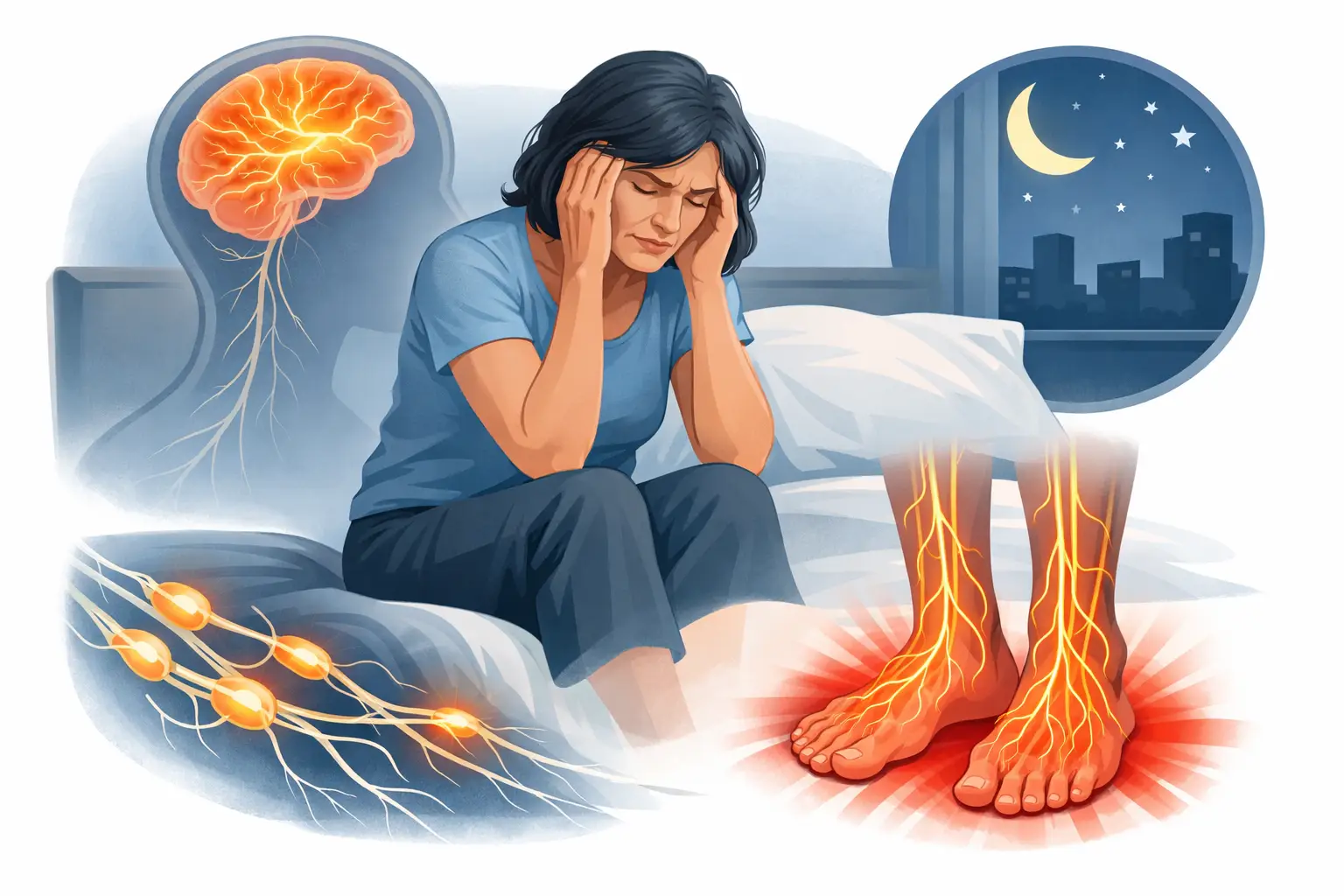
Anxiety can cause symptoms that feel similar to neuropathy, including tingling, numbness, pins and needles, burning sensations, shakiness, or tight muscles. This may happen during stress, panic, or hyperventilation. However, anxiety does not usually mean there is structural nerve damage. Persistent, worsening, one-sided, painful, weakness-related, or unexplained symptoms should be evaluated to rule out neuropathy, vitamin B12 deficiency, diabetes, nerve compression, circulation problems, or other medical causes.
A sudden pins-and-needles feeling in your feet or hands can be unsettling, especially if you are wondering, can anxiety cause neuropathy-like symptoms? The short answer is yes – anxiety can create real physical sensations that resemble nerve problems. But that does not mean every episode of tingling, burning, numbness, or weakness should be blamed on stress.
For adults over 45, that distinction matters. Anxiety can amplify body sensations and trigger symptoms that feel neurological, while true neuropathy may be linked to vitamin deficiencies, diabetes, medication effects, alcohol use, thyroid problems, or other medical issues. The challenge is that the symptoms can overlap enough to cause confusion.
Can anxiety cause neuropathy-like symptoms, or is it true nerve damage?
Anxiety does not typically cause the kind of structural nerve injury seen in peripheral neuropathy. What it can do is change breathing patterns, muscle tension, circulation, pain perception, and the way the brain interprets physical signals. That combination can create sensations that feel strikingly similar to nerve-related symptoms.
Many people with anxiety describe tingling in the hands, feet, face, or scalp. Others notice burning skin, internal buzzing, prickling, numb patches, cold sensations, or a sense that their limbs feel “off.” These experiences are real. They are not imagined. But they may arise from the body’s stress response rather than direct nerve damage.
Hyperventilation is one common reason. When anxiety causes rapid or shallow breathing, carbon dioxide levels can shift. That can lead to tingling, lightheadedness, chest tightness, and feelings of numbness, especially in the fingers and around the mouth. Muscle tension is another factor. Tight muscles in the neck, shoulders, back, or legs can compress tissues and temporarily irritate nearby nerves, creating pain, tingling, or a crawling sensation.
At the same time, neuropathy has its own patterns. True peripheral neuropathy often develops gradually and may be more persistent, especially in the feet. It can involve burning pain, reduced sensation, balance problems, weakness, or a stocking-and-glove distribution that affects both sides in a fairly symmetrical way. Anxiety can mimic parts of that picture, but it usually does not explain every case.
Why anxiety can feel so physical
The nervous system does not separate mental stress from physical stress as neatly as most people assume. During anxiety, the body shifts into a higher-alert state. Adrenaline rises, muscles tighten, breathing changes, heart rate increases, and attention becomes more focused on possible threats – including bodily sensations.
That matters because the more closely a person monitors a sensation, the more intense it can seem. A mild tingling episode that might otherwise pass unnoticed can become alarming when it is interpreted as a sign of nerve disease. Then the fear itself increases muscle tension and changes breathing further, which can reinforce the symptom.
This cycle is one reason anxiety-related symptoms can come and go, move around, or worsen during stressful periods. Someone may notice tingling at night, during a panic episode, while driving, after poor sleep, or during a period of ongoing worry. Those timing clues can be useful, although they are not enough by themselves to rule out a medical cause.
Symptoms that anxiety may mimic
When people ask whether anxiety can cause neuropathy-like symptoms, they are usually referring to sensations such as tingling, numbness, burning, shooting discomfort, trembling, or heaviness in the arms and legs. Anxiety can sometimes mimic all of these.
It may also produce symptoms that overlap with circulation concerns, such as cold hands and feet, color changes related to stress, or a feeling that blood is not flowing properly. In some cases, prolonged stress can worsen an existing sensitivity to pain, making mild symptoms feel more severe.
Still, there are limits. Anxiety is less likely to cause steadily progressive weakness, loss of reflexes, visible muscle wasting, foot drop, or persistent numbness that follows a clear nerve pattern over time. Those findings deserve medical evaluation.
When to look beyond anxiety
This is the part many readers need most: anxiety may be part of the story, but it should not become a catch-all explanation.
If symptoms are new, recurrent, or worsening, it is reasonable to consider common medical causes of neuropathy-like sensations. Vitamin B12 deficiency is one of the better-known examples, especially in older adults, people taking certain acid-reducing medications, strict vegetarians, or those with digestive conditions that affect absorption. Low B12 can contribute to numbness, tingling, balance changes, and fatigue. Other nutrient issues, including low folate, low vitamin B6 in some cases, or copper deficiency, may also affect nerve function.
Blood sugar problems are another major consideration. Diabetes and prediabetes can affect peripheral nerves long before a person realizes nerve symptoms are related to glucose control. Thyroid disorders, kidney disease, alcohol overuse, infections, autoimmune conditions, spinal problems, and certain medications can also produce symptoms that resemble neuropathy.
That is why persistent symptoms should not be self-diagnosed as anxiety alone. A careful history, physical exam, and appropriate lab work can help sort out the difference.
Clues that suggest a medical evaluation is needed
Some patterns deserve more attention than a watch-and-wait approach. Symptoms that are persistent rather than occasional, worse over weeks or months, or clearly affecting walking, balance, grip, or sleep should be discussed with a healthcare professional.
Medical review is also important if tingling or numbness is accompanied by weakness, severe pain, back pain with leg symptoms, one-sided deficits, bladder or bowel changes, unexplained weight loss, or new symptoms after starting a medication. Sudden neurological symptoms, especially on one side of the body or with speech or vision changes, require urgent care.
For adults researching nerve health, this is where practical caution matters. An episode of stress-related tingling may pass. Ongoing burning feet, numb toes, or reduced sensation should not be brushed off.
Where supplements fit into the picture
Supplements may be appropriate when a confirmed deficiency or dietary gap is part of the problem, but they are not a shortcut for diagnosing tingling, numbness, burning sensations, or other neuropathy-like symptoms.
Vitamin B12 gets a great deal of attention for good reason. It is essential for nerve function, red blood cell formation, and neurological health. If someone is low or borderline, correcting that deficiency may be clinically important. But taking high-dose B12 without knowing whether deficiency is present does not automatically explain or solve every tingling symptom.
The same principle applies to broader “nerve support” formulas. Some contain B vitamins, alpha-lipoic acid, acetyl-L-carnitine, or other ingredients promoted for nerve comfort. These products may interest consumers, but expectations should stay realistic. Ingredient quality, dosing, interactions, and the reason for the symptom all matter. A product can support nutritional intake, but it should not be framed as a cure for neuropathy or a substitute for medical assessment.
For readers comparing options, the better question is not simply which supplement is best, but whether there is a documented need for that ingredient in the first place.
What to do if symptoms seem tied to anxiety
If a clinician has ruled out urgent or obvious medical causes, it can help to manage both the symptom and the stress response behind it. Slow breathing is one of the simplest tools because it addresses a common mechanism directly. If tingling appears during panic or shallow breathing, slowing the breath may reduce symptoms more effectively than repeatedly checking the area for signs of damage.
Pay attention to patterns. Symptoms that flare during stress, after caffeine, during poor sleep, or during periods of health anxiety may reflect nervous system arousal more than progressive nerve injury. That does not make them trivial. It just points toward a different kind of management.
Gentle movement, stretching, posture changes, hydration, and reducing stimulant overload may help some people. Others benefit from addressing the anxiety itself through counseling, relaxation training, or medical support when appropriate. If symptoms continue despite these measures, reassessment is reasonable.
The practical takeaway for adults 45+
The answer to can anxiety cause neuropathy-like symptoms is yes, but with an important qualifier: anxiety can mimic nerve symptoms without necessarily causing true nerve damage. That overlap is real enough to confuse even careful readers, especially when symptoms involve burning feet, numbness, prickling, or intermittent weakness.
The safest approach is balanced rather than dismissive. Do not panic over every tingling sensation, but do not assume stress is the whole explanation if symptoms persist, progress, or interfere with daily life. In adults over 45, a thoughtful review of vitamin status, blood sugar, medications, and other health factors often makes more sense than guessing.
When symptoms are evaluated properly, the next steps become clearer. Sometimes the issue is anxiety, sometimes it is a nutrient deficiency, and sometimes it is another medical condition that deserves targeted care. Good decisions start with sorting out which one you are actually dealing with.
Frequently Asked Questions
Can anxiety cause neuropathy-like symptoms?
Yes. Anxiety can cause tingling, numbness, pins and needles, burning sensations, shakiness, or tight muscles, especially during stress, panic, or hyperventilation.
Can anxiety cause tingling in the feet?
Yes, anxiety can cause tingling in the feet for some people, especially when breathing changes, muscle tension, or heightened body awareness are involved.
Can anxiety cause numbness in the hands and feet?
Yes, anxiety and hyperventilation can cause numbness or tingling sensations. However, persistent or worsening numbness should be medically evaluated.
How do I know if it is anxiety or neuropathy?
Anxiety-related symptoms often fluctuate, move around, or appear during stress. Neuropathy is more likely when symptoms are persistent, progressive, start in the feet, reduce sensation, affect balance, or involve weakness.
Can hyperventilation cause pins and needles?
Yes. Hyperventilation can cause numbness and tingling, especially around the mouth, arms, hands, or feet.
Can B12 deficiency be mistaken for anxiety?
It can overlap. Vitamin B12 supports nerve and blood cell health, and deficiency may contribute to neurologic symptoms. Testing is more useful than guessing.
When should tingling or numbness be checked?
Symptoms should be checked if they are new, persistent, worsening, one-sided, painful, associated with weakness, balance changes, facial drooping, trouble speaking, severe back pain, chest pain, shortness of breath, or bowel/bladder changes.
Medical Disclaimer:
This content is for educational purposes only and does not diagnose, treat, cure, or replace professional medical care. Vitamin B12 deficiency, neuropathy symptoms, nerve pain, numbness, tingling, burning feet, balance problems, fatigue, and related health concerns can have many possible causes, including diabetes, vitamin deficiencies, medication effects, alcohol exposure, autoimmune conditions, infections, circulation problems, gastrointestinal or absorption issues, spinal conditions, or nerve compression.
Information about supplements, nutrition, lifestyle, sleep, movement, testing, or symptom support should not be used as a substitute for evaluation by a qualified healthcare professional. Supplements may not be appropriate for everyone and may interact with medications or medical conditions.
New, worsening, spreading, severe, one-sided, or unexplained symptoms — including numbness, weakness, balance problems, falls, wounds, foot ulcers, skin color changes, severe pain, chest pain, shortness of breath, bowel or bladder changes, facial drooping, trouble speaking, confusion, or sudden neurologic symptoms — should be discussed with a qualified healthcare professional or emergency service promptly.

- Can Low B12 Cause Dizziness? - July 9, 2026
- B12 Deficiency and Cracked Corners of the Mouth - July 9, 2026
- Can Low B12 Cause Dry Mouth? - July 8, 2026