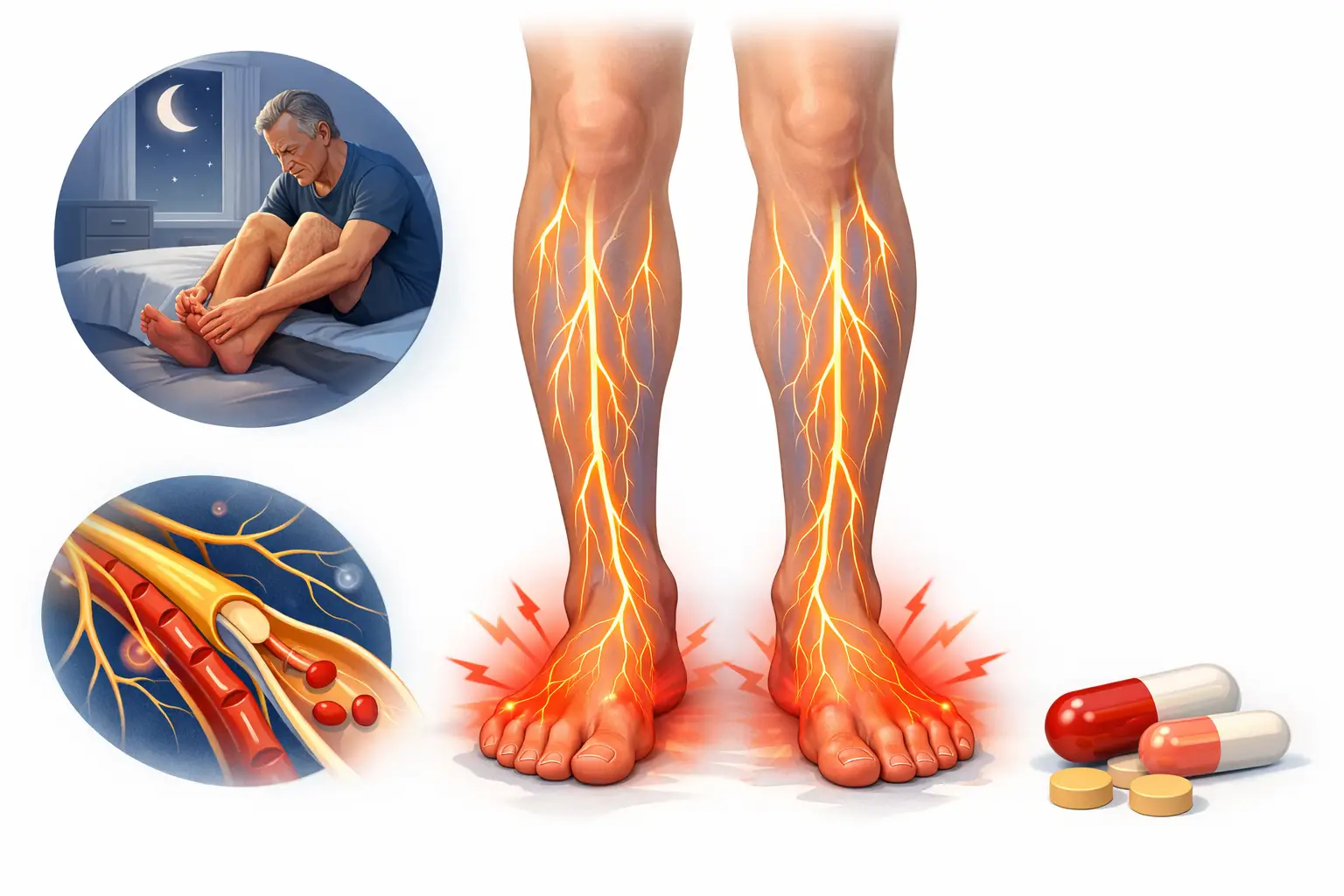
Neuropathy often affects both legs, especially when the cause is systemic, such as diabetes, vitamin B12 deficiency, alcohol use, medication effects, kidney disease, or metabolic problems. However, neuropathy does not always affect both legs. Symptoms that stay clearly on one side may suggest a pinched nerve, sciatica, nerve compression, injury, circulation problem, or another condition that should be evaluated.
Burning, tingling, or numbness in your feet can be unsettling, and one of the first questions many people ask is: does neuropathy affect both legs? Often, yes – but not always. The pattern matters because symptoms in both legs may point to a very different cause than symptoms limited to one side.
Neuropathy is a broad term for nerve damage or nerve dysfunction. It is not a single disease. In adults over 45, leg symptoms are commonly linked to peripheral neuropathy, which affects the nerves outside the brain and spinal cord. Those nerves carry sensation, help control muscles, and regulate some automatic body functions. When they are irritated, compressed, or damaged, the result can be pain, tingling, numbness, weakness, or unusual sensitivity.
Does neuropathy affect both legs or just one?
In many cases, peripheral neuropathy affects both legs, especially when the cause is systemic. That means the problem is related to something affecting the body as a whole, such as diabetes, vitamin deficiencies, alcohol-related nerve damage, certain medications, kidney disease, or other metabolic issues. These cases often produce a fairly symmetrical pattern. Symptoms may start in both feet and gradually move upward, sometimes described as a “stocking” distribution.
That said, neuropathy does not always begin evenly. One foot may feel worse at first, or one leg may become symptomatic earlier. Some people notice burning in one foot and only later develop similar symptoms in the other. So while bilateral symptoms are common, asymmetry at the beginning does not rule neuropathy in or out.
If symptoms stay clearly limited to one leg, healthcare professionals often consider other explanations as well. A pinched nerve in the lower back, sciatica, nerve entrapment, injury, or circulation-related problems may be more likely when the pattern is one-sided.
Why both legs are commonly affected
The longest nerves in the body are often the most vulnerable. That is why peripheral neuropathy frequently starts in the feet before the hands. When a body-wide issue affects nerve health, the farthest nerves may show symptoms first, and because both legs have similarly long nerves, symptoms often appear on both sides.
This is especially true with length-dependent peripheral neuropathy. In that pattern, sensory changes begin in the toes or soles of the feet, then spread upward over time. People may describe numbness, prickling, buzzing sensations, burning pain at night, or the feeling of walking on cotton, sand, or an invisible sock.
For older adults, this pattern can be easy to dismiss early on. Mild numbness may seem like aging, poor shoes, or simple fatigue. But if both feet are involved, especially in a gradual and symmetrical way, it is worth getting evaluated.
When neuropathy may affect only one leg
A one-sided pattern usually needs a closer look because it may not fit the most common form of peripheral neuropathy. It does not mean the problem is less serious. It just changes the list of likely causes.
For example, a compressed nerve root in the spine can cause pain, tingling, or weakness down one leg. Sciatica is a well-known example. Peroneal nerve compression near the knee can affect part of one lower leg or foot. Trauma, surgery, or prolonged pressure on a nerve can also produce localized symptoms. In some cases, a person may have mononeuropathy, meaning damage to a single nerve rather than a diffuse nerve problem.
Circulatory conditions can also mimic neuropathy. If one leg feels cold, pale, weak, or painful with walking, reduced blood flow may need to be considered alongside nerve-related causes. That distinction matters because nerve problems and vascular problems are managed differently.
Common causes of bilateral leg neuropathy
When neuropathy affects both legs, clinicians usually think first about common metabolic or nutritional causes. Diabetes is one of the best-known contributors, particularly when blood sugar has been elevated over time. Prediabetes may also be associated with neuropathic symptoms in some people, although evaluation should remain individualized.
Vitamin deficiencies are another important consideration, especially vitamin B12. Low B12 can affect nerve function and may contribute to numbness, tingling, balance changes, and weakness. Adults over 45 may be at higher risk if they take certain acid-reducing medications, have digestive disorders, follow very restrictive diets, or have reduced absorption with age. Because vitamin B12 deficiency can overlap with neuropathy-like symptoms, it is worth addressing clearly. Correcting a confirmed deficiency may support nerve health, but supplements are not a guaranteed fix for leg symptoms and should not replace medical evaluation.
Other possible contributors include excessive alcohol use, chemotherapy drugs, some other medications, hypothyroidism, kidney disease, autoimmune conditions, and infections. Sometimes more than one factor is involved. A person may have mild B12 deficiency, borderline blood sugar issues, and spinal arthritis at the same time, which can complicate the symptom picture.
Symptoms that suggest neuropathy in both legs
The most common sensory symptoms are tingling, numbness, burning, electric-like pain, or unusual sensitivity to touch. Some people notice that bed sheets feel irritating on their feet at night. Others feel unsteady in dim lighting because they cannot sense the floor as well. As symptoms progress, the discomfort may rise from the feet into the calves.
Motor symptoms can happen too, though they are less often the first complaint. These may include weakness, foot slapping, trouble lifting the front of the foot, muscle cramping, or reduced coordination. If balance changes are developing, fall risk becomes a practical concern, especially in older adults.
Autonomic nerve involvement is less talked about, but it can coexist with peripheral neuropathy. That may cause changes in sweating, blood pressure regulation, or digestion. Those symptoms are less specific, yet they can help clinicians understand the broader pattern.
When the pattern needs prompt medical attention
Not every case of leg tingling is an emergency, but some symptom patterns deserve quicker evaluation. Sudden weakness, rapidly worsening numbness, trouble walking, severe back pain with leg symptoms, or new bladder or bowel changes should not be brushed off. Those findings can point to conditions that need urgent assessment.
One-sided swelling, color change, or severe cramping pain may also suggest a vascular problem rather than neuropathy. Similarly, if the foot develops sores, injuries, or burns that you do not feel well because of numbness, delayed care can raise the risk of complications.
A slower, symmetrical pattern in both legs is often less urgent, but it still should not be ignored. The earlier a cause is identified, the more options there may be to address contributing factors and protect function.
How doctors figure out why both legs are involved
Diagnosis starts with the symptom pattern. A clinician will usually ask when symptoms began, whether both feet were involved from the start, what makes symptoms worse, and whether there are signs of back disease, diabetes, alcohol exposure, medication side effects, or nutritional deficiency.
The exam often includes checking reflexes, vibration sense, light touch, strength, and balance. Blood tests may be used to look for diabetes or prediabetes, vitamin B12 status, thyroid problems, kidney issues, and other metabolic contributors. In some cases, nerve conduction studies or electromyography help show whether the issue is truly peripheral neuropathy and whether it is affecting sensory nerves, motor nerves, or both.
If symptoms are clearly one-sided or linked with back pain, imaging of the spine may be considered. The right workup depends heavily on the pattern, which is why the answer to “does neuropathy affect both legs” can guide the next steps rather than settle the diagnosis by itself.
Where supplements fit – and where they do not
For readers researching nerve-health products, the key point is that supplements should match the underlying issue. If someone has a confirmed vitamin B12 deficiency, correcting that deficiency may be appropriate and medically relevant. If B12 status is normal, more is not automatically better.
The same cautious approach applies to broader nerve-support formulas. Some ingredients have been studied for nerve health or symptom support, but evidence quality varies, dosing matters, and expectations should stay realistic. A supplement may be part of a bigger wellness plan, but it is not a substitute for identifying whether symptoms are due to diabetes, spinal nerve compression, medication effects, or another cause.
That is why evidence-based review matters. Products should be judged by ingredient transparency, appropriate dosing, safety considerations, and whether their claims go beyond what the science supports.
A practical way to think about leg symptoms
If both legs are developing similar numbness, tingling, or burning – especially starting in the feet – peripheral neuropathy moves higher on the list of possibilities. If only one leg is affected, or if symptoms are tied to back pain, injury, or walking-related calf pain, the cause may be different.
Either way, the symptom pattern is useful information, not a self-diagnosis. Paying attention to whether symptoms are symmetrical, gradual, worsening, or associated with weakness can make your medical visit more productive. For many adults, that simple observation is the first step toward figuring out what is really going on and what deserves attention next.
Frequently Asked Questions
Does neuropathy always affect both legs?
No. Neuropathy often affects both legs when the cause is systemic, but it can also affect one leg depending on the nerve involved and the underlying cause.
Can neuropathy affect only one leg?
Yes, but symptoms limited to one leg should be evaluated because they may suggest sciatica, a pinched nerve, nerve entrapment, injury, or circulation problems.
Is diabetic neuropathy usually in both feet?
Diabetic peripheral neuropathy often starts in the feet and commonly affects both sides of the body.
Can B12 deficiency cause symptoms in both legs?
Vitamin B12 deficiency can contribute to numbness, tingling, balance problems, and other neurologic symptoms. It should be checked when symptoms fit the pattern.
When is one-sided numbness urgent?
One-sided numbness is more concerning when it is sudden, severe, rapidly worsening, associated with weakness, facial drooping, trouble speaking, severe back pain, foot drop, bladder or bowel changes, or a cold, pale, or blue limb.
Can sciatica feel like neuropathy?
Yes. Sciatica or a compressed nerve root may cause pain, tingling, numbness, or weakness down one leg, which can feel similar to neuropathy.
Medical Disclaimer:
This content is for educational purposes only and does not diagnose, treat, cure, or replace professional medical care. Vitamin B12 deficiency, neuropathy symptoms, nerve pain, numbness, tingling, burning feet, balance problems, fatigue, and related health concerns can have many possible causes, including diabetes, vitamin deficiencies, medication effects, alcohol exposure, autoimmune conditions, infections, circulation problems, gastrointestinal or absorption issues, spinal conditions, or nerve compression.
Information about supplements, nutrition, lifestyle, sleep, movement, testing, or symptom support should not be used as a substitute for evaluation by a qualified healthcare professional. Supplements may not be appropriate for everyone and may interact with medications or medical conditions.
New, worsening, spreading, severe, one-sided, or unexplained symptoms — including numbness, weakness, balance problems, falls, wounds, foot ulcers, skin color changes, severe pain, chest pain, shortness of breath, bowel or bladder changes, facial drooping, trouble speaking, confusion, or sudden neurologic symptoms — should be discussed with a qualified healthcare professional or emergency service promptly.

- Can Low B12 Cause Dizziness? - July 9, 2026
- B12 Deficiency and Cracked Corners of the Mouth - July 9, 2026
- Can Low B12 Cause Dry Mouth? - July 8, 2026