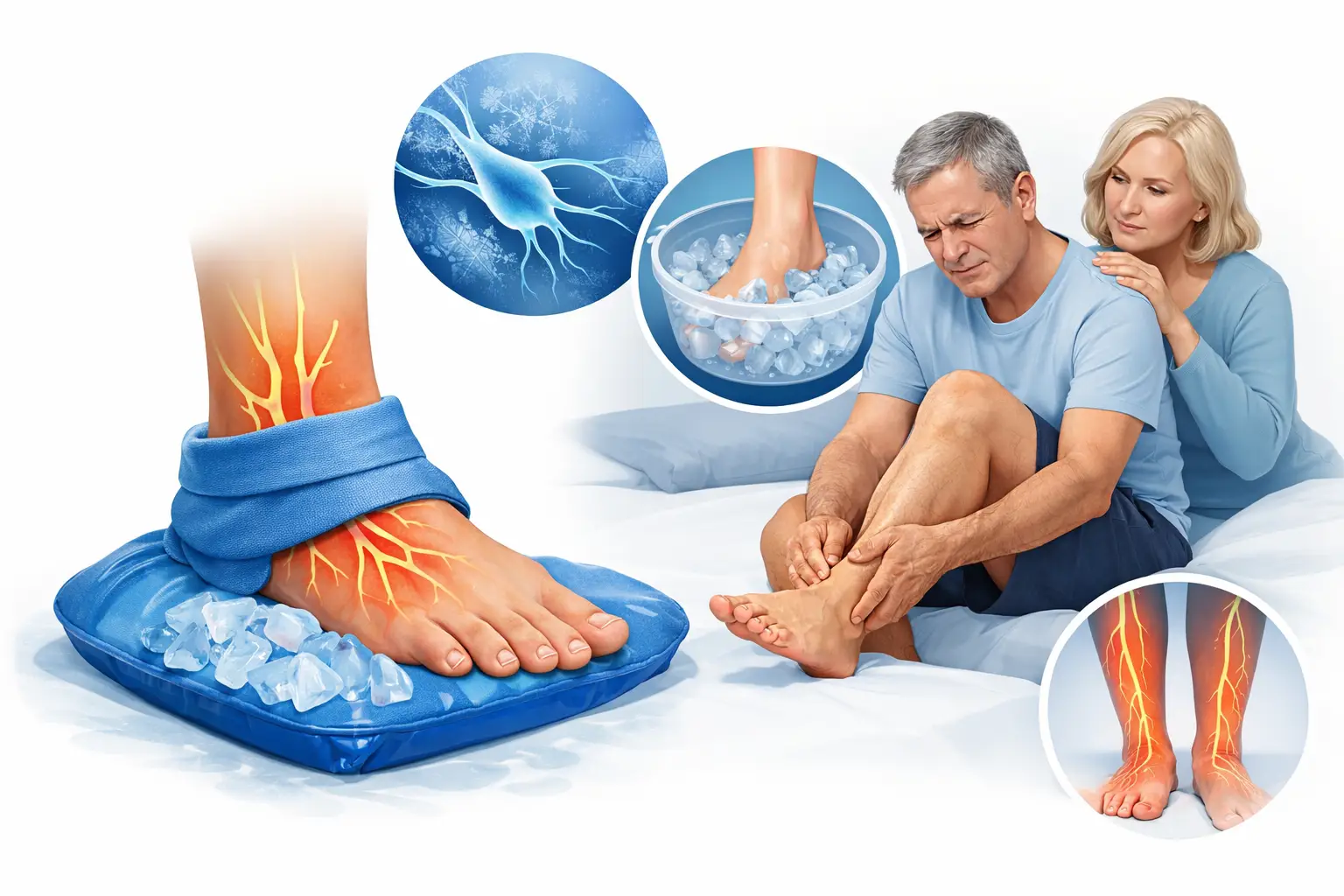
Cold therapy may temporarily help some neuropathy symptoms, especially burning, hot-feeling, or throbbing discomfort, but it can worsen symptoms in people with numbness, cold sensitivity, poor circulation, fragile skin, or diabetes-related nerve damage. It should be used gently, briefly, and never with ice placed directly on the skin. Cold therapy does not treat the underlying cause of neuropathy, so persistent, spreading, or unexplained nerve symptoms still need medical evaluation.
A cold floor, an ice pack, even a blast of air conditioning – for some people with nerve pain, these feel surprisingly soothing. For others, the same exposure can trigger sharper burning, numbness, or discomfort that lingers. That is the challenge with cold therapy for neuropathy: it is not one-size-fits-all, and the details matter.
Neuropathy is a broad term, not a single condition. It usually refers to damaged or irritated peripheral nerves, often causing burning feet, tingling, pins-and-needles sensations, numbness, electric-shock pain, or unusual sensitivity to touch and temperature. Because symptoms vary so much, the response to cold can vary too. A method that briefly calms one person’s symptoms may aggravate another person’s nerves or skin.
What cold therapy for neuropathy is meant to do
Cold therapy generally means applying a cool or cold source to an area of pain for a short period. In everyday use, that may include a cold pack wrapped in cloth, a cool gel compress, or soaking feet in cool – not icy – water. The basic idea is simple: cooling can dull pain signals, reduce a sense of heat or burning, and temporarily decrease local inflammation.
That logic makes sense on the surface, especially when neuropathy feels like heat. Many people describe peripheral neuropathy as burning soles, hot feet at night, or a painful sensation that seems to radiate outward. In that situation, cooling may feel intuitively helpful. And for some people, it is.
The problem is that neuropathic pain is not the same as a sprained ankle or a swollen knee. With nerve-related symptoms, the pain pathway itself may be altered. A cold stimulus can blunt discomfort in one person but overstimulate already sensitive nerves in another. If numbness is present, there is also a practical safety issue: a person may not accurately feel when something is too cold.
Why cold sometimes helps and sometimes makes neuropathy worse
Cold can reduce the speed at which nerves send pain signals. That may lead to short-term relief, particularly in people whose main complaint is burning or throbbing discomfort. Some also find that a brief cooling session helps them settle symptoms before sleep.
At the same time, cold can narrow blood vessels. If someone already has poor circulation, diabetes-related vascular changes, or very cold-sensitive feet, that reduced blood flow may increase discomfort rather than improve it. This is one reason people often report opposite experiences with the same home remedy.
There is also the issue of temperature sensitivity. Some forms of neuropathy cause allodynia or hyperalgesia, meaning ordinary sensations become painful. In that setting, even mild cold can feel extreme. Instead of calming the nerves, it may provoke a flare.
So the practical answer is not whether cold therapy is good or bad in general. It is whether a specific person, with a specific symptom pattern, tolerates it well.
Cold Therapy for Neuropathy: When It May Help or Worsen Symptoms
Cold therapy is not automatically good or bad for neuropathy. The safest way to think about it is by symptom pattern, skin sensation, circulation, and how the body responds after a short trial.
| Situation | Cold May Be More Reasonable When | Cold May Be Riskier When | Practical Takeaway |
|---|---|---|---|
| Main symptom | Burning, hot-feeling, throbbing, or mild localized discomfort | Deep numbness, cold-triggered pain, cramping, stiffness, or worsening burning after cooling | Use symptom response as the guide, not the trend. |
| Sensation level | You can clearly feel temperature and discomfort during the trial. | You cannot reliably feel heat, cold, pain, or skin irritation. | Loss of sensation raises the risk of skin injury. |
| Circulation and diabetes | No known circulation problems, no open sores, and no significant loss of foot sensation | Diabetes-related neuropathy, poor circulation, ulcers, fragile skin, or slow-healing wounds | Ask a clinician before using cold therapy when foot risk is high. |
| Method | Cool compress wrapped in cloth, cool gel pad, fan, breathable socks, cooler bedding | Direct ice, frozen objects on skin, ice baths, sleeping with cold packs | Gentle cooling is safer than intense cold. |
| After-effect | Symptoms calm without rebound pain, color change, or skin irritation | Pain returns sharper, numbness worsens, skin changes color, or feet feel painfully cold | Stop if the rebound is worse than the original symptom. |
What the evidence says
The evidence for cold therapy for neuropathy is limited and not especially strong. Cooling is widely used in general pain care, sports recovery, and injury management, but neuropathy is a different category. There is not a large body of high-quality clinical research showing that routine cold therapy provides reliable benefit across neuropathy types.
That does not mean no one should try it. It means expectations should stay realistic. Cooling may offer temporary symptom relief for some individuals, particularly when symptoms are described as burning, hot, or inflamed feeling. But it should be viewed as a comfort strategy, not a solution to the underlying cause of nerve dysfunction.
That distinction matters for adults researching self-care options. Neuropathy can be associated with diabetes, vitamin B12 deficiency, alcohol use, certain medications, chemotherapy, thyroid issues, autoimmune disease, and spinal or nerve compression. A cold pack does not address those root drivers. If symptoms are persistent, progressive, or unexplained, the cause still needs proper medical evaluation.
Research Snapshot: Cold Therapy for Neuropathy
Cold therapy is widely used for short-term pain relief, but neuropathy requires extra caution because nerve damage can alter pain, temperature sensation, and skin-safety feedback.
| Research Finding | Clinical Relevance |
|---|---|
| Cold can reduce nerve conduction and dull pain signals temporarily | This may explain why some people feel short-term relief from burning or throbbing symptoms. |
| Neuropathy can reduce temperature and pain sensation | A person with numbness may not recognize when skin is becoming too cold or injured. |
| Very cold or prolonged exposure can injure skin | Direct ice and long sessions are not appropriate for neuropathy self-care, especially in feet with reduced sensation. |
| Evidence for routine cold therapy across neuropathy types is limited | Cold therapy should be framed as a possible comfort strategy, not a treatment for the cause of neuropathy. |
| The underlying cause still matters most | Diabetes, B12 deficiency, medication effects, alcohol exposure, thyroid disease, and nerve compression require different management than symptom cooling. |
Editorial note: This snapshot summarizes general medical education themes. It is not intended to recommend cold therapy for every person with neuropathy or replace evaluation by a qualified healthcare professional.
When cold therapy may be reasonable to try
If symptoms are mild, clearly localized, and mainly described as burning rather than deep numbness, cautious cooling may be worth testing. The safest approach is usually a cool compress wrapped in fabric for a short period, followed by checking the skin carefully.
People tend to do best when they treat cold therapy as a trial, not a routine. In other words, use it once, pay attention to how the feet or hands feel during and after, and decide based on that response. If symptoms calm down without skin irritation, color change, or rebound pain, it may be a useful occasional tool.
Some people also prefer indirect cooling methods rather than ice. A fan, breathable socks, moisture-wicking bedding, or a cool gel pad may be easier to tolerate than a very cold pack. That gentler approach often makes more sense for sensitive nerves.
When to avoid cold therapy for neuropathy
Cold therapy deserves more caution if numbness is significant. If a person cannot clearly feel temperature, there is a real risk of skin injury from prolonged exposure. This is especially relevant in diabetic peripheral neuropathy, where both sensation loss and circulation issues may be present.
It may also be a poor choice if cold consistently triggers pain, cramping, color changes, or stiffness. Those reactions suggest that cooling is not helping that symptom pattern. People with known circulation problems, a history of cold-induced pain, or fragile skin should be particularly careful.
Direct ice application is generally not a good idea. Ice placed straight on the skin can cause tissue injury even in people with normal sensation. In someone with neuropathy, that risk is higher because the warning signals may be blunted.
Important: Do not use direct ice, frozen packs, or long cold exposure on numb feet or hands.
Neuropathy can reduce the ability to feel pain, temperature, and skin injury. Stop cold therapy if the skin becomes pale, blotchy, very red, painful, unusually numb, stiff, or if burning worsens after cooling. People with diabetes, poor circulation, open sores, fragile skin, or significant loss of sensation should ask a healthcare professional before using cold therapy.
How to try cold therapy more safely
A cautious trial should stay short and gentle. Use a cool pack rather than a frozen object, keep a layer of cloth between the skin and the cold source, and limit the session to around 10 to 15 minutes. Then remove it and inspect the area.
Look for redness that does not fade, pale or blotchy skin, worsening numbness, or an increase in burning after the pack is removed. If any of those occur, stop using that method. The goal is comfort, not endurance.
For foot symptoms, avoid falling asleep with a cold pack on. That is a common setup for accidental overexposure. If balance is affected by neuropathy, be careful with cold foot soaks as well, since slippery surfaces raise the risk of falls.
Cold therapy versus heat
Many readers ask whether cold or heat is better. The honest answer is that it depends on the symptom pattern. Cold may feel better when feet are burning, hot, or swollen-feeling. Heat may feel better when symptoms are tied to stiffness, muscle tension, or a dull aching sensation.
But heat also has limits. If numbness is present, heating pads can pose the same injury risk as ice because reduced sensation makes temperature harder to judge. Very hot foot baths are not a safe workaround for nerve pain.
In practice, the better question is often which option gives mild relief without irritating the skin or increasing symptoms later. Some people alternate methods on different days and quickly learn which direction their body prefers.
Cold vs Heat for Neuropathy
Neither cold nor heat is automatically better for neuropathy. Both can help or harm depending on sensation, circulation, skin safety, and the person’s symptom pattern.
| Option | May Feel Better When | Use Caution When | Safer Approach |
|---|---|---|---|
| Cold | Symptoms feel burning, hot, throbbing, or mildly inflamed | Numbness, poor circulation, diabetes-related foot risk, cold sensitivity, fragile skin, or rebound pain | Cool compress wrapped in cloth for a short supervised trial |
| Heat | Symptoms feel stiff, tight, achy, or muscle-related rather than sharply burning | Reduced temperature sensation, numbness, diabetes, poor circulation, or risk of burns | Warm, not hot, comfort measures with careful skin checks |
| Neither | Symptoms worsen with temperature changes or skin is too sensitive | Pain flares after either cold or heat, or skin changes occur | Use non-temperature strategies such as footwear, bedding changes, medication review, foot care, or medical evaluation |
The bigger issue: symptom relief is not the whole plan
Temporary relief matters. Better sleep, less burning at night, and fewer pain flares can improve day-to-day quality of life. But symptom tools work best when paired with attention to the bigger picture.
If neuropathy symptoms are new, worsening, or occurring alongside fatigue, balance changes, weakness, or unexplained numbness, it is worth discussing medical testing with a healthcare professional. In some cases, nutrient status is part of that conversation, especially vitamin B12 when symptoms include tingling, numbness, or burning sensations. That evidence-based distinction matters: nutritional support may be relevant in select cases, but it should match the suspected cause and should never be framed as a guaranteed fix.
Other supportive strategies may include better glucose control when appropriate, footwear changes, physical therapy, medication review, and foot-care habits that reduce irritation. Those steps are not as quick as grabbing an ice pack, but they often matter more over time.
A practical way to think about cold therapy for neuropathy
Cold therapy for neuropathy is best viewed as a selective comfort measure, not a standard recommendation for everyone with nerve symptoms. If cooling gently reduces burning and does not aggravate numbness or skin sensitivity, it may have a place in your routine. If it makes your symptoms feel sharper, colder, tighter, or stranger, that is useful information too.
The most helpful approach is to trust the response, not the trend. With neuropathy, the safest strategy is often the one that respects how unpredictable irritated nerves can be — and keeps symptom relief secondary to understanding what is causing the problem in the first place.
If you’re trying to understand what may be behind numbness, tingling, burning feet, or nerve pain, our guide to peripheral neuropathy causes and relief explains the most common causes and what may help support nerve health.
Frequently Asked Questions About Cold Therapy for Neuropathy
These answers are for education only and should not replace medical evaluation.
Does cold therapy help neuropathy?
Cold therapy may temporarily help some people with burning, hot-feeling, or throbbing neuropathy symptoms. However, it can worsen symptoms in people with numbness, cold sensitivity, poor circulation, diabetes-related foot risk, or fragile skin.
Can ice make neuropathy worse?
Yes. Ice or strong cold can worsen neuropathy symptoms in some people, especially when nerves are highly sensitive to temperature. Direct ice can also injure skin, particularly when sensation is reduced.
How long should I use cold therapy for neuropathy?
A cautious trial should usually be short, such as 10 to 15 minutes, with a cloth barrier and careful skin checks afterward. Do not fall asleep with a cold pack on, and stop if symptoms or skin changes worsen.
Is cold therapy safe for diabetic neuropathy?
It requires extra caution. Diabetic neuropathy can reduce temperature and pain sensation, and circulation may also be affected. People with diabetic foot numbness, ulcers, fragile skin, or poor circulation should ask a healthcare professional before using cold therapy.
Is cold or heat better for neuropathy?
It depends. Cold may feel better for burning or hot-feeling symptoms, while gentle warmth may feel better for stiffness or aching. Both can cause skin injury when sensation is reduced, so neither should be used aggressively.
Can cold therapy treat the cause of neuropathy?
No. Cold therapy may change how symptoms feel temporarily, but it does not treat underlying causes such as diabetes, B12 deficiency, thyroid disease, medication effects, alcohol-related nerve injury, or nerve compression.
Can B12 help neuropathy more than cold therapy?
B12 may help when deficiency is documented or likely. Cold therapy is only a comfort measure. The right approach depends on the cause of neuropathy, lab results, symptoms, medications, and medical history.
When should neuropathy symptoms be evaluated?
Medical evaluation is important if symptoms are new, worsening, spreading, one-sided, associated with weakness, balance problems, wounds, color changes, severe pain, or unexplained numbness.
Medical Disclaimer:
This article is for educational purposes only and does not diagnose, treat, or replace medical care. Neuropathy symptoms can have many causes, including diabetes, vitamin deficiencies, medication effects, alcohol exposure, autoimmune disease, infections, circulation problems, spinal conditions, or nerve compression. Cold therapy may not be safe for everyone, especially people with numbness, diabetes, poor circulation, wounds, fragile skin, or reduced temperature sensation. New, worsening, spreading, severe, or unexplained numbness, weakness, balance problems, skin color changes, wounds, foot ulcers, severe pain, or loss of sensation should be discussed with a qualified healthcare professional.

- Can Low B12 Cause Dizziness? - July 9, 2026
- B12 Deficiency and Cracked Corners of the Mouth - July 9, 2026
- Can Low B12 Cause Dry Mouth? - July 8, 2026