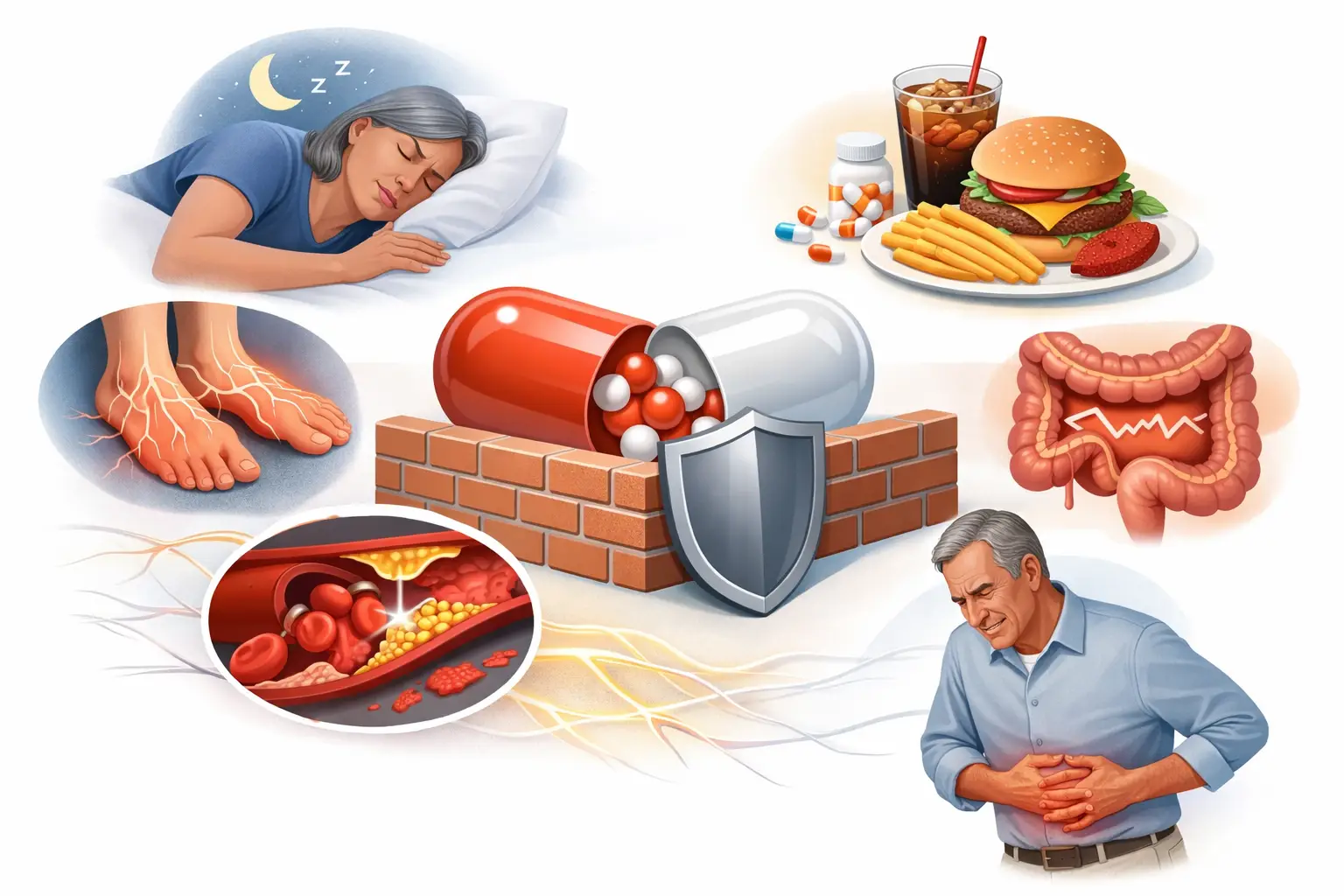
Quick Answer: Vitamin B12 absorption can be blocked by low stomach acid, lack of intrinsic factor, pernicious anemia, long-term use of acid-reducing medications, metformin, stomach or intestinal surgery, and digestive disorders that affect the ileum, such as Crohn’s disease or celiac disease. This means a person may eat B12-rich foods or take supplements and still have low B12 if the stomach or intestine cannot process and absorb it properly.
Fatigue, numbness, tingling, balance changes, and brain fog do not always come from getting too little B12 in your diet. In many adults, especially after age 45, the bigger question is what blocks vitamin B12 absorption once food or supplements are already being taken. That distinction matters, because a person can eat B12-rich foods or use a supplement regularly and still end up with low levels if the body cannot absorb the vitamin properly.
Vitamin B12 absorption is more complicated than many other nutrients. It depends on stomach acid, digestive enzymes, a protein called intrinsic factor, and a healthy small intestine. If any step is disrupted, absorption can fall short. That is why low B12 is sometimes linked to age-related digestive changes, certain medications, stomach surgery, or gastrointestinal disorders rather than poor diet alone.
- Vitamin B12 absorption depends on more than diet, including stomach acid, intrinsic factor, digestive enzymes, and a healthy small intestine.
- Low stomach acid, acid-reducing medications, metformin, and aging can make it harder for some adults to maintain healthy B12 levels.
- Pernicious anemia, stomach surgery, Crohn’s disease, celiac disease, and ileal problems may significantly reduce B12 absorption even when intake is adequate.
- Fatigue, numbness, tingling, balance changes, and brain fog can occur with B12 deficiency, but they can also have other medical causes.
- Persistent symptoms or low-normal B12 results may require medical testing such as serum B12, methylmalonic acid, homocysteine, CBC, or intrinsic factor antibody testing.
How vitamin B12 absorption normally works
B12 in food is usually bound to protein. In the stomach, acid and enzymes help release it. The vitamin then attaches to transport proteins, and later, in the small intestine, it binds to intrinsic factor, which is made by cells in the stomach. This B12-intrinsic factor complex travels to the last part of the small intestine, called the ileum, where it can finally be absorbed.
Supplement forms can behave a little differently. Free B12, such as the kind found in many capsules, tablets, liquids, or sublingual products, does not need to be separated from food protein first. Even so, much of its absorption still depends on the same digestive pathway, especially at standard doses. Higher-dose supplements may allow a small amount to be absorbed by passive diffusion, but that route is limited.
What blocks vitamin B12 absorption most often
One of the most common issues is low stomach acid. Stomach acid helps separate B12 from the protein in food. As people get older, acid production often declines. This does not mean every older adult will become deficient, but it does raise the risk. Low acid can make it harder to absorb B12 from meat, dairy, eggs, and fortified foods.
Medications are another major factor. Proton pump inhibitors and H2 blockers, which reduce stomach acid for reflux or ulcers, can lower food-based B12 absorption over time. Metformin, commonly used for blood sugar management, is also well known for interfering with B12 status in some patients, although the exact mechanism is not fully settled. Long-term use matters most, especially when other risk factors are present.
A lack of intrinsic factor can block absorption more severely. Without enough intrinsic factor, B12 cannot be absorbed efficiently in the ileum. This can happen in pernicious anemia, an autoimmune condition that damages the stomach cells responsible for intrinsic factor production. It can also occur after certain stomach surgeries or with advanced stomach lining damage.
Digestive disorders can interfere as well. Conditions affecting the small intestine, especially the ileum, may reduce the body’s ability to absorb B12 even when intake is adequate. Crohn’s disease, celiac disease, bacterial overgrowth, and damage following intestinal surgery are examples. In these cases, the problem is less about what was eaten and more about whether the intestine can take the vitamin in.
| Absorption Blocker | How It Affects B12 | Who May Be at Higher Risk |
|---|---|---|
| Low stomach acid | Makes it harder to release B12 from food protein. | Adults over 45, older adults, and people with chronic gastritis. |
| Proton pump inhibitors or H2 blockers | Reduce stomach acid, which may lower food-bound B12 absorption over time. | People using acid-reducing medications long term for reflux, GERD, or ulcers. |
| Metformin | Can lower B12 status in some patients, especially with prolonged use. | People using metformin for diabetes, prediabetes, or insulin resistance. |
| Pernicious anemia | Reduces or blocks intrinsic factor, which is needed for efficient B12 absorption in the ileum. | People with autoimmune gastritis, family history, or unexplained low B12 despite intake. |
| Stomach surgery | May reduce stomach acid, intrinsic factor, or normal digestive flow. | People after gastric bypass, gastrectomy, or other stomach procedures. |
| Ileal disease or ileal surgery | Affects the part of the small intestine where B12 is absorbed. | People with Crohn’s disease, ileal resection, or inflammatory bowel disease. |
| Celiac disease or bacterial overgrowth | May interfere with normal small-intestine absorption and nutrient status. | People with chronic digestive symptoms, malabsorption, or unexplained nutrient deficiencies. |
Medications and health conditions that can lower B12 status
If you are trying to figure out what blocks vitamin B12 absorption, it helps to look at the full picture rather than one single cause. Several factors can overlap.
Acid-suppressing drugs are common in adults over 45, and many people take them for years. These medicines may be appropriate and necessary, but prolonged use can reduce the release of B12 from food. Metformin is another frequent contributor. Some people using metformin never develop low B12, while others do, which is why periodic monitoring may be worth discussing with a clinician.
Stomach surgery can change the anatomy needed for normal absorption. Procedures that remove part of the stomach, bypass it, or alter digestive flow can reduce acid, intrinsic factor, or both. Similarly, surgery involving the ileum can limit the site where B12 is absorbed.
Autoimmune gastritis and pernicious anemia deserve special attention because they may not cause obvious digestive symptoms early on. A person may first notice fatigue, pale skin, tongue soreness, memory issues, or tingling in the feet and hands. Those symptoms are not specific to B12 deficiency, but they are worth evaluating, particularly in older adults.
Heavy alcohol use can also affect nutritional status and the lining of the digestive tract. It is not always the sole reason for low B12, but it can be part of the picture. So can chronic inflammatory conditions affecting the gut.
Age-related changes after 45
For many readers, age is not the only reason for low B12, but it is an important background factor. As the stomach ages, acid production may decline. The lining of the stomach can also become thinner in some adults. This makes food-bound B12 harder to absorb.
That is one reason why B12 deficiency becomes more common later in life. It is not simply because older adults eat less meat. In many cases, they are still consuming some B12, but the digestive system is less efficient at extracting and transporting it.
This also explains why some people do better with B12 delivered as a supplement rather than relying only on food. Free-form supplemental B12 may be easier to absorb than food-bound B12 when stomach acid is low. Still, if intrinsic factor is severely reduced or the ileum is impaired, even standard oral supplements may not be enough.
Can supplements overcome blocked absorption?
Sometimes yes, but not always in the same way for every person. If the issue is mild low stomach acid, a well-formulated oral B12 supplement may help support levels more effectively than food alone. Higher-dose oral supplements can be useful because a small percentage may be absorbed even without the full intrinsic factor pathway.
That does not mean every symptom should be self-treated with supplements. Tingling, numbness, weakness, or burning sensations can have many causes, including diabetes, thyroid disease, medication effects, spinal issues, and circulation problems. B12 is one possibility, not the only one.
It is also worth knowing that choosing a supplement form is usually less important than people think. Methylcobalamin, cyanocobalamin, hydroxocobalamin, and adenosylcobalamin all have different practical considerations, but the biggest issue is often whether the dose, route, and underlying absorption problem have been identified correctly. A premium label cannot fix pernicious anemia or significant intestinal malabsorption by itself.
Important: Persistent numbness, tingling, balance changes, weakness, or brain fog should not be treated as a supplement problem only.
Low B12 may be related to absorption problems, but similar symptoms can also occur with diabetes, thyroid disease, medication effects, spinal conditions, autoimmune disease, circulation problems, or other neurologic disorders. If symptoms are worsening, affect walking, involve weakness, or persist despite B12 intake, medical evaluation is important.
Signs that absorption may be the problem
A useful clue is when someone appears to get enough B12 on paper but still develops low blood levels or symptoms consistent with deficiency. Another clue is when deficiency persists despite regular oral intake.
Symptoms can include fatigue, weakness, pale skin, mouth or tongue soreness, memory lapses, mood changes, numbness, tingling, reduced vibration sense, and balance problems. These symptoms can overlap with many other conditions, so they should not be used for self-diagnosis. Still, in adults 45 and older, they are reasonable reasons to ask whether testing is needed.
People at higher risk include long-term users of metformin, proton pump inhibitors, or H2 blockers, adults with a history of stomach or bowel surgery, strict vegans who have not supplemented consistently, and anyone with known autoimmune or inflammatory digestive disease.
When to ask a doctor about testing
Research Snapshot
| Research Finding | Clinical Relevance |
|---|---|
| Vitamin B12 deficiency can result from inadequate intake, impaired absorption from food, lack of intrinsic factor, gastrointestinal surgery, and certain digestive conditions. | This supports the article’s core point: low B12 is not always a diet problem. |
| Older adults and people with stomach surgery or digestive disorders such as Crohn’s disease or celiac disease may have higher risk of low B12. | This strengthens the section focused on adults over 45 and absorption-related risk factors. |
| Metformin and long-term acid-suppressing medications are recognized risk factors for low B12 status in some patients. | This creates a strong search opportunity for readers taking diabetes or reflux medications. |
| Methylmalonic acid may help confirm deficiency when B12 levels are low-normal or borderline in higher-risk patients. | This helps explain why a basic serum B12 test may not always be the full answer. |
If symptoms suggest possible deficiency or if major risk factors are present, testing is often the next logical step. A basic serum B12 level may be helpful, but it is not always the full story. In borderline cases, clinicians may also consider methylmalonic acid, homocysteine, complete blood count results, and sometimes intrinsic factor antibody testing when pernicious anemia is suspected.
This is where an evidence-focused approach matters. Low-normal lab values can be tricky to interpret in the context of symptoms, age, medication use, and overall health history. A one-size-fits-all answer is rarely appropriate.
For supplement shoppers, the practical takeaway is simple. Before assuming a product is ineffective, consider whether the real issue is absorption. The best vitamin B12 supplement for one person may be a reasonable oral capsule, while another may need a different dose, a different delivery method, or medical evaluation for an underlying cause.
Blocked B12 absorption is often less about the vitamin itself and more about the stomach, medications, or intestine. If you are taking B12 and still wondering why symptoms or low levels persist, that is a strong reason to look beyond the label and ask what your body is doing with it after you swallow it.
If you’re trying to understand what may be behind numbness, tingling, burning feet, or nerve pain, see our guide to peripheral neuropathy causes, warning signs, and evidence-informed next steps.
Frequently Asked Questions
What blocks vitamin B12 absorption?
Vitamin B12 absorption can be blocked by low stomach acid, lack of intrinsic factor, pernicious anemia, long-term acid-reducing medications, metformin, stomach surgery, ileal disease, Crohn’s disease, celiac disease, bacterial overgrowth, and other conditions that affect the stomach or small intestine.
Can you take B12 and still not absorb it?
Yes. Some people take B12 regularly but still have low levels because their body cannot absorb it efficiently. This may happen with pernicious anemia, low stomach acid, certain medications, stomach surgery, or intestinal conditions that affect the ileum.
Why does low stomach acid affect B12?
B12 in food is usually attached to protein. Stomach acid helps release B12 from that protein so it can later bind to intrinsic factor and be absorbed in the small intestine. When stomach acid is low, food-bound B12 may be harder to absorb.
Do PPIs or acid reducers block B12 absorption?
Proton pump inhibitors and H2 blockers reduce stomach acid. Long-term use may lower food-bound B12 absorption in some people, especially when other risk factors are present. These medications should not be stopped without medical guidance.
Does metformin lower vitamin B12?
Metformin can lower B12 status in some patients, particularly with long-term use. Not everyone taking metformin becomes deficient, but people with symptoms or additional risk factors may want to ask a clinician whether B12 monitoring is appropriate.
What is the role of intrinsic factor in B12 absorption?
Intrinsic factor is a protein made in the stomach. It binds to vitamin B12 and helps carry it to the ileum, the last part of the small intestine, where B12 is absorbed. Without enough intrinsic factor, B12 absorption can become severely limited.
Can high-dose oral B12 overcome absorption problems?
High-dose oral B12 may help some people because a small amount can be absorbed passively without the full intrinsic factor pathway. However, people with severe deficiency, significant neurologic symptoms, pernicious anemia, or major intestinal malabsorption may need medical evaluation and a different treatment approach.
When should you test for B12 absorption problems?
Testing may be worth discussing if you have fatigue, numbness, tingling, balance changes, brain fog, tongue soreness, anemia, low-normal B12 levels, or risk factors such as metformin use, long-term acid reducers, stomach surgery, Crohn’s disease, celiac disease, or suspected pernicious anemia.
Medical Disclaimer: The information provided in this article is for educational purposes only and is not intended as medical advice. Dietary supplements are not a replacement for professional medical diagnosis or treatment. Always consult with a qualified healthcare professional before starting any new supplement, especially if you have pre-existing medical conditions or are taking prescription medications. Individual results may vary.

- Can Low B12 Cause Dizziness? - July 9, 2026
- B12 Deficiency and Cracked Corners of the Mouth - July 9, 2026
- Can Low B12 Cause Dry Mouth? - July 8, 2026