Quick Answer:
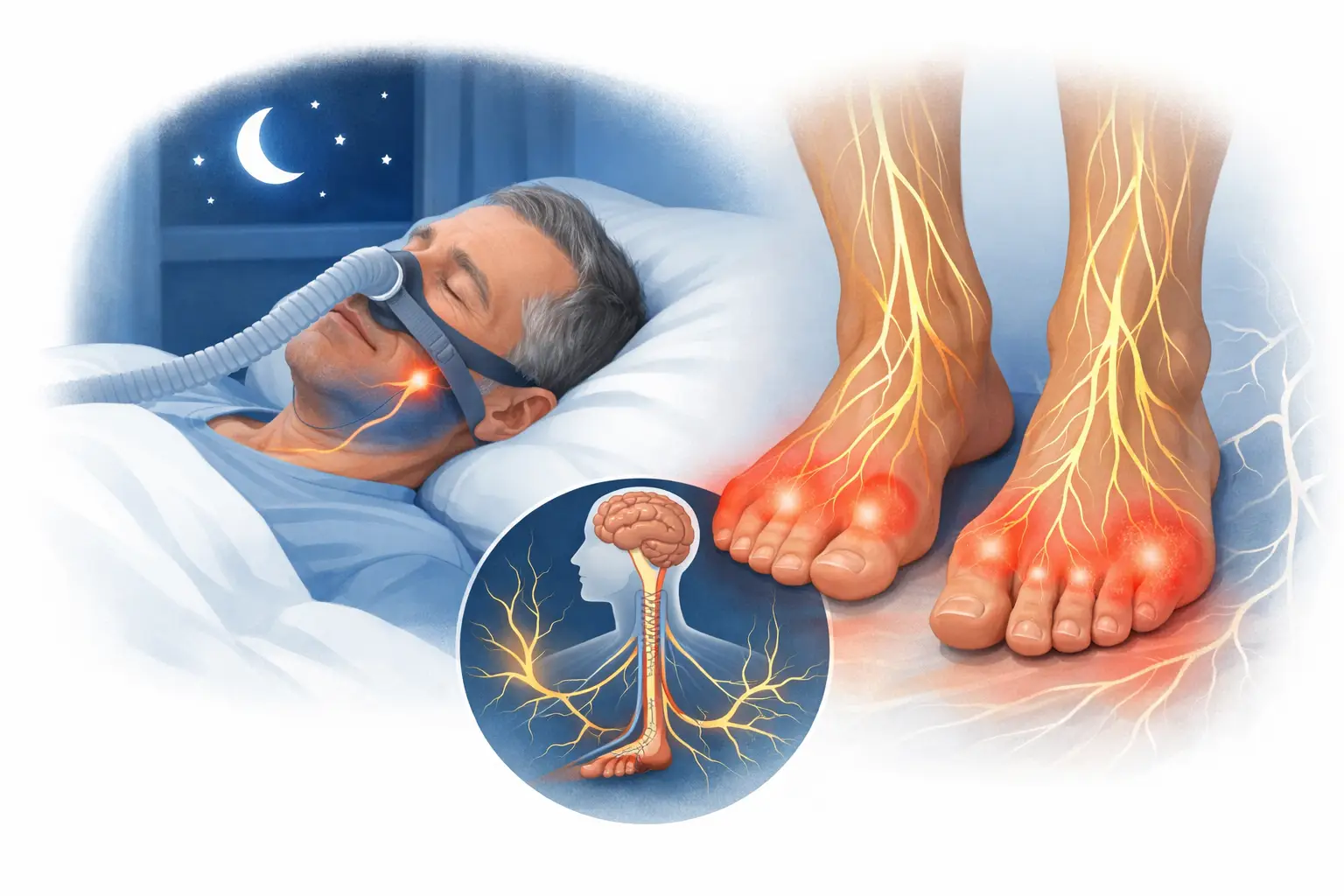
Sleep apnea is not considered one of the most common causes of peripheral neuropathy, but it may contribute to nerve-related symptoms in some individuals through repeated oxygen drops, inflammation, metabolic stress, and poor glucose regulation. In many cases, sleep apnea acts as a contributing factor rather than the sole explanation for numbness, tingling, burning feet, or nerve discomfort.
A person wakes up tired, notices numb toes when getting out of bed, and starts wondering whether two seemingly separate problems might be connected. Can sleep apnea cause neuropathy? In some cases, it may contribute to nerve-related symptoms indirectly, but the relationship is not simple, and sleep apnea is rarely the only explanation.
That distinction matters, especially for adults over 45, when tingling, burning feet, leg cramps, fatigue, and poor sleep often begin to overlap. Neuropathy has many possible causes, including diabetes, vitamin B12 deficiency, alcohol use, thyroid disease, certain medications, and circulation problems. Sleep apnea can add stress to the body in ways that may affect nerves, but it should be evaluated as part of the bigger picture rather than treated as an automatic answer.
Can sleep apnea cause neuropathy, or just similar symptoms?
Obstructive sleep apnea happens when the airway repeatedly narrows or closes during sleep. These pauses can lower oxygen levels, disrupt normal sleep stages, and trigger stress responses throughout the night. Over time, that pattern may affect blood vessels, inflammation, metabolism, and nerve function.
So, can sleep apnea cause neuropathy? Possibly, but a more careful way to say it is that sleep apnea may be associated with peripheral nerve dysfunction in some people. Research has suggested links between obstructive sleep apnea and nerve conduction abnormalities, as well as higher rates of symptoms such as numbness or tingling. Still, association does not prove direct cause.
This is where many readers get misled. Sleep apnea can also create symptoms that feel neurological without being classic peripheral neuropathy. Poor sleep can worsen pain sensitivity, increase muscle tension, and amplify awareness of tingling or restless legs. A person may feel heavy, weak, foggy, or unsteady and assume nerve damage is progressing, when the sleep disorder is intensifying symptom perception.
Key Takeaways
- Sleep apnea may contribute to nerve dysfunction through intermittent low oxygen levels.
- Diabetes, vitamin B12 deficiency, and thyroid disease remain more common causes of neuropathy.
- Poor sleep can amplify pain perception and make symptoms feel worse.
- Sleep apnea and neuropathy often share overlapping risk factors.
- Vitamin B12 deficiency can mimic many symptoms attributed to sleep apnea.
- A complete evaluation is usually more useful than focusing on a single possible cause.
How sleep apnea might affect nerves
The most plausible mechanism is intermittent low oxygen. During repeated breathing pauses, tissues get less oxygen than they should, then are re-oxygenated again and again. That cycle can promote oxidative stress and inflammation, both of which may affect small blood vessels that nourish nerves.
Nerves depend on steady blood flow and oxygen delivery. If that support becomes inconsistent over months or years, nerve signaling may become less efficient. In people who already have another risk factor – such as prediabetes, type 2 diabetes, B12 deficiency, obesity, or vascular disease – sleep apnea may act more like an accelerant than a lone cause.
Inflammation is another likely piece of the puzzle. Untreated sleep apnea is associated with higher inflammatory activity and increased sympathetic nervous system activation. In plain terms, the body stays under strain at night instead of recovering. That ongoing stress may worsen conditions already tied to neuropathy risk.
There is also a metabolic angle. Sleep apnea is closely linked with insulin resistance and poor glucose control. Since diabetes and prediabetes are among the most common causes of peripheral neuropathy, an untreated sleep disorder can indirectly raise nerve risk by making blood sugar regulation harder.
Why vitamin B12 still deserves attention
For readers on a nerve-health site, this is where the conversation becomes practical. If someone has numbness, burning feet, balance changes, fatigue, or brain fog, sleep apnea should not distract from checking for nutrient-related causes, especially vitamin B12 deficiency.
Low B12 can cause neuropathy, and it can also cause weakness, memory changes, mood changes, and trouble walking. Some of those symptoms overlap with untreated sleep apnea, which makes self-diagnosis unreliable. An adult who snores heavily and also has low B12 could easily assume everything comes from poor sleep, while a correctable deficiency continues to worsen.
This overlap is especially relevant in older adults, people taking metformin, and those using acid-reducing medications long term. These groups may face a higher risk of B12 inadequacy. In that setting, asking only “Can sleep apnea cause neuropathy?” may be too narrow. The better question is whether sleep apnea is one contributing factor among several.
What the symptoms can and cannot tell you
Sleep Apnea Symptoms vs Neuropathy Symptoms
| Symptom | More Common in Sleep Apnea | More Common in Neuropathy |
|---|---|---|
| Loud Snoring | ✓ | Rare |
| Morning Headaches | ✓ | Rare |
| Daytime Sleepiness | ✓ | Uncommon |
| Tingling Feet | Possible | ✓ |
| Burning Feet | Uncommon | ✓ |
| Balance Problems | Possible | ✓ |
Symptoms alone rarely reveal the source. Tingling in the feet may come from peripheral neuropathy, but it can also be related to compression, circulation issues, lumbar spine problems, or even nighttime swelling. Morning headaches, dry mouth, daytime exhaustion, loud snoring, and witnessed pauses in breathing point more strongly toward sleep apnea.
Burning, stabbing, or electric-shock sensations in the feet and hands lean more toward neuropathic pain, especially if symptoms are persistent rather than occasional. Balance trouble in the dark, reduced vibration sense, or numbness that slowly creeps upward from the toes are also common neuropathy patterns. Even so, there can be overlap. A person with sleep apnea may sleep poorly, move less, gain weight, and develop worsening glucose control, which then contributes to true neuropathy.
That is why symptom clusters matter more than any single complaint. If nerve symptoms are paired with snoring, choking awake, resistant high blood pressure, morning fatigue, or excessive daytime sleepiness, sleep apnea deserves a place on the evaluation list.
When the link is more likely
Factors That Increase the Likelihood of Sleep Apnea Contributing to Neuropathy
| Risk Factor | Why It Matters |
|---|---|
| Type 2 Diabetes | Already increases neuropathy risk |
| Prediabetes | May worsen nerve vulnerability |
| Obesity | Strongly linked to sleep apnea severity |
| Vitamin B12 Deficiency | Can independently cause neuropathy |
| Years of Untreated Sleep Apnea | Increases cumulative oxygen-related stress |
The connection between sleep apnea and neuropathy becomes more plausible when other risk factors are present. Someone with obesity, prediabetes, diabetes, metabolic syndrome, or cardiovascular disease is more likely to have sleep apnea and more likely to have nerve stress from multiple directions.
Severity also matters. Mild snoring without significant oxygen drops is different from moderate or severe obstructive sleep apnea with repeated desaturations throughout the night. The more prolonged and frequent the oxygen disruption, the more biologically plausible a nerve effect becomes.
Duration matters too. A few months of poor sleep is not the same as years of untreated apnea. Nerves generally do not fail overnight. Most neuropathic processes develop gradually, often with several overlapping contributors.
What to discuss with a healthcare professional
If you are asking whether sleep apnea can cause neuropathy, it is reasonable to discuss both conditions at the same visit. A clinician may review symptoms, medical history, medications, alcohol use, blood sugar status, and nutrient risks. Depending on the situation, testing may include a sleep study, fasting glucose or A1c, vitamin B12 levels, thyroid testing, and other basic neuropathy labs.
This broader approach is useful because it prevents tunnel vision. If sleep apnea is found, treating it may improve energy, sleep quality, blood pressure, and sometimes overall symptom burden. But if numbness comes from B12 deficiency, diabetic neuropathy, or spinal nerve compression, that separate issue still needs attention.
For some patients, a neurology evaluation or nerve testing may be appropriate, particularly if symptoms are worsening, asymmetrical, painful, or affecting balance and walking.
⚠ Important
Persistent numbness, progressive weakness, worsening balance problems, repeated falls, or symptoms affecting only one side of the body should not automatically be blamed on sleep apnea. These patterns may indicate another neurological or metabolic condition requiring prompt evaluation.
Can treating sleep apnea help neuropathy symptoms?
It may help some people, but expectations should stay realistic. Treatment for obstructive sleep apnea, often with CPAP or other airway-support strategies, can improve oxygen levels and reduce nightly physiologic stress. Better sleep may also lower pain sensitivity, improve daytime function, and support healthier glucose control.
That does not mean established neuropathy will simply disappear. If nerves have been injured by diabetes, severe deficiency, chemotherapy, or another cause, sleep apnea treatment is more likely to support the overall environment for recovery than to act as a stand-alone fix.
Still, this is not a small benefit. Better sleep can improve adherence to exercise, appetite regulation, blood pressure control, and mental clarity. Those changes often matter for people managing chronic nerve symptoms. At an educational site such as VitB12Supplement.com, that is the practical takeaway: look for contributing factors you can identify and address early, rather than waiting for one perfect explanation.
A balanced way to think about the question
Can sleep apnea cause neuropathy? It can be part of the story, especially when low oxygen, inflammation, and metabolic dysfunction are involved. But it is usually more accurate to view sleep apnea as a potential contributor or amplifier, not the default cause of tingling, numbness, or burning feet.
If nerve symptoms are showing up alongside snoring, daytime sleepiness, and morning fatigue, bring both issues up together. The most useful answers often come from looking at sleep, blood sugar, vitamin B12 status, medications, and circulation at the same time. When symptoms overlap, a careful workup beats guesswork every time.
If you’re trying to understand what may be behind numbness, tingling, burning feet, or nerve pain, our guide to peripheral neuropathy causes and relief explains the most common causes and what may help support nerve health.
Frequently Asked Questions
Can sleep apnea cause neuropathy?
Sleep apnea may contribute to nerve dysfunction in some individuals, but it is usually considered a contributing factor rather than a primary cause.
Can sleep apnea cause tingling in the feet?
It may contribute indirectly through metabolic stress, inflammation, and associated health conditions, but other causes should also be investigated.
What is the connection between sleep apnea and neuropathy?
Researchers believe intermittent low oxygen levels, inflammation, and impaired glucose regulation may contribute to nerve dysfunction in some people.
Can CPAP improve neuropathy symptoms?
Treating sleep apnea may improve sleep quality, energy levels, and overall health, but it does not automatically reverse established nerve damage.
Can vitamin B12 deficiency and sleep apnea occur together?
Yes. Both conditions can coexist and may contribute to fatigue, brain fog, numbness, tingling, and other overlapping symptoms.
Medical Disclaimer: The information provided in this article is for educational purposes only and is not intended as medical advice. Dietary supplements are not a replacement for professional medical diagnosis or treatment. Always consult with a qualified healthcare professional before starting any new supplement, especially if you have pre-existing medical conditions or are taking prescription medications. Individual results may vary.

- Can Low B12 Cause Dizziness? - July 9, 2026
- B12 Deficiency and Cracked Corners of the Mouth - July 9, 2026
- Can Low B12 Cause Dry Mouth? - July 8, 2026