Quick Answer:
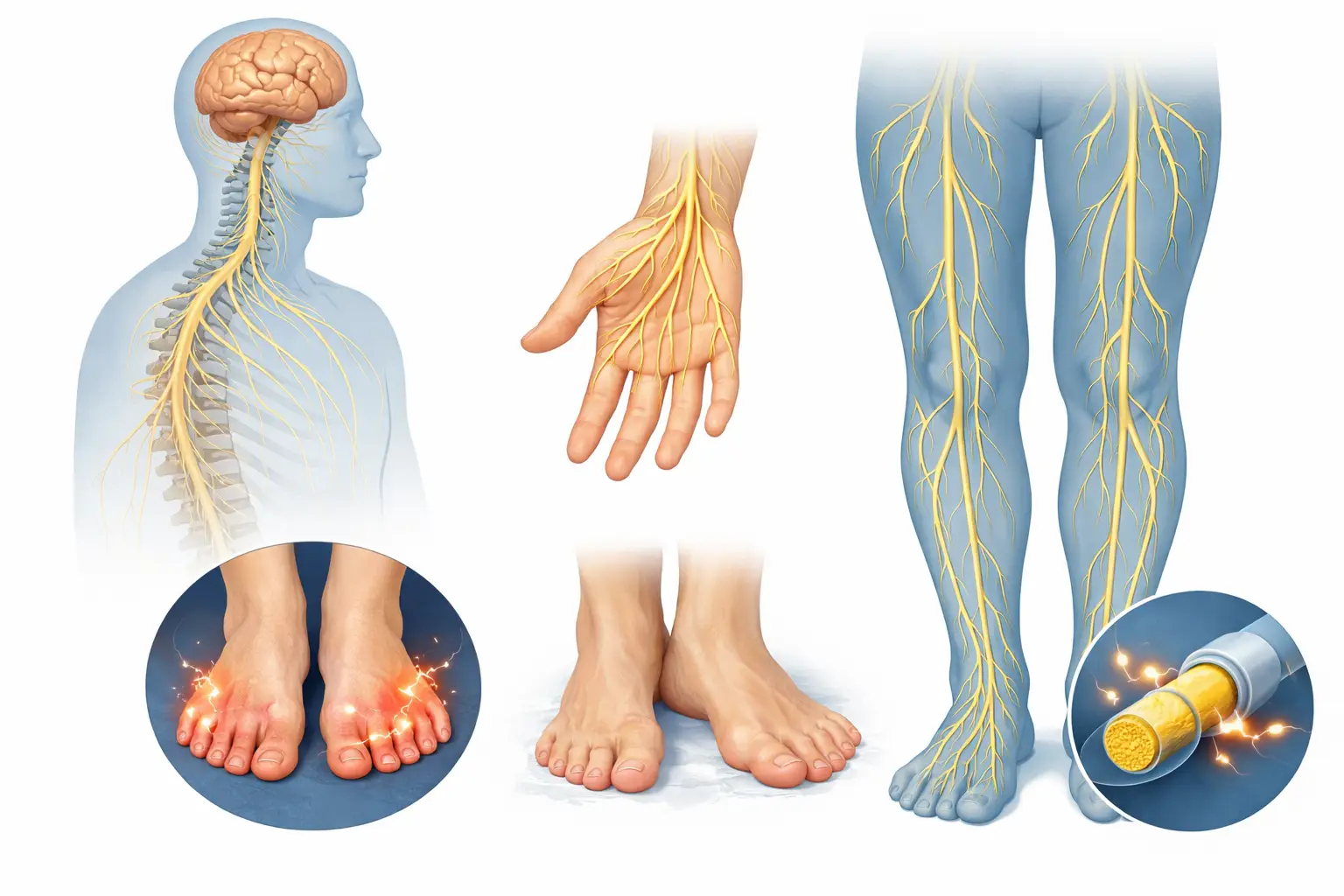
The peripheral nervous system includes all nerves outside the brain and spinal cord. It is organized into sensory nerves, motor nerves, and autonomic nerves that help control sensation, movement, balance, digestion, circulation, and many automatic body functions. When these nerves become damaged, symptoms such as tingling, numbness, burning feet, weakness, dizziness, or coordination problems may develop depending on which nerve fibers are affected.
A common reason people search for nerve health answers is simple: the symptoms feel strange, inconsistent, and hard to explain. If you are trying to understand how the peripheral nervous system is organized (and what goes wrong in neuropathy), it helps to start with one practical fact – these nerves form the communication network that carries signals between the brain, spinal cord, skin, muscles, and internal organs. When that network is damaged, the pattern of symptoms often tells you a lot about where the problem may be.
How the peripheral nervous system is organized
The peripheral nervous system includes all the nerves outside the brain and spinal cord. You can think of it as the body’s wiring beyond the central control center. These nerves are not all doing the same job, which is why neuropathy can feel very different from one person to another.
At the broadest level, the peripheral nervous system is organized into sensory nerves, motor nerves, and autonomic nerves. Sensory nerves carry information from the body to the brain and spinal cord. They report pain, temperature, vibration, touch, and body position. Motor nerves carry commands in the other direction, telling muscles when to contract. Autonomic nerves handle functions you do not consciously control, such as heart rate, blood pressure, sweating, digestion, and bladder activity.
This matters because symptoms usually reflect which fibers are involved. Burning, tingling, pins-and-needles, electric-shock sensations, or numbness often point toward sensory fiber damage. Weakness, muscle cramping, or trouble lifting the front of the foot can suggest motor involvement. Dizziness when standing, abnormal sweating, constipation, or changes in sexual function may indicate autonomic nerve problems.
The body also organizes nerves by size and distance
Not all nerve fibers are built the same way. Some are large and heavily myelinated, meaning they have a fatty insulating covering that helps signals travel quickly. These fibers are important for vibration sense, reflexes, and position awareness. Others are small fibers, with thin or absent myelin, and they carry pain and temperature signals while also helping regulate autonomic function.
That distinction helps explain why some people with neuropathy have severe burning pain even when routine nerve conduction studies are normal. Standard tests are often better at detecting large-fiber problems than small-fiber damage. So a normal test does not always mean symptoms are imaginary or insignificant. It may simply mean the wrong part of the system was measured.
Length matters too. The longest nerves in the body are often affected first, which is why neuropathy commonly starts in the feet before the hands. This is called a length-dependent pattern. If symptoms rise from the toes to the ankles and later affect the fingers, clinicians sometimes describe it as a stocking-glove distribution.
What goes wrong in neuropathy
Neuropathy is not one disease. It is a broad term for nerve damage or nerve dysfunction. What goes wrong can vary at the level of the nerve cell body, the axon, or the myelin sheath surrounding the axon.
In axonal neuropathy, the long nerve fiber itself is damaged. This often causes symptoms that begin gradually in the toes and progress upward over time. Diabetes, alcohol overuse, certain medications, kidney disease, and nutritional deficiencies can contribute to this type.
In demyelinating neuropathy, the protective coating around the nerve is damaged, which slows signal transmission. That can lead to weakness, sensory changes, and reduced reflexes. Some demyelinating neuropathies are immune-mediated and require medical evaluation rather than self-treatment.
There are also compression neuropathies, where a nerve is physically squeezed or entrapped. Carpal tunnel syndrome is a familiar example, but similar issues can affect nerves at the elbow, shoulder, hip, or ankle. These problems may cause more localized symptoms than a generalized peripheral neuropathy.
Important
Neuropathy is not a single disease. Similar symptoms such as tingling, numbness, burning feet, weakness, or balance problems may result from diabetes, vitamin deficiencies, alcohol-related nerve injury, medication effects, autoimmune disorders, spinal problems, or other neurological conditions.
Why neuropathy symptoms can feel so different
One person notices numb toes and poor balance in the dark. Another feels burning feet at night but has normal strength. Another develops weakness, dropped objects, and muscle wasting. These are not contradictions. They reflect different nerve fibers, different causes, and sometimes different stages of injury.
Pain does not always mean more severe nerve damage, and numbness does not always mean less. In some cases, irritated small fibers produce intense discomfort. In others, reduced sensation may create a greater risk of falls, unnoticed injuries, or foot ulcers, especially in people with diabetes.
The timing matters as well. Sudden symptoms raise different concerns than slow, symmetrical symptoms that have built over months or years. Gradual progression often fits metabolic or nutritional causes, while rapid onset may call for more urgent medical evaluation.
Common reasons nerves become damaged
For adults over 45, the most common causes discussed in routine care include diabetes and prediabetes, alcohol-related nerve injury, medication side effects, thyroid disease, kidney disease, autoimmune conditions, and vitamin deficiencies. Vitamin B12 deserves special attention because low B12 can affect nerve function and may also cause fatigue, memory complaints, balance changes, or anemia.
According to the NIH Office of Dietary Supplements, vitamin B12 is essential for neurological function and helps maintain healthy nerve signaling throughout the nervous system.
Still, this is where caution matters. Not every tingling foot is caused by low B12, and not every low-normal lab result explains severe symptoms. Circulation problems, spinal issues, arthritis, and even anxiety can sometimes overlap with or mimic neuropathy. That is one reason self-diagnosing based on one symptom alone is risky.
Nutritional status is worth reviewing, especially in people who use acid-reducing medications long term, take metformin, follow restrictive diets, or have digestive conditions that may impair absorption. But supplements should be viewed as targeted support only when they fit the situation. More is not always better, and taking high doses without a clear reason can create its own problems.
How clinicians figure out the pattern
A good neuropathy workup usually starts with the story. Where did symptoms begin? Are they symmetrical? Is there pain, weakness, balance trouble, or autonomic symptoms? Are symptoms worse at night? Have there been medication changes, heavy alcohol use, unexplained weight loss, or blood sugar issues?
The physical exam then helps sort sensory, motor, and reflex changes. Clinicians may test vibration, pinprick, temperature, strength, gait, and ankle reflexes. Blood work is often used to look for common contributors such as B12 deficiency, diabetes, thyroid disorders, kidney impairment, or abnormal protein levels.
Nerve conduction studies and electromyography can be useful, but they are not perfect for every type of neuropathy. As noted earlier, small-fiber neuropathy can sometimes require different forms of evaluation. The right test depends on the pattern, and the pattern depends on how the peripheral nervous system is organized.
Where supplements fit, and where they do not
For supplement shoppers, the practical question is usually whether a nerve-health formula makes sense. The honest answer is: it depends on the cause. If someone has a documented B12 deficiency, correcting that deficiency is medically relevant. If there is no deficiency, a B12 supplement may still be reasonable in select cases, but expectations should stay realistic.
The same applies to other commonly marketed ingredients. Alpha-lipoic acid, acetyl-L-carnitine, benfotiamine, and B-complex products are often discussed in nerve-support conversations, but evidence quality varies by ingredient, dose, population, and outcome measured. Some products are better positioned as general nutritional support than as solutions to a clearly diagnosed nerve disorder.
That is one reason an evidence-based review matters. At vitb12supplement.com, the more useful question is not whether an ingredient sounds impressive on a label. It is whether the formula, dose, safety profile, and clinical rationale match the reader’s actual situation.
Key Takeaways
- The peripheral nervous system connects the brain and spinal cord to the rest of the body.
- Sensory nerves carry information such as pain, temperature, and touch.
- Motor nerves control muscle movement and coordination.
- Autonomic nerves regulate digestion, blood pressure, sweating, and heart rate.
- Neuropathy symptoms often reflect which nerve fibers are damaged.
- Vitamin B12 deficiency is one possible cause of peripheral nerve dysfunction.
When symptoms should not wait
Some nerve symptoms deserve prompt medical attention rather than supplement experimentation. Rapidly worsening weakness, difficulty walking, sudden loss of coordination, new bowel or bladder problems, facial weakness, severe back pain with neurological symptoms, or numbness that spreads quickly should be evaluated urgently.
Even less dramatic symptoms can justify an appointment if they are persistent, painful, or interfering with sleep, balance, or daily function. Early assessment can sometimes identify a reversible contributor, or at least narrow the list of possibilities before symptoms become more disabling.
A better way to think about nerve health
People often look for one simple explanation for tingling or burning feet, but the nervous system is not simple. The peripheral nervous system is organized by function, fiber type, and nerve length, and neuropathy can disrupt any of those levels in different ways. That is why the smartest next step is usually not guessing from a label or a social media post. It is matching the symptom pattern to the most likely mechanism, then using that information to have a more informed conversation with your healthcare professional.
Frequently Asked Questions
What is the peripheral nervous system?
The peripheral nervous system consists of all nerves outside the brain and spinal cord and serves as the communication network between the central nervous system and the rest of the body.
What are the three main parts of the peripheral nervous system?
The peripheral nervous system is organized into sensory nerves, motor nerves, and autonomic nerves.
What symptoms can occur when peripheral nerves are damaged?
Common symptoms include tingling, numbness, burning sensations, weakness, balance problems, muscle cramps, and autonomic symptoms such as dizziness or digestive changes.
Can vitamin B12 deficiency affect peripheral nerves?
Yes. Vitamin B12 deficiency may contribute to numbness, tingling, balance difficulties, and other neurological symptoms.
Why does neuropathy often start in the feet?
Many neuropathies affect the longest nerves first, which is why symptoms commonly begin in the toes and feet before progressing upward.
Medical Disclaimer: The information provided in this article is for educational purposes only and is not intended as medical advice. Dietary supplements are not a replacement for professional medical diagnosis or treatment. Always consult with a qualified healthcare professional before starting any new supplement, especially if you have pre-existing medical conditions or are taking prescription medications. Individual results may vary.

- Can Low B12 Cause Dizziness? - July 9, 2026
- B12 Deficiency and Cracked Corners of the Mouth - July 9, 2026
- Can Low B12 Cause Dry Mouth? - July 8, 2026