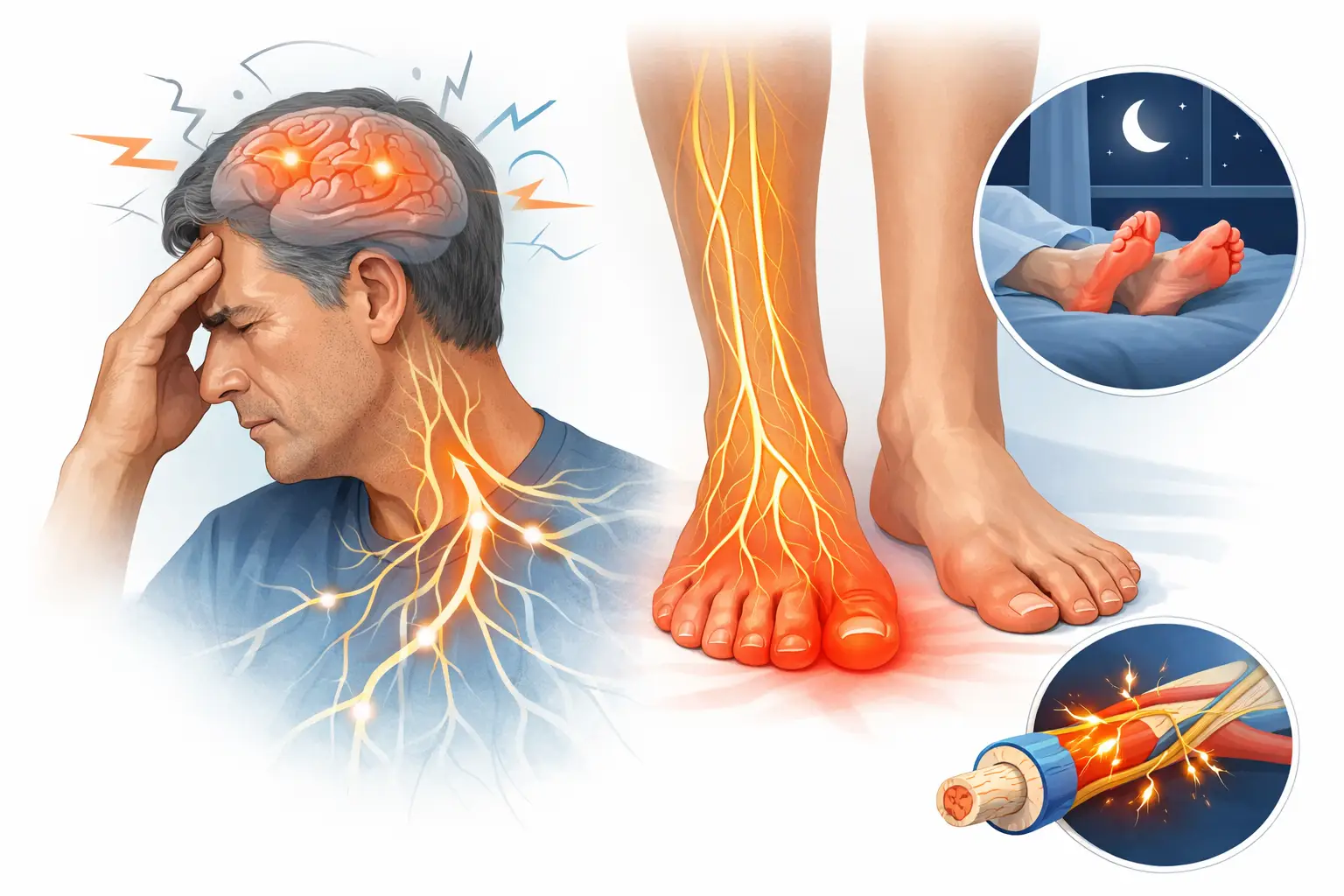
Stress can intensify neuropathy symptoms by increasing pain sensitivity, muscle tension, sleep disruption, and nervous-system arousal. However, persistent numbness, burning feet, weakness, balance changes, or progressive tingling should not automatically be blamed on stress alone because underlying nerve dysfunction may still be present.
Burning feet after a long day, tingling in the hands, sudden pins-and-needles when stress is high – many adults wonder whether stress and neuropathy symptoms are connected. The short answer is yes, but not always in the way people assume. Stress can intensify how nerve symptoms feel, make people more aware of normal body sensations, and sometimes worsen underlying health issues that already affect nerves. What stress does not do is explain away every case of numbness, burning, or weakness.
That distinction matters, especially for adults over 45. Nerve symptoms can show up with vitamin deficiencies, diabetes, medication side effects, alcohol use, spinal problems, thyroid issues, circulation concerns, or compression injuries. Stress may be part of the picture, but it should not become the only explanation.
Key Takeaways
- Stress may amplify nerve sensations such as tingling, burning, trembling, and heightened sensitivity.
- True neuropathy often follows a more consistent pattern, especially in the feet and hands.
- Poor sleep, anxiety, muscle tension, and hyperventilation can temporarily worsen neurologic sensations.
- Vitamin B12 deficiency, diabetes, medications, alcohol use, and spinal problems are important medical causes to consider.
- Persistent weakness, balance decline, progressive numbness, or one-sided symptoms deserve medical evaluation.
How stress and neuropathy symptoms can overlap
Stress affects the nervous system broadly. When the body stays in a prolonged fight-or-flight state, stress hormones can alter breathing, muscle tension, sleep quality, pain sensitivity, and blood flow. This can create sensations that feel neurological, including tingling, prickling, cold hands and feet, trembling, or a sense that the skin is unusually sensitive.
At the same time, people with true peripheral neuropathy often notice that symptoms flare during periods of emotional stress. A person who already has nerve irritation from diabetes, B12 deficiency, or another cause may find that burning, zapping, or numbness feels worse when sleep is poor and stress is high. In that sense, stress may not be the root cause, but it can still be a meaningful aggravating factor.
The challenge is that symptom overlap does not equal symptom identity. Stress-related tingling is often temporary and variable. Neuropathy is more likely to follow a pattern, persist, or slowly progress.
What neuropathy usually feels like
Peripheral neuropathy refers to damage or dysfunction involving nerves outside the brain and spinal cord. Symptoms vary by which nerves are affected, but common complaints include numbness, tingling, burning pain, electric-shock sensations, increased sensitivity to touch, muscle weakness, or a feeling of walking on cotton or pebbles.
Many cases begin in the feet and move upward gradually. This is often called a stocking pattern. If the hands become involved later, it may form a stocking-glove pattern. That distribution is one clue that points more toward peripheral nerve involvement than stress alone.
Some people also notice balance problems, reduced awareness of temperature, nighttime worsening, or cramps. Others describe feet that feel both numb and painful at the same time. That combination can sound contradictory, but it is common in neuropathic symptoms.
Signs that stress may be amplifying the problem
Stress tends to make symptoms less predictable. Tingling may come and go quickly, move around the body, or appear during anxiety, shallow breathing, poor sleep, or emotional strain. Someone may also have jaw tension, headaches, heart palpitations, digestive upset, or a sense of internal restlessness at the same time.
Hyperventilation is one example. Fast or shallow breathing can temporarily shift blood chemistry enough to trigger tingling in the fingers, around the mouth, or in the feet. Muscle tension can also compress tissues and create temporary nerve irritation, especially in the neck, shoulders, wrists, or lower back.
Still, stress should be viewed as a modifier, not a diagnosis. If symptoms are recurring, symmetrical, or steadily worsening, a medical evaluation is more important than trying to label them as stress-related.
When symptoms suggest something more than stress
Stress-Related Tingling vs Possible Neuropathy Symptoms
Although symptoms can overlap, certain patterns are more commonly associated with stress while others raise greater concern for peripheral nerve dysfunction.
| Feature | Stress-Related Sensations | Possible Neuropathy |
|---|---|---|
| Pattern | More variable and intermittent | Often gradual and persistent |
| Body distribution | Can move around unpredictably | Frequently starts in feet or hands |
| Triggers | Anxiety, shallow breathing, emotional stress | Diabetes, vitamin deficiency, nerve damage |
| Associated symptoms | Jaw tension, palpitations, restlessness | Burning pain, numbness, balance changes |
| Nighttime worsening | Possible during anxiety | Very common in neuropathy |
| Weakness or falls | Less typical | More concerning for neurologic disease |
Certain patterns deserve closer attention. Persistent numbness in the feet, burning that is worse at night, weakness, reduced coordination, or a clear progression over weeks to months is more concerning for neuropathy or another neurologic issue. So is tingling that occurs with fatigue, memory issues, glossitis, or pale skin, which may raise suspicion for vitamin B12 deficiency in some individuals.
For adults 45 and older, this is especially relevant because several common causes become more likely with age. Blood sugar problems, long-term acid-reducing medications, metformin use, dietary insufficiency, alcohol exposure, kidney disease, and spinal wear-and-tear can all contribute to symptoms that may be mistaken for stress.
This is where evidence-informed caution matters. Burning feet are not automatically a vitamin issue. Tingling is not automatically poor circulation. Numbness is not automatically anxiety. Similar symptoms can come from very different causes.
Common causes doctors may consider
A clinician evaluating neuropathy-like symptoms may ask about diabetes or prediabetes, alcohol use, thyroid disease, autoimmune conditions, infections, chemotherapy exposure, back or neck symptoms, and medication history. They may also review nutrient status, especially vitamin B12 when risk factors are present.
Vitamin B12 gets a great deal of attention for good reason: deficiency can affect nerve function.
The NIH Office of Dietary Supplements explains that vitamin B12 plays an important role in neurological function and nervous system health.
But it is only one piece of the diagnostic picture. Low B12 can coexist with other issues, and taking a supplement without understanding the cause of symptoms may delay proper evaluation.
Other nutrients sometimes discussed in nerve-health conversations include folate, vitamin B6, vitamin D, and alpha-lipoic acid. Here again, more is not always better. Excess vitamin B6 from supplements, for example, can itself contribute to neuropathy symptoms in some cases. That is one reason careful label review matters, especially for adults taking multiple products.
Stress, sleep, and pain sensitivity
One of the clearest ways stress worsens neuropathy symptoms is through sleep disruption. Poor sleep lowers pain tolerance, increases irritability, and can make mild tingling feel much more intrusive. It also reduces resilience during the day, which can create a cycle: stress worsens sleep, poor sleep worsens symptoms, and worse symptoms increase stress.
Inflammation and central pain processing may also play a role. While stress does not directly cause every nerve problem, prolonged psychological strain can increase overall symptom burden. Patients often describe this as feeling more inflamed, more sensitive, or less able to ignore sensations they used to brush off.
That does not mean symptoms are imagined. It means perception and physiology interact. In real life, that interaction can be powerful.
What to do if you notice stress and neuropathy symptoms
Start by tracking the pattern. Note where symptoms occur, how long they last, whether they affect both sides equally, and what seems to trigger them. Pay attention to nighttime worsening, balance changes, weakness, medication changes, diet shifts, and alcohol intake. This kind of detail helps a clinician separate likely causes more efficiently.
If symptoms are mild and intermittent, practical steps may help reduce aggravation. Better sleep habits, regular meals, stable blood sugar patterns, hydration, gentle activity, and stress reduction techniques can all make symptoms easier to manage. For some people, paced breathing, walking, or physical therapy-based exercises reduce symptom intensity more than expected.
Supplement shoppers should be careful not to assume that any nerve support formula is automatically appropriate. Ingredient quality, dosage, and medical context matter. A product aimed at general nerve health may be reasonable for some adults, but it should not replace evaluation for new, persistent, or progressive symptoms. This is particularly true when formulas contain high-dose B6 or multiple overlapping ingredients already present in other supplements.
When to seek medical care promptly
Immediate evaluation is warranted for sudden weakness, facial drooping, speech changes, one-sided symptoms, loss of bladder or bowel control, severe back pain with neurologic changes, or rapidly progressing numbness. These are not signs to monitor casually.
Less urgent but still important reasons to make an appointment include persistent burning feet, ongoing numbness, repeated falls, hand weakness, worsening balance, or symptoms that interfere with sleep or daily function. A basic workup may include blood testing, a neurologic exam, and sometimes nerve studies, depending on the pattern.
For readers trying to make sense of symptoms before discussing supplements or lab testing, the most useful mindset is this: stress can absolutely make nerve sensations louder, but it should not be used as a catch-all explanation. If the symptoms keep returning, follow a pattern, or are getting worse, they deserve a closer look.
That careful middle ground is often the smartest one – reduce stress where you can, support overall health, and take persistent nerve-related symptoms seriously enough to get clear answers.
Frequently Asked Questions
Can stress make neuropathy symptoms worse?
Yes. Stress may increase pain sensitivity, muscle tension, poor sleep, and nervous-system arousal, which can intensify burning, tingling, or numbness sensations.
Can anxiety cause tingling sensations?
Yes. Anxiety and hyperventilation can temporarily trigger tingling, trembling, cold hands, or pins-and-needles sensations in some people.
How do neuropathy symptoms differ from stress-related sensations?
Neuropathy symptoms are more likely to follow a persistent or progressive pattern, especially in the feet or hands, and may include numbness, burning pain, weakness, or balance problems.
Can vitamin B12 deficiency cause tingling and numbness?
Low vitamin B12 may contribute to numbness, tingling, balance changes, weakness, and other neurologic symptoms in some adults.
When should tingling or numbness be medically evaluated?
Persistent numbness, weakness, falls, one-sided symptoms, speech changes, or rapidly worsening neurologic symptoms deserve prompt medical evaluation.
Medical Disclaimer: The information provided in this article is for educational purposes only and is not intended as medical advice. Dietary supplements are not a replacement for professional medical diagnosis or treatment. Always consult with a qualified healthcare professional before starting any new supplement, especially if you have pre-existing medical conditions or are taking prescription medications. Individual results may vary.

- Can Low B12 Cause Dizziness? - July 9, 2026
- B12 Deficiency and Cracked Corners of the Mouth - July 9, 2026
- Can Low B12 Cause Dry Mouth? - July 8, 2026