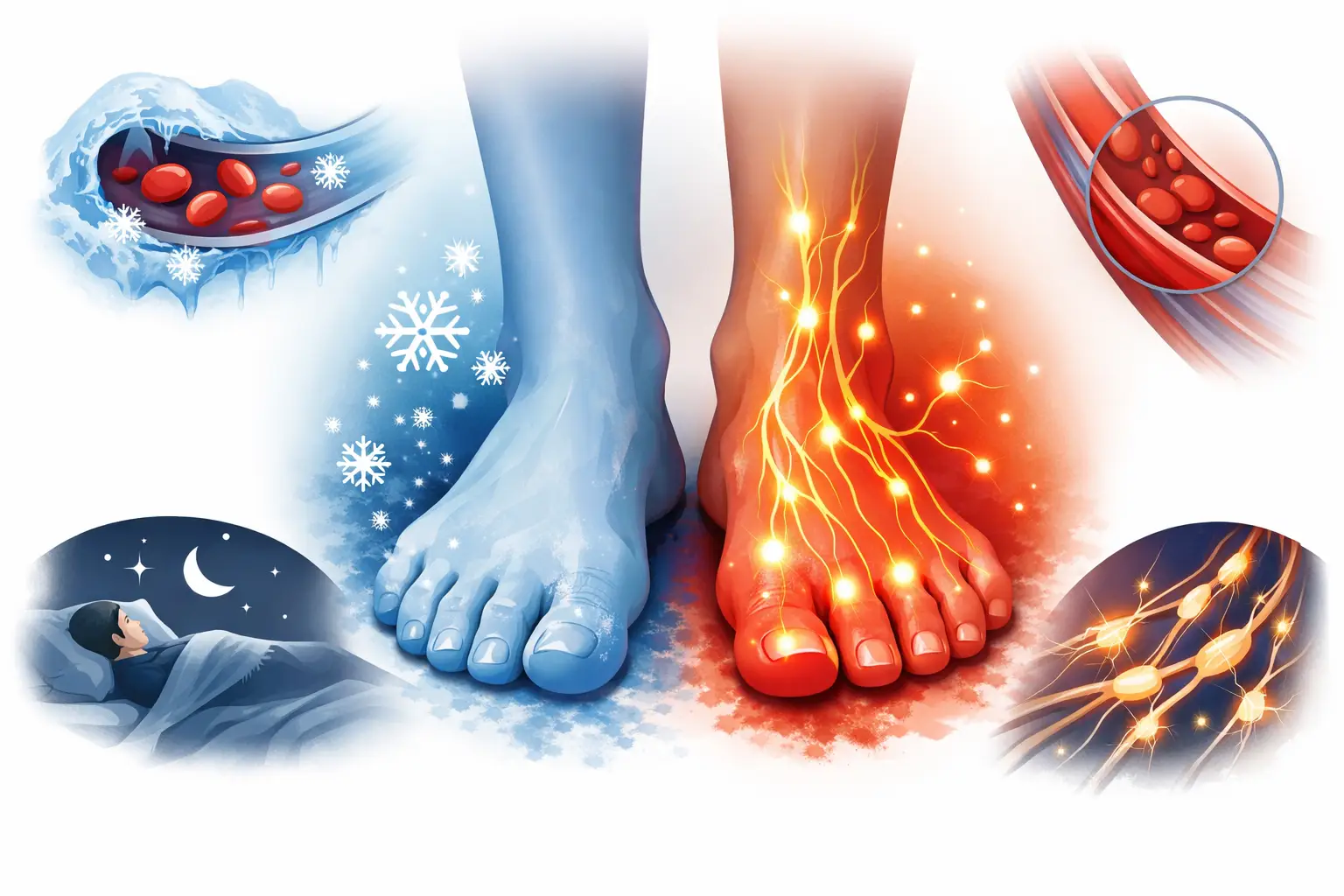
Cold feet and tingling can happen because of poor circulation, peripheral neuropathy, vitamin deficiencies, diabetes, or other nerve-related problems. Circulation issues often make the feet physically cold, pale, or painful with walking, while neuropathy changes how the feet feel, causing tingling, numbness, burning, or a cold sensation even when the feet are warm to the touch.
Cold feet that tingle can feel deceptively minor at first – easy to blame on age, cold weather, or sitting too long. But the question behind that symptom matters: is it simply poor blood flow, or could it be nerve-related? When people search for Cold Feet and Tingling: Circulation Problem or Neuropathy?, they are usually trying to sort out two very different problems that can overlap but are not the same.
For adults over 45, this distinction is especially important. Circulation problems affect oxygen delivery to the tissues. Neuropathy affects how nerves send signals, including signals for temperature, touch, pain, and position. Both can cause discomfort in the feet, yet the pattern, triggers, and associated symptoms often point in different directions.
Key Takeaways
- Cold feet and tingling are not always caused by the same problem — circulation issues and neuropathy can create similar but distinct patterns.
- Feet that feel cold but are not physically cold may point more toward nerve-related sensory changes than blood-flow problems.
- True circulation problems often affect the appearance of the feet, including color changes, slow healing, or cramping during walking.
- Peripheral neuropathy may cause burning, tingling, numbness, or balance changes, especially at night or in both feet.
- Vitamin B12 deficiency remains an important possibility, particularly in adults over 45 or people taking certain medications long-term.
Why cold feet and tingling can mean different things
Poor circulation usually means blood is not reaching the feet as efficiently as it should. This can happen because of narrowed arteries, vascular disease, smoking history, diabetes, prolonged inactivity, or simply being in a cold environment. In this setting, the feet may feel cold to the touch, look pale or bluish, and sometimes ache with walking.
Neuropathy is different. Tingling, burning, numbness, electric shock sensations, or reduced feeling in the feet usually suggest a nerve issue. The feet may feel freezing cold even when they are physically warm. That contrast matters. A person with neuropathy may say, “My feet feel ice cold at night,” but a family member touching them finds they are not actually cold.
The challenge is that circulation problems and neuropathy can coexist. Diabetes is a classic example because it can contribute to both nerve damage and blood vessel disease. That is why symptom details, health history, and physical examination matter more than any single sign.
Signs that suggest a circulation problem
When circulation is the main issue, the complaint often centers on true coldness rather than altered sensation alone. The feet may feel cold and also appear cold. Skin color changes can be a clue. Pale, bluish, or reddish discoloration, shiny skin, slow-healing cuts, and reduced hair growth on the legs or toes can all suggest reduced blood flow.
Another useful clue is timing. Circulation-related discomfort often worsens with activity if the arteries are narrowed. Some people develop calf pain, heaviness, or cramping while walking that improves with rest. This pattern deserves attention because it may point to peripheral artery disease.
Pulses also matter, although most people cannot assess them reliably at home. A clinician may check foot pulses, capillary refill, skin temperature, and blood pressure differences between the arms and ankles. If blood flow is impaired, the feet may be objectively cool and pulses may be weaker than expected.
Signs that point more toward neuropathy
Neuropathy tends to produce sensory changes that are harder to explain by temperature alone. Tingling is common, but so are burning, pins-and-needles, numbness, unusual sensitivity to bed sheets, or the sense of wearing an invisible sock. Symptoms often start gradually in the toes and move upward in a fairly symmetrical pattern.
According to the Cleveland Clinic, peripheral neuropathy commonly causes numbness, tingling, burning sensations, pain, or altered temperature perception that often begins in the feet.
Nighttime worsening is another familiar feature. Many people with peripheral neuropathy notice symptoms most when they are trying to rest. The lack of daytime distraction makes altered nerve signaling more obvious. Some describe a cold sensation mixed with burning, which sounds contradictory but is actually common in nerve-related discomfort.
Balance changes can also be part of the picture. If the nerves that help you sense the floor are not working well, walking in the dark or on uneven surfaces may feel less stable. In more advanced cases, weakness can occur, although sensory symptoms usually show up first.
Cold Feet and Tingling: Circulation Problem or Neuropathy?
How Circulation Problems and Neuropathy Often Differ
Cold, tingling feet may come from circulation problems, nerve-related changes, or sometimes a combination of both. The symptom pattern often provides useful clues.
| Feature | Circulation-Related Changes | Neuropathy-Related Changes |
|---|---|---|
| Foot temperature | Feet are physically cold to the touch | Feet may feel cold even when physically warm |
| Skin appearance | Pale, bluish, shiny, or slow-healing skin | Skin appearance may remain normal |
| Sensation pattern | Cramping, heaviness, pain during walking | Tingling, burning, numbness, electric sensations |
| Timing | May worsen with activity or cold exposure | Often more noticeable at night or during rest |
| Distribution | Sometimes affects one side more than the other | Often starts gradually in both feet |
| Associated symptoms | Color changes, wounds, weak pulses | Balance problems, hypersensitivity, reduced sensation |
Circulation problems and neuropathy can sometimes feel similar, but they do not usually behave the same way. Poor blood flow tends to affect the physical condition of the foot itself, while neuropathy changes how temperature and sensation are perceived by the nerves.
If your feet are cold to the touch, change color, cramp with walking, or develop slow-healing sores, circulation deserves a closer look. If your feet feel cold without actually being cold, and you also have numbness, burning, tingling, or reduced sensation, neuropathy becomes more likely.
Still, there are gray areas. A person can have mild vascular disease and nerve dysfunction at the same time. Someone with long-standing diabetes, kidney disease, alcohol overuse, certain autoimmune conditions, or a history of chemotherapy may have multiple contributing factors. That is why self-diagnosis has limits.
Common causes of neuropathy adults over 45 should know
Peripheral neuropathy is not one single disease. It is a symptom pattern with many possible causes. Diabetes remains one of the most recognized, but it is far from the only one. Vitamin B12 deficiency is particularly relevant because it can affect nerve health and may be overlooked, especially in older adults, people taking metformin, and those using acid-reducing medications for long periods.
Other possible contributors include thyroid disease, excessive alcohol intake, kidney dysfunction, certain medications, spinal problems, and less commonly autoimmune or inherited nerve disorders. Sometimes testing finds no clear cause, but that diagnosis should come after a thoughtful evaluation rather than as a first assumption.
For readers researching supplements, this is where caution is useful. Nutrients such as vitamin B12 may be appropriate when a deficiency or low status is present, but they are not universal fixes for every case of tingling feet. Evidence-based decisions depend on the cause, not just the symptom.
When vitamin B12 enters the conversation
B12 deserves special mention because low levels can contribute to numbness, tingling, balance issues, fatigue, and sometimes cognitive changes. Older adults are at higher risk of low B12 because absorption can decline with age. Certain gastrointestinal conditions, restrictive diets, and medication use can add to that risk.
That said, more is not always better. Taking a supplement without knowing whether B12 is actually low can muddy the picture, especially if symptoms are caused by circulation problems, diabetes, or another neurologic issue. A clinician may evaluate blood levels and, when appropriate, look at related markers to decide whether B12 insufficiency is a realistic factor.
For people researching nerve-health supplements, this is where caution matters. Vitamin B12 may help when a true deficiency or low status is involved, but tingling feet can have many possible causes beyond B12 alone.
What your doctor may look for
A medical evaluation usually starts with pattern recognition. Are symptoms in both feet or just one? Did they come on suddenly or slowly? Are the feet actually cold? Is there pain with walking? Are there skin changes, ulcers, weakness, or balance problems?
From there, the workup may include a foot exam, pulse checks, sensory testing, and blood tests for common metabolic and nutritional causes. In some cases, vascular testing is appropriate. In others, nerve studies may be considered, particularly when the diagnosis remains unclear or symptoms are progressing.
This is one reason new numbness or tingling should not be brushed aside for months. The sooner the cause is identified, the better the chance of addressing reversible contributors and reducing the risk of complications such as falls or unnoticed foot injuries.
When symptoms need urgent attention
Some foot symptoms are not watch-and-wait problems. Sudden severe pain, one foot becoming cold and pale abruptly, loss of pulses, new weakness, rapidly worsening numbness, or a non-healing wound require prompt medical attention. The same is true for symptoms paired with chest pain, shortness of breath, or stroke-like changes.
More gradual symptoms still deserve evaluation if they are persistent, worsening, affecting sleep, or changing your ability to walk safely. Many people wait until symptoms become disruptive, but earlier assessment is usually more useful than later.
Practical next steps at home
While you are arranging medical follow-up, pay attention to patterns rather than trying to label yourself. Notice whether your feet are truly cold to the touch, whether color changes occur, and whether symptoms are worse at night, with walking, or after sitting. These details can help a clinician sort out circulation from nerve-related causes.
It also helps to inspect your feet regularly, especially if numbness is present. Reduced sensation can make small injuries easy to miss. Wear well-fitting shoes, avoid heating pads directly on numb feet, and manage known risk factors such as blood sugar, smoking, and inactivity where possible.
If you are considering a nerve-health supplement, look at it as supportive nutrition rather than a diagnosis or a guarantee. The smartest next move is often a targeted medical workup followed by a more informed decision about whether ingredients such as vitamin B12 are relevant to your case.
Cold, tingling feet are common, but they are not always simple. The most useful question is not just what the symptom feels like, but what pattern it follows – because that pattern often reveals whether blood flow, nerve function, or both deserve the closer look.
Frequently Asked Questions
Can neuropathy make feet feel cold?
Yes. Peripheral neuropathy can create cold sensations even when the feet are physically warm because nerve signaling becomes altered.
How can I tell if cold feet are from circulation problems?
Circulation-related symptoms often involve objectively cold feet, color changes, slow-healing wounds, or cramping pain during walking.
Can vitamin B12 deficiency cause tingling feet?
Low vitamin B12 may contribute to numbness, tingling, balance changes, and nerve-related symptoms in some adults.
Can circulation problems and neuropathy happen together?
Yes. Conditions such as diabetes may contribute to both nerve damage and blood-vessel disease at the same time.
When should cold feet and tingling be evaluated urgently?
Sudden severe pain, rapidly worsening numbness, one foot becoming pale and cold suddenly, or symptoms paired with weakness or chest pain require urgent medical evaluation.
Medical Disclaimer: The information provided in this article is for educational purposes only and is not intended as medical advice. Dietary supplements are not a replacement for professional medical diagnosis or treatment. Always consult with a qualified healthcare professional before starting any new supplement, especially if you have pre-existing medical conditions or are taking prescription medications. Individual results may vary.

- Can Low B12 Cause Dizziness? - July 9, 2026
- B12 Deficiency and Cracked Corners of the Mouth - July 9, 2026
- Can Low B12 Cause Dry Mouth? - July 8, 2026