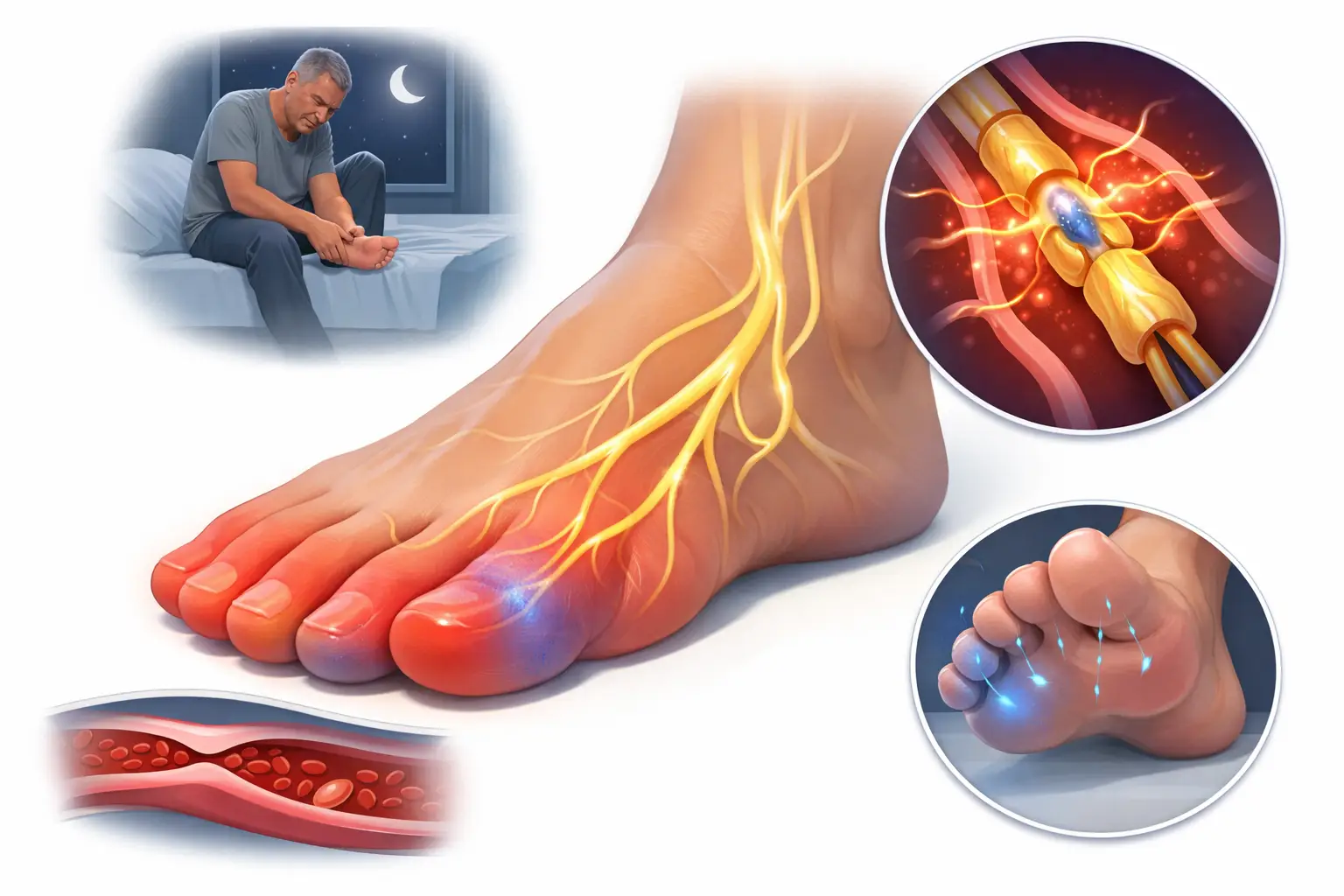
Numbness in toes can happen for several reasons, including nerve compression, peripheral neuropathy, circulation problems, diabetes, spinal issues, or vitamin B12 deficiency. Occasional numbness after pressure or awkward positioning is common, but persistent, worsening, or spreading numbness deserves medical evaluation, especially when combined with tingling, burning, weakness, balance problems, or skin color changes.
A toe that feels numb once after sitting awkwardly is usually not a crisis. Toe numbness that keeps returning, spreads, burns, tingles, or starts affecting balance is different. Numbness in Toes: When It’s Nerve-Related and When to Worry is really a question about patterns – what the symptom feels like, how long it lasts, what else comes with it, and whether nerves, circulation, or pressure may be involved.
For adults over 45, numb toes are easy to dismiss at first. Many people blame shoes, aging, or being on their feet too long. Sometimes that is true. But persistent numbness can also point to nerve irritation, vitamin deficiency, blood sugar problems, spinal issues, or reduced blood flow. The goal is not to panic. It is to know which clues matter.
Key Takeaways
- Numbness in toes is often nerve-related, especially when it comes with tingling, burning, or electric-shock sensations.
- Persistent or symmetrical numbness in both feet may raise concern for peripheral neuropathy or metabolic issues.
- Circulation problems may cause additional symptoms such as coldness, pale skin, color changes, or slow-healing sores.
- Vitamin B12 deficiency is one possible contributor, particularly in adults over 45 or those taking certain medications.
- Sudden numbness with weakness, facial drooping, or speech changes may require urgent medical evaluation.
When numbness in toes is likely nerve-related
Nerve-related numbness often does not happen in isolation. It tends to come with tingling, burning, prickling, electric-shock sensations, or unusual sensitivity to touch. Some people describe it as wearing an invisible sock or feeling like the toes are asleep even when they have been moving around.
A common nerve cause is peripheral neuropathy. This is a broad term for damage or dysfunction affecting nerves outside the brain and spinal cord. It can start gradually in the toes because the longest nerves in the body are often affected first. That is why symptoms may begin in the feet before the hands.
Peripheral neuropathy has many possible contributors. Diabetes is one of the best-known causes, but it is not the only one. Low vitamin B12, long-term alcohol use, certain medications, thyroid problems, kidney disease, and nerve compression can also play a role. In some cases, more than one factor is present at the same time.
Another nerve-related cause is a pinched nerve in the lower back. If a spinal nerve is irritated, symptoms may travel down the leg into the foot or toes. This often affects one side more than the other and may come with back pain, buttock pain, or shooting discomfort down the leg. Toe numbness caused by a back issue may worsen when walking, standing, or changing position.
Local nerve compression in the foot can also cause numbness. Tight shoes, forefoot pressure, bunion-related changes, or conditions such as Morton’s neuroma may lead to numbness or tingling in specific toes rather than the whole foot.
Signs the cause may be something other than nerves
Not every numb toe points to neuropathy. Circulation problems can reduce blood flow and create coldness, paleness, cramping, or a heavy feeling in the feet. With poor circulation, the toes may look bluish or unusually pale rather than just feel numb. Symptoms may worsen in cold temperatures or during walking.
Pressure is another common explanation. Crossing your legs for too long, kneeling, wearing narrow shoes, or standing for hours can temporarily compress nerves or blood vessels. In those cases, sensation usually returns after changing position or removing the source of pressure.
Skin and joint issues can also confuse the picture. Calluses, swelling, arthritis in the toes, or foot deformities may make the area feel strange, sore, or less responsive without causing true nerve damage. That is one reason symptom quality matters. Numbness is different from pain, stiffness, or a thickened skin sensation.
What the pattern can tell you
Common Patterns Behind Toe Numbness
The pattern of numbness often provides more useful clues than the symptom alone. Timing, location, associated sensations, and triggers may help point toward different possible causes.
| Pattern | Possible Concern | Additional Clues |
|---|---|---|
| Both feet gradually becoming numb | Peripheral neuropathy | Burning, tingling, worse at night |
| One foot or a few toes only | Local pressure or nerve compression | Tight shoes, posture, Morton’s neuroma |
| Numbness with back pain | Pinched spinal nerve | Pain radiating down the leg |
| Cold, pale, or bluish toes | Circulation-related issue | Cold sensitivity, slow healing |
| Numbness with fatigue or balance problems | Possible nutritional deficiency | Vitamin B12 may be evaluated |
| Sudden numbness with weakness or speech trouble | Urgent neurological concern | Emergency evaluation needed |
Doctors often look at the pattern before anything else. Symmetrical numbness in both feet that started gradually and is moving upward raises suspicion for peripheral neuropathy. Numbness in one foot or a few toes may suggest localized pressure, injury, or a nerve issue coming from the back.
Timing also matters. Sudden numbness after an injury is different from numbness that slowly developed over months. Symptoms that are worst at night often occur with neuropathy, while numbness triggered by certain shoes or activities may point more strongly to mechanical pressure.
Associated symptoms matter just as much. Burning feet, loss of balance, weakness, foot drop, or reduced awareness of temperature increase concern for nerve involvement. Cold toes, color changes, slow-healing sores, or calf pain during walking may point toward circulation problems instead.
When to worry about numbness in toes
Most cases are not emergencies, but some situations should not wait. Sudden numbness with weakness on one side of the body, facial drooping, confusion, or trouble speaking needs immediate emergency care because stroke is one possibility.
Urgent medical evaluation is also warranted if toe numbness appears suddenly after a back injury, comes with loss of bladder or bowel control, or causes rapidly worsening leg weakness. Those symptoms can signal significant nerve compression.
Even without an emergency, persistent numbness deserves attention if it lasts more than a few days without a clear reason, keeps recurring, or is getting worse. The same is true if you have diabetes, a history of B12 deficiency, heavy alcohol use, chemotherapy exposure, or known vascular disease. In these settings, what seems minor can be an early sign of a bigger problem.
Open sores, skin breakdown, or infections in a numb foot also require prompt care. Reduced sensation makes it easier to miss injuries, and healing may be slower if blood flow or nerve function is impaired.
The vitamin B12 connection
For this audience, vitamin B12 deserves special mention because it is one of the more relevant nutritional causes of nerve-related symptoms. B12 is involved in nerve health and red blood cell formation. Low levels can contribute to numbness, tingling, burning sensations, balance changes, fatigue, and cognitive complaints.
Older adults are at higher risk of low B12 for several reasons. Absorption can decline with age, and common medications such as metformin or acid-reducing drugs may further lower levels over time. Strict vegetarian or vegan diets can also increase risk if intake is not carefully planned.
That said, toe numbness does not automatically mean B12 deficiency, and supplements are not a diagnosis. A blood test and a clinician’s broader assessment are more useful than guessing. For readers comparing nerve-health products, this is where evidence matters. The right supplement may help correct a documented deficiency, but it should match an identified need rather than serve as a blanket fix for every numb-foot symptom.
How numbness in toes is evaluated
A medical evaluation usually starts with a history and physical exam. A clinician may ask where the numbness is, whether it is constant or intermittent, what it feels like, and what other symptoms occur with it. They may also review medications, alcohol intake, blood sugar history, back problems, and nutritional risk factors.
The physical exam often includes testing sensation, reflexes, strength, and circulation in the legs and feet. Depending on the situation, follow-up testing may include blood work for glucose, B12, thyroid function, kidney function, or other markers. Some people may need nerve testing or spine imaging, especially if weakness or one-sided symptoms are present.
This step matters because the same symptom can have very different causes. Treating a shoe-pressure problem, evaluating suspected neuropathy, and addressing a circulation issue are not the same task.
What you can do now while deciding on next steps
If the numbness is mild, new, and not tied to emergency warning signs, a few simple observations can help. Notice whether it affects one toe, several toes, or both feet. Pay attention to whether burning, tingling, weakness, pain, color changes, or temperature changes are present. Check your footwear. Shoes with a narrow toe box or high pressure across the forefoot are common offenders.
It also helps to think about timing. Did symptoms begin after a medication change, a back flare, a period of poor glucose control, or months of fatigue and low energy that might fit a deficiency pattern? A brief symptom diary can make a medical visit more productive.
Avoid self-treating numb feet with extremes such as heating pads or harsh foot soaks. If sensation is reduced, burns and skin injury are easier to miss. Gentle foot inspection is safer, especially for people with diabetes.
A practical way to think about risk
If toe numbness is brief and clearly linked to posture or tight shoes, watchful waiting is often reasonable. If it is persistent, progressive, symmetrical, or paired with tingling and burning, nerve involvement becomes more likely. If it comes with coldness, discoloration, wounds, or exercise-related leg pain, circulation deserves attention too.
The most useful question is not just, “Is this serious?” It is, “What pattern is this following, and is it changing?” Symptoms that evolve, spread, or interfere with walking and daily function should move up your priority list.
Toe numbness is common, but it should not be written off when it keeps showing up. The earlier you identify whether the issue is pressure, circulation, nerve irritation, or a possible deficiency such as low B12, the easier it is to have a more focused conversation with your healthcare professional.
Frequently Asked Questions
Is numbness in toes usually nerve-related?
Toe numbness is often related to nerve irritation or neuropathy, especially when tingling, burning, or electric-shock sensations are also present.
Can vitamin B12 deficiency cause numb toes?
Low vitamin B12 may contribute to numbness, tingling, balance changes, or burning sensations in some individuals, particularly older adults.
When should numbness in toes be treated as urgent?
Sudden numbness combined with weakness, facial drooping, confusion, or speech problems may require emergency medical evaluation.
Can poor circulation make toes feel numb?
Yes. Reduced blood flow may contribute to numbness, coldness, pale skin, color changes, or slow-healing sores in the feet or toes.
Can tight shoes cause toe numbness?
Yes. Tight footwear, prolonged pressure, or forefoot compression may temporarily irritate nerves or reduce circulation in the toes.
Medical Disclaimer: The information provided in this article is for educational purposes only and is not intended as medical advice. Dietary supplements are not a replacement for professional medical diagnosis or treatment. Always consult with a qualified healthcare professional before starting any new supplement, especially if you have pre-existing medical conditions or are taking prescription medications. Individual results may vary.

- Can Low B12 Cause Dizziness? - July 9, 2026
- B12 Deficiency and Cracked Corners of the Mouth - July 9, 2026
- Can Low B12 Cause Dry Mouth? - July 8, 2026