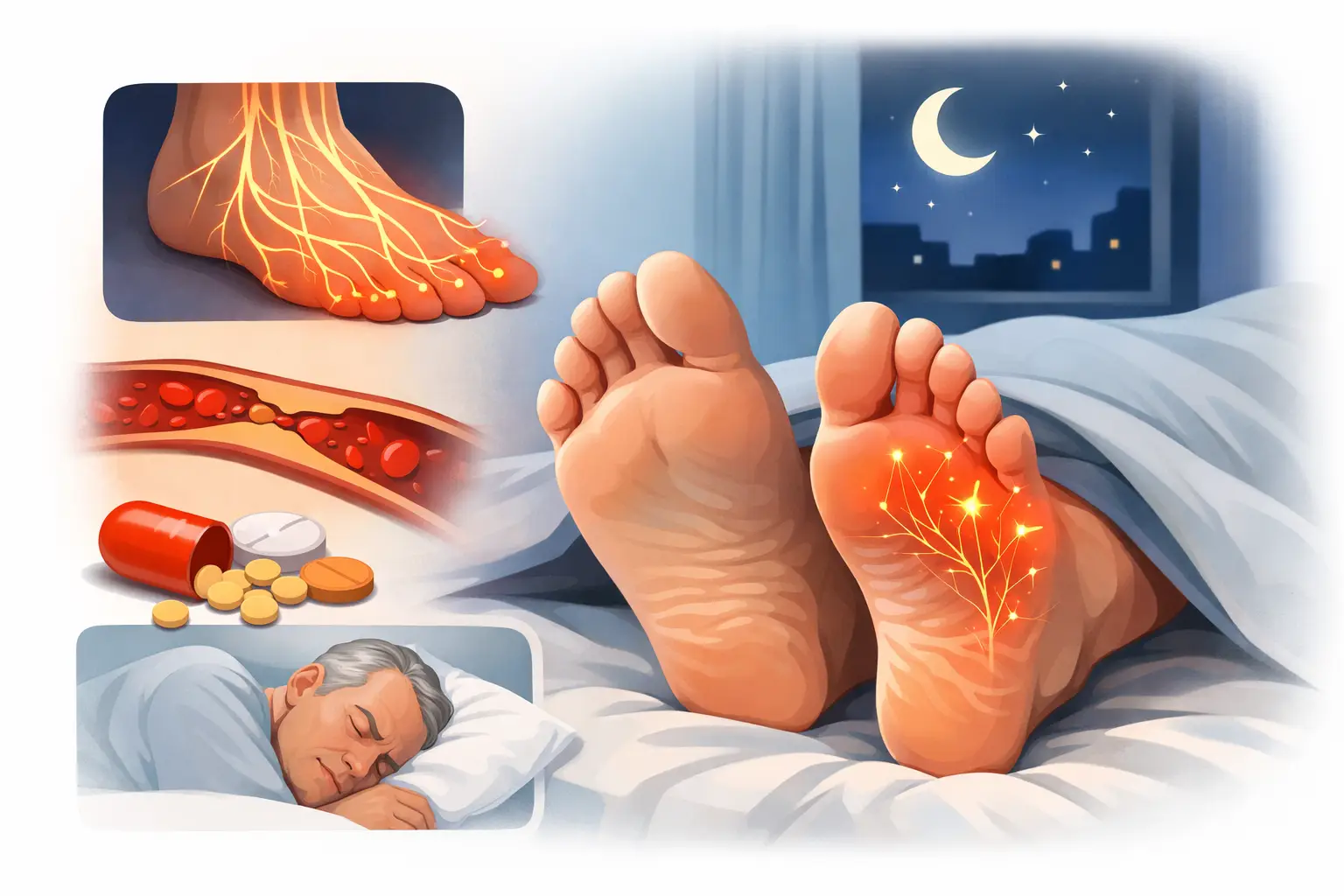
If you have ever asked, “Why Do My Feet Tingle at Night?” you are not alone. Many adults notice pins-and-needles, buzzing, burning, or mild numbness most clearly when they finally lie down. Nighttime makes these sensations harder to ignore, but the cause is not always the same. Tingling can come from something temporary, like posture or pressure on a nerve, or from an underlying issue involving nerves, circulation, blood sugar, or vitamin status.
For adults over 45, the pattern matters. A brief tingling episode after sitting awkwardly is very different from frequent nighttime symptoms that spread, worsen, or start affecting sleep. The goal is not to jump to worst-case scenarios. It is to understand the most likely explanations, know which red flags deserve prompt medical attention, and recognize when a more careful review of nerve health, circulation, and nutrition may be appropriate.
Why feet tingling often feels worse at night
Many people do not necessarily have more nerve activity at night. They simply have fewer distractions. During the day, walking, working, and background noise can make mild tingling less noticeable. At bedtime, in a quiet room, even small sensory changes can feel amplified.
Body position can also contribute. Crossing the legs, sitting for long periods, reclining with pressure behind the knee, or sleeping in a position that compresses a nerve can trigger temporary tingling. In some people, warmth from blankets may make burning or buzzing sensations feel more obvious, especially if sensitive nerves are already irritated.
There is also a practical point: symptoms related to peripheral nerves often start in the feet because the longest nerves in the body are usually affected first. That is why tingling from nerve irritation or early neuropathy commonly begins in the toes or soles before moving upward.
Common causes of tingling feet at night
| Possible Cause | Common Clues | When To Pay More Attention |
|---|---|---|
| Temporary nerve pressure | Tingling after sitting, crossing legs, or sleeping awkwardly | If symptoms happen repeatedly or do not improve with movement |
| Peripheral neuropathy | Burning, numbness, pins-and-needles, nighttime discomfort | If symptoms spread, worsen, or affect sleep and balance |
| Vitamin B12 deficiency | Tingling + fatigue, weakness, balance changes | Higher concern in adults over 45 or people using metformin |
| Blood sugar problems | Burning feet, numb toes, increased thirst or fatigue | If symptoms are persistent or paired with diabetes risk factors |
| Circulation problems | Cold feet, color changes, cramping while walking | If feet become pale, bluish, swollen, or painful |
| Back-related nerve irritation | Tingling traveling down one leg into the foot | If paired with back pain, weakness, or one-sided symptoms |
Temporary nerve pressure
One of the simplest explanations is nerve compression. If you fall asleep in an awkward position, wear tight footwear in the evening, or sit with pressure on your legs for too long, a nerve can become irritated. This usually causes a short-lived pins-and-needles feeling that improves when you change position, stand up, or gently move the foot.
Occasional episodes are common. Persistent or repetitive symptoms are less likely to be explained by posture alone.
Peripheral neuropathy
Peripheral neuropathy is a broad term for nerve damage or nerve dysfunction outside the brain and spinal cord. It often causes tingling, numbness, burning, altered sensation, or pain in the feet. Symptoms may be especially noticeable at night.
There are many possible reasons peripheral nerves become affected. Diabetes is a common one, but it is not the only cause. Alcohol use, certain medications, kidney problems, thyroid disorders, autoimmune conditions, and nutritional deficiencies can also play a role. Sometimes no clear cause is found immediately, and a clinician may need to sort through several possibilities.
Vitamin B12 deficiency and other nutrient issues
Because your site focuses on evidence-based supplement information, this is an area worth discussing carefully. Vitamin B12 helps support normal nerve function and red blood cell formation. When B12 levels are low, some people develop numbness, tingling, balance problems, fatigue, memory changes, or weakness.
Older adults may be at higher risk of low B12 due to reduced stomach acid, certain medications such as metformin or acid-suppressing drugs, digestive disorders, or limited intake of animal foods. That said, not every tingling foot symptom is caused by B12 deficiency, and self-diagnosing based on one symptom can be misleading. Low levels of other nutrients, including folate, vitamin B6, or copper, may also affect nerve health, although B6 is a special case because too little or too much can both create problems.
Blood sugar problems
Elevated blood sugar over time can injure peripheral nerves. Some people first notice subtle symptoms such as tingling in the toes, mild numbness, or burning at night before they realize blood sugar is an issue. Prediabetes can also be associated with nerve symptoms in some cases.
This matters because nighttime tingling may be one of several clues rather than an isolated complaint. Increased thirst, frequent urination, fatigue, blurry vision, or slow healing wounds would make a blood sugar evaluation more important.
Circulation problems
Poor circulation is often blamed for tingling feet, but the story is more nuanced. Reduced blood flow can cause cold feet, cramping with walking, color changes, or delayed wound healing. Tingling may occur, but true pins-and-needles symptoms are often more closely related to nerves than to circulation alone.
Still, circulation should not be ignored, especially in adults with smoking history, diabetes, high blood pressure, or high cholesterol. If the feet are consistently cold, pale, bluish, painful, or weak, a vascular assessment may be needed.
Back-related nerve irritation
Sometimes the source is not in the foot at all. A pinched nerve in the lower back can send tingling, numbness, or shooting discomfort down the leg into the foot. Spinal arthritis, disc problems, or narrowing around the spinal nerves become more common with age.
This cause becomes more likely if tingling affects one side more than the other, travels from the back or buttock downward, or worsens with certain positions.
When tingling may point to something more significant
A repeated nighttime pattern
If your feet tingle at night once in a while, the explanation may be minor. If it happens several nights a week, wakes you from sleep, or seems to be spreading, it deserves more attention. Nerves usually do not become irritated for no reason over long periods.
Burning, numbness, or balance changes
Tingling that is joined by burning pain, reduced ability to feel temperature, clumsiness, or trouble with balance raises more concern for peripheral nerve involvement. These symptoms are particularly important in older adults, because reduced foot sensation can increase fall risk and make foot injuries easier to miss.
Foot sores, skin changes, or muscle weakness
When tingling is paired with wounds that heal slowly, changes in skin color, swelling, thinning muscles, or weakness in the feet or legs, medical evaluation should not be delayed. These features suggest the problem may extend beyond harmless positional tingling.
Why Do My Feet Tingle at Night? What to check first
Start with the pattern. Is it both feet or just one? Only the toes, or the whole foot? Is it true tingling, or more like burning, crawling, or numbness? Does it improve when you stand up, stretch, or remove pressure? Tracking these details for a week or two can make a medical visit much more productive.
Review recent changes as well. New medications, increased alcohol intake, long periods of inactivity, back pain, tighter shoes, or changes in diet can all matter. If you have risk factors for low B12, diabetes, or circulation problems, those deserve mention early in the conversation.
A clinician may consider a physical exam, medication review, blood work, and sometimes nerve testing depending on the broader picture. The right next step depends on the pattern. Symmetrical tingling in both feet often points in a different direction than sudden tingling in one foot with severe back pain.
Practical steps that may help while you investigate the cause
A few simple measures can reduce discomfort, even though they do not replace medical evaluation for ongoing symptoms. Avoid prolonged leg crossing, loosen restrictive socks or footwear, and change positions if symptoms appear after sitting or reclining. Gentle evening movement, such as walking around the house or light calf and ankle stretches, may help if pressure or stiffness is contributing.
Foot care also matters. Check the skin regularly for blisters, cuts, redness, or pressure spots, especially if any numbness is present. If burning or tingling is frequent, avoid very hot foot baths or heating pads because reduced sensation can increase the risk of accidental burns.
If you suspect a nutritional issue, resist the urge to take high-dose supplements blindly. Evidence-informed supplementation is best based on the likely deficiency, the dose, and your medical context. For example, vitamin B12 may be appropriate for people with documented deficiency or clear risk factors, but more is not always better, and unrelated tingling will not necessarily improve just because a supplement is marketed for nerve support. This is one reason careful review of ingredient quality and realistic claims matters.
When to seek medical attention promptly
Some symptoms should not wait for a routine appointment. Seek prompt care if tingling comes on suddenly, affects one side with weakness, is paired with loss of bladder or bowel control, follows an injury, or occurs with severe swelling, discoloration, chest symptoms, or inability to walk normally.
For non-emergency cases, make an appointment if tingling is persistent, progressive, painful, or interfering with sleep. The earlier a pattern is identified, the easier it is to address contributing factors and avoid complications such as falls, unnoticed foot injuries, or worsening nerve dysfunction.
Nighttime foot tingling is common, but it is not one-size-fits-all. Sometimes it reflects a sleeping position. Sometimes it is an early clue pointing to nerve irritation, blood sugar issues, vitamin B12 deficiency, or another health concern that deserves a closer look. Paying attention to the pattern, rather than guessing, is often the most useful first step.
Frequently Asked Questions
Why do my feet tingle more at night?
Feet may tingle more at night because there are fewer distractions, the body is at rest, and pressure from lying down can make sensitive nerves feel more noticeable.
Can neuropathy cause tingling feet at bedtime?
Yes. Peripheral neuropathy can cause tingling, burning, numbness, or pins-and-needles sensations that often feel stronger when you are resting or trying to sleep.
Is nighttime tingling always neuropathy?
No. Nighttime tingling can also be related to vitamin B12 deficiency, blood sugar problems, poor circulation, nerve compression, or body position.
Can vitamin B12 deficiency cause pins and needles?
Yes. Low vitamin B12 can affect nerve function and may contribute to pins and needles, tingling, numbness, burning sensations, or balance issues.
Why do my toes tingle when I lie down?
Your toes may tingle when you lie down because of pressure on nerves, reduced movement, circulation changes, or an underlying nerve issue becoming more noticeable at rest.
Should I worry about tingling feet at night?
Occasional tingling may come from position or temporary pressure, but persistent, worsening, painful, or one-sided tingling should be discussed with a healthcare professional.
Medical Disclaimer: The information provided in this article is for educational purposes only and is not intended as medical advice. Dietary supplements are not a replacement for professional medical diagnosis or treatment. Always consult with a qualified healthcare professional before starting any new supplement, especially if you have pre-existing medical conditions or are taking prescription medications. Individual results may vary.
Related Articles
- Why Feet Burn More at Night
- Can Vitamin B12 Deficiency Cause Tingling?
- Why Neuropathy Gets Worse at Night
- Early Signs of Nerve Damage From Vitamin Deficiency
- Peripheral Neuropathy Causes and Relief
Sources
- National Institute of Neurological Disorders and Stroke (NINDS)
- NIH Office of Dietary Supplements — Vitamin B12
- Mayo Clinic — Peripheral Neuropathy
- Cleveland Clinic — Burning Feet Syndrome

- Can Low B12 Cause Dizziness? - July 9, 2026
- B12 Deficiency and Cracked Corners of the Mouth - July 9, 2026
- Can Low B12 Cause Dry Mouth? - July 8, 2026