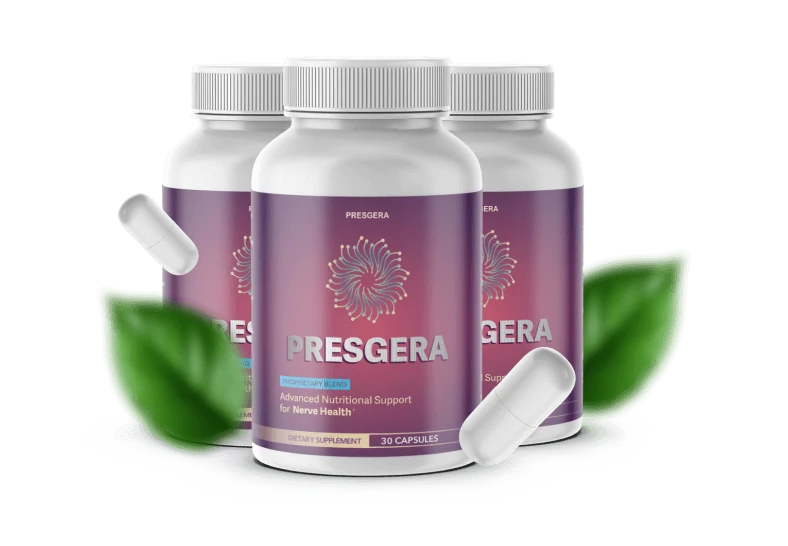
Note: This Presgera review 2026 is for informational and educational purposes only and does not replace medical advice, diagnosis, or treatment. Always talk to your doctor before starting any new supplement, especially for neuropathy or chronic pain.
When Tingling Stops Being “Just Annoying” and Starts Taking Over Your Life
It usually starts quietly. A light tingling in your feet at night. A strange “pins and needles” feeling in your hands when you’re just holding your phone. You shake it off, stretch a bit, tell yourself you probably slept in a weird position.
But then it keeps coming back.
The tingling slowly turns into burning. Numb spots appear, or that electric “zip” when you touch something or simply stand for too long. You start noticing you can’t walk around the house barefoot like you used to, because the floor suddenly feels like sandpaper or ice.
Nights get longer. Sleep gets lighter. You toss and turn, trying to find a position where your feet don’t feel like they’re buzzing. During the day, you’re tired, more irritable, and a little scared to admit how much this is affecting you.
Maybe your doctor mentioned the word neuropathy. Maybe your blood sugar is “a bit high”. Maybe your B12 is “on the low side”. Or maybe you still don’t have a clear answer — just symptoms that won’t go away.
At some point, you open your laptop and search for something like “tingling feet supplement” or “neuropathy support”. And that’s probably how you ended up here, reading a Presgera review 2026, trying to figure out if this nerve support supplement is just one more empty promise… or something that may genuinely support your nerve health over time.
This article is not a miracle story. It’s a realistic, human, and research-informed look at Presgera — what it is, what it may help with, where it falls short, and what real people might expect when they decide to try it.
What Is Presgera, Exactly?
Presgera is a dietary nerve support supplement designed to help support overall nerve health, especially in people dealing with symptoms like tingling, numbness, mild burning sensations, and general nerve discomfort.
It does not claim to be a cure for neuropathy. Instead, its formula focuses on a combination of vitamins and nutrients that may:
- Support healthy nerve function
- Help maintain the myelin sheath (the protective covering around nerves)
- Support energy production in nerve cells
- Provide antioxidant support
Many people find Presgera while looking for neuropathy support options that are non-prescription and more “nutritional” in nature. It’s marketed for mild to moderate nerve symptoms, especially when there might be nutritional or metabolic factors involved (like low B12 or blood sugar imbalances). [1]
Why Are People Talking About Presgera?
Living with nerve discomfort often means living in a constant gray area: your symptoms may be “not severe enough” for certain aggressive treatments, but they’re serious enough to affect your sleep, mood, mobility, and confidence.
People start looking for something that:
- Feels less intimidating than new prescription medications
- May work alongside what they already take (with medical approval)
- Focuses on nutritional and metabolic nerve support
That’s where Presgera enters the conversation. It brings together several nutrients that, according to general research, may support nerve health: specific forms of B vitamins, alpha-lipoic acid, acetyl-L-carnitine, and vitamin D3. [1]
Presgera Ingredients: Simple Overview of What’s Inside
Presgera’s formula focuses on a group of nutrients that have been studied, in general, for their potential role in nerve health. The goal is not to overpower the body, but to support key processes like myelin repair, energy production in nerves, and antioxidant protection. [1]
Methylcobalamin (Vitamin B12)
Methylcobalamin is an “active” form of vitamin B12. B12 is involved in maintaining the myelin sheath, the protective coating around nerves. When B12 levels are low, some people may experience tingling, numbness, or balance issues.
Using methylcobalamin (rather than synthetic forms like cyanocobalamin) may help support better absorption and direct usability in the body. Some people with B12-related nerve issues report noticeable improvements when they correct a deficiency, although the speed and extent of improvement can vary widely. [1]
Alpha-Lipoic Acid (ALA)
Alpha-lipoic acid is an antioxidant that can work in both water and fat environments in the body. It is often discussed in the context of diabetic neuropathy support, because some studies suggest it may help reduce certain nerve-related symptoms for some individuals. [1]
In Presgera, ALA is included to help support antioxidant protection around nerve tissue and potentially contribute to symptom relief in some people over time.
Benfotiamine (Vitamin B1)
Benfotiamine is a fat-soluble form of vitamin B1 (thiamine). This form may be better at entering cells and supporting energy metabolism in nerve tissue. Some research suggests it may be helpful for people with nerve issues linked to diabetes or alcohol use, although results are not universal. [1]
P5P (Active Vitamin B6)
P5P (pyridoxal-5-phosphate) is the active form of vitamin B6. B6 is involved in neurotransmitter production and the structure of nerve-related lipids. However, too much of the standard form of B6 (pyridoxine) over long periods may itself be associated with nerve symptoms.
Presgera uses P5P, which may help support B6-related functions with a lower risk of the issues seen with very high doses of basic B6. Still, overall B6 intake (from diet plus supplements) is something worth discussing with a healthcare provider. [1]
Acetyl-L-Carnitine (ALCAR)
Acetyl-L-carnitine helps transport fatty acids into mitochondria, the “energy factories” of the cell. Nerves have high energy demands, especially when they’re trying to repair or maintain themselves.
Some studies suggest that ALCAR may support nerve conduction and reduce certain types of nerve discomfort, particularly in cases like chemotherapy-induced or diabetic neuropathy, though not everyone responds the same way. [1]
Vitamin D3
Vitamin D3 plays roles in immune function, bone health, and may also be involved in nerve signaling and receptor function. Low vitamin D has been linked, in general research, to higher rates of several chronic conditions, including some nerve-related issues.
The idea behind including vitamin D3 is to support overall nerve health, especially in people who might be borderline or deficient. Since vitamin D is fat-soluble and can build up in the body, it’s important not to overdo it across different supplements without checking levels with a healthcare professional. [1]
Realistic Expectations: What Presgera May (and May Not) Do
One of the most important parts of any honest Presgera review 2026 is this: setting realistic expectations.
Presgera is:
- A nerve support supplement that may help some people with mild to moderate neuropathy symptoms, especially when nutritional or metabolic factors are involved
- Not a cure for neuropathy
- Not a quick fix — many users report that any benefits they notice tend to appear gradually, often after 2–3 months of consistent use
What users commonly report
- Some users with milder symptoms or known deficiencies (like low B12) report meaningful relief over time
- Some users with long-standing, severe, or structural nerve damage report little to no change
- Those who combine supplements with lifestyle changes (better blood sugar management, physical activity within limits, improved nutrition) often seem to do better than those who rely on a supplement alone
The company itself positions Presgera as best suited for mild to moderate neuropathy, not severe or advanced nerve damage. [1]
What It May Feel Like to Use Presgera: 3 Realistic User Scenarios
The following stories are fictional but realistic composites based on common patterns described in user feedback and general neuropathy experiences. They are not guarantees of what will happen — they’re simply meant to help you imagine what this journey might look like in real life.
1. Maria, 56 – Mild Tingling, Busy Life, Quiet Improvements
Maria works at a desk all day and loves walking in the evening. Over the last year, she began feeling a subtle tingling in her toes, especially at night. Her blood work showed a borderline B12 level, and her doctor suggested nutritional support, stress management, and following up regularly.
After researching options, Maria found Presgera. She liked that it combined several nutrients in one capsule, so she didn’t have to manage five different bottles.
The first few weeks, she didn’t notice much. She almost stopped taking it, thinking, “Here we go again, another supplement that does nothing.” But she decided to stick with it for at least three months, as suggested for neuropathy support.
Around week 6–8, she realized something subtle: the tingling was still there, but it was less sharp and less distracting when she went to bed. Her evening walks felt a bit more comfortable. She wasn’t “cured”, but the constant buzzing was dialed down enough that she felt more relaxed and less anxious.
Maria continued using Presgera, kept up with her follow-up blood tests, improved her diet, and focused on gentle daily movement. For her, Presgera felt like one supportive piece of a bigger lifestyle puzzle.
2. James, 62 – Early Diabetes, Hoping for a Turnaround
James was recently told he was in the early stages of type 2 diabetes. Along with blood sugar concerns, he had started to notice burning sensations in his feet at night. His doctor talked to him about medication, diet, exercise, and also mentioned that some patients explore nutritional nerve support supplements.
James found Presgera while looking specifically for a nerve support supplement related to diabetic neuropathy support. He decided to try it, but this time, he promised himself not to rely only on a pill. He worked with a dietitian, started walking daily, and took his prescribed medication consistently.
During the first month on Presgera, not much changed. He felt frustrated and wondered if it was a waste of money. By the end of month two, though, he noticed that some nights were better than others — less burning, less restlessness.
Over three to four months, James didn’t experience a dramatic transformation, but he did notice that the worst nights of burning became less frequent. His main wins actually came from better blood sugar control and weight loss, but he felt that Presgera might have contributed to making his nerve symptoms more manageable.
For James, Presgera was a supportive ally — not a hero, not a cure, but one more tool alongside serious lifestyle changes and medical care.
3. Linda, 68 – Long-Standing Severe Neuropathy and Deep Frustration
Linda has lived with severe neuropathy for over 10 years. Her nerve pain is intense, often sharp, sometimes burning, and has been linked to long-term diabetes and other medical factors. She has already tried multiple medications, treatments, and many different supplements.
When she discovered Presgera, she was both hopeful and tired. The formula looked solid, and she read reviews from people saying it helped their tingling and numbness. She decided to give it a try, even though she was skeptical.
After three months of consistent use, Linda didn’t feel any meaningful change. Her pain levels were still high, her mobility still limited. She felt disappointed and a little angry at herself for hoping again.
In Linda’s case, the likely reality is that her nerve damage is more advanced and structural. Nutritional support alone may not be enough to significantly change what she feels day to day. Presgera, for her, wasn’t harmful — but it also wasn’t the solution she deeply wished for.
Her story is important, because it reminds us that supplements can be helpful for some, but they have limits, especially in cases of long-standing, severe neuropathy.
Presgera Review 2026: Pros & Cons at a Glance
✅ Potential Pros
- Thoughtful formula: Combines several nutrients with general research support for nerve health (B12, B1, B6 in active forms, ALA, ALCAR, vitamin D3). [1]
- Active vitamin forms: Uses methylcobalamin (B12), benfotiamine (B1), and P5P (B6), which may support better absorption and utilization in some people. [1]
- Targets multiple pathways: Aims to support myelin health, energy metabolism in nerves, and antioxidant protection rather than focusing on only one mechanism. [1]
- Best fit for mild to moderate cases: Many positive user stories tend to come from people with less advanced neuropathy, especially when linked to nutrient or metabolic issues. [1]
- Transparent ingredient list: The dosages are clearly disclosed, which allows you and your healthcare provider to evaluate whether it fits your overall plan. [1]
⚠️ Potential Cons
- Not a cure: Presgera does not claim to cure neuropathy and is unlikely to resolve severe or structural nerve damage.
- Results are not guaranteed: Some people may feel noticeable support, while others may not experience any change, even after months.
- Requires patience: Many users report that if they do notice benefits, they tend to appear after 6–12 weeks of consistent use, not within days. [1]
- Cost vs. individual ingredients: Some users feel it can be more expensive than buying the main components separately, though others value the convenience of a single formula. [1]
- Potential interactions: Ingredients like alpha-lipoic acid and B vitamins can interact with certain medications or conditions, so professional guidance is important. [1]
- Less effective in severe cases: People with long-term, advanced neuropathy often report limited or no noticeable improvement. [1]
Safety, Side Effects & Important Disclaimers
Presgera is generally described as well-tolerated when used as directed by adults. However, “generally well-tolerated” does not mean “risk-free” or “appropriate for everyone”. [1]
Possible Side Effects (Reported or Theoretical)
While many users report no serious side effects, some people may experience:
- Mild digestive discomfort (such as nausea or stomach upset)
- Headache or mild dizziness
- Changes in blood sugar levels, especially due to alpha-lipoic acid in those with diabetes or on glucose-lowering medications
Who Should Be Especially Cautious
You should talk to your doctor, and possibly avoid Presgera or only use it under close supervision, if you:
- Have diabetes and take medications that affect blood sugar
- Take medications for seizures, blood clotting, or chemotherapy
- Are pregnant, breastfeeding, or planning pregnancy
- Have severe kidney or liver disease
- Have a history of vitamin B6-related neuropathy or are already taking high-dose B6 supplements
Not a Substitute for Medical Care
This cannot be repeated enough: Presgera is a neuropathy support supplement, not a medical treatment, diagnosis, or cure.
If you’re experiencing symptoms like:
- Sudden or rapidly worsening numbness or weakness
- Severe burning or stabbing pain
- Loss of balance or coordination
- Changes in bladder or bowel control
You should seek medical evaluation promptly. A supplement cannot replace a full medical assessment in these situations.
This Presgera review 2026 is informational only. It should not be used as a basis for self-diagnosis or self-treatment without professional guidance.
Final Verdict: Is Presgera Worth Considering in 2026?
When you strip away the hype, marketing language, and unrealistic promises that often surround nerve supplements, Presgera lands in a fairly honest middle ground.
On one hand, it offers:
- A research-aligned combination of nutrients commonly discussed for nerve health support
- Active forms of key B vitamins, plus ALA, ALCAR, and vitamin D3
- A transparent formula that many people with mild to moderate symptoms feel comfortable trying
On the other hand, it clearly has limits:
- It will not reverse severe, long-standing, or structurally advanced neuropathy
- Results vary widely — some users notice meaningful relief, others feel no change
- It demands consistency, patience, and realistic expectations over at least 2–3 months
If you are someone with mild to moderate neuropathy symptoms, possibly linked to nutritional or metabolic issues, and you’re already working with a healthcare provider, Presgera may be a reasonable option to discuss as part of a broader nerve health strategy. [1]
If your neuropathy is severe, long-standing, or deeply connected to complex medical conditions, it may be less likely to bring noticeable relief on its own — and any decisions should be made very carefully with your medical team.
Ultimately, Presgera is not about miracle cures. It’s about incremental support. For some people, that support may be enough to make tingling and burning less intrusive. For others, it may not move the needle at all. The most important step is to stay informed, stay skeptical in a healthy way, and always keep your doctor in the loop when you’re considering any new nerve support supplement.
If you do decide to try Presgera, consider giving it enough time (often at least 60–90 days), monitor your symptoms honestly, and combine it with the foundations that matter most: blood sugar management if applicable, nutrient-rich food, movement adapted to your reality, and regular medical follow-up.
Frequently Asked Questions About Presgera
Below are the most common questions people ask before trying Presgera for nerve health support, tingling, numbness, burning sensations, and neuropathy-related discomfort.
Does Presgera really work for neuropathy?
How long does it take for Presgera to start working?
Is Presgera a scam or a legitimate supplement?
Can Presgera reverse nerve damage?
What are the main ingredients in Presgera?
- Methylcobalamin — Vitamin B12
- Benfotiamine — Vitamin B1
- P5P — Active Vitamin B6
- Alpha-Lipoic Acid
- Acetyl-L-Carnitine
- Vitamin D3
Are there any side effects associated with Presgera?
Who should consider taking Presgera?
Can Presgera help diabetic neuropathy?
Can I take Presgera with vitamin B12 supplements?
Is Presgera worth buying in 2026?

- Can Low B12 Cause Dizziness? - July 9, 2026
- B12 Deficiency and Cracked Corners of the Mouth - July 9, 2026
- Can Low B12 Cause Dry Mouth? - July 8, 2026