Quick Answer:
Yes, hypothyroidism can contribute to neuropathy, particularly when thyroid hormone levels remain low for an extended period. Some people develop tingling, numbness, burning sensations, weakness, slowed reflexes, or nerve compression syndromes such as carpal tunnel syndrome. However, thyroid disease is not among the most common causes of neuropathy, which is why additional testing is often needed.
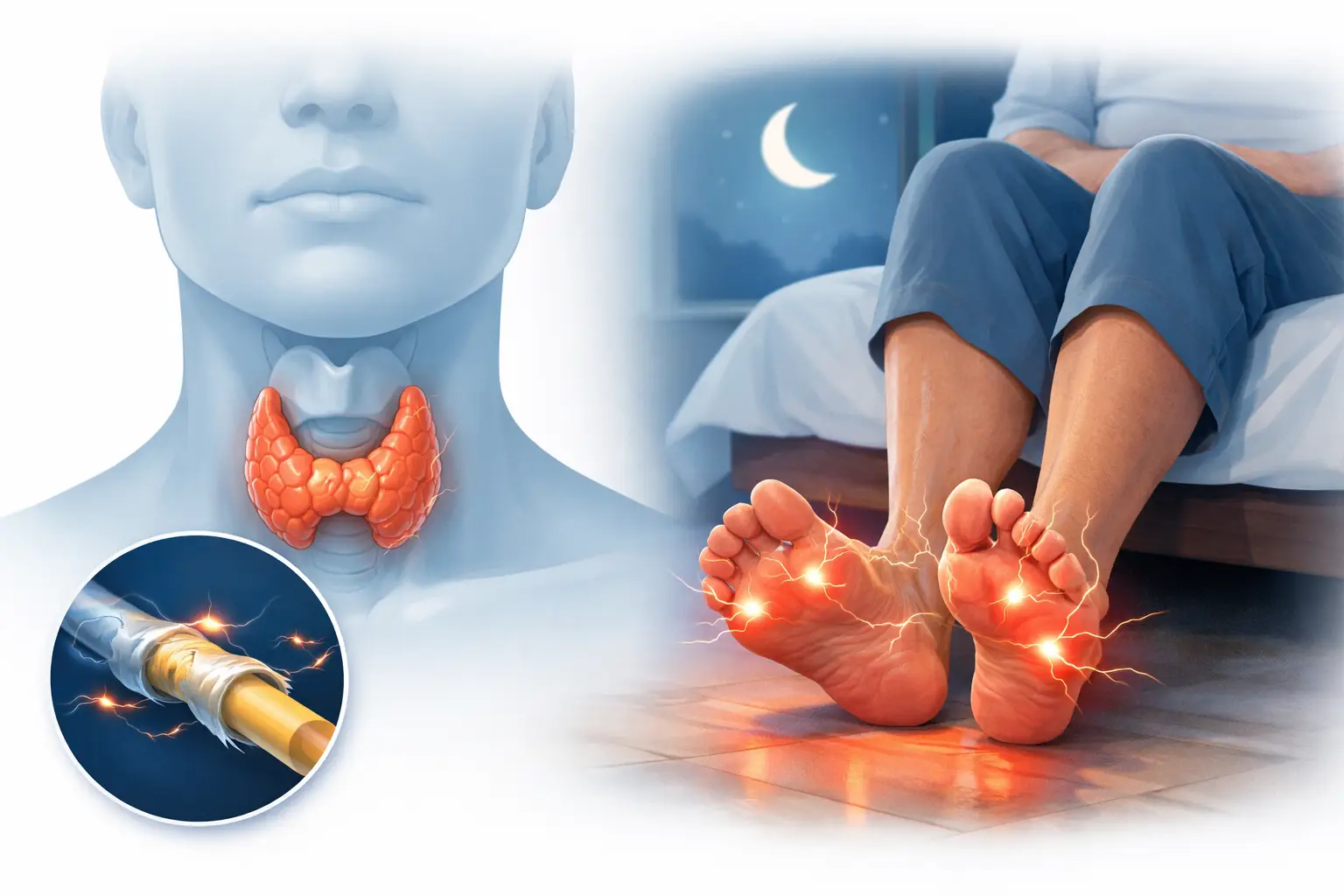
Tingling toes, burning feet, numb fingers – many people assume those symptoms must come from diabetes or poor circulation. But can hypothyroidism cause neuropathy? In some cases, yes. Low thyroid hormone can contribute to nerve-related symptoms, especially when it is untreated, longstanding, or severe. The connection is real, but it is not the most common cause of neuropathy, which is why proper testing matters.
For adults over 45, this question often comes up after months of vague symptoms that are easy to dismiss. Fatigue, weight gain, constipation, dry skin, cold intolerance, muscle aches, and slowed thinking can point toward an underactive thyroid. At the same time, tingling, numbness, pain, or weakness may suggest nerve involvement. When both sets of symptoms appear together, it makes sense to ask whether they are linked.
How hypothyroidism may affect the nerves
Hypothyroidism means the thyroid gland does not produce enough thyroid hormone to meet the body’s needs. Those hormones help regulate metabolism, tissue repair, nerve signaling, and muscle function. When levels stay low for long enough, several changes can affect the peripheral nerves.
One possible mechanism is fluid retention and tissue swelling. In hypothyroidism, mucopolysaccharides and fluid can build up in tissues, which may increase pressure around nerves. This is one reason carpal tunnel syndrome is more common in people with low thyroid function. The median nerve can become compressed at the wrist, causing numbness, tingling, and hand weakness.
Another issue is slower nerve conduction. Thyroid hormone helps maintain normal nerve and muscle activity. When hormone levels are low, nerve signals may travel less efficiently, and muscle reflexes can slow down. In more advanced or prolonged hypothyroidism, this can contribute to a more generalized peripheral neuropathy, not just a compression problem like carpal tunnel.
That said, the severity varies widely. Some people with hypothyroidism never develop nerve symptoms. Others have mild tingling that improves once thyroid levels are corrected. A smaller group may have persistent symptoms because more than one factor is involved.
Key Takeaways
- Hypothyroidism can contribute to nerve-related symptoms.
- Carpal tunnel syndrome is one of the most common nerve problems linked to low thyroid function.
- Vitamin B12 deficiency can mimic or coexist with hypothyroidism.
- Persistent numbness, tingling, burning feet, or weakness deserve medical evaluation.
- Treating hypothyroidism may improve nerve symptoms over time.
- Not every neuropathy symptom in someone with hypothyroidism is caused by the thyroid itself.
What neuropathy symptoms can look like
Hypothyroidism Symptoms vs Neuropathy Symptoms
| Symptom | Common in Hypothyroidism | Common in Neuropathy |
|---|---|---|
| Fatigue | ✓ | Possible |
| Cold Intolerance | ✓ | Rare |
| Tingling | Possible | ✓ |
| Numbness | Possible | ✓ |
| Burning Feet | Uncommon | ✓ |
| Weight Gain | ✓ | No |
Neuropathy is a broad term. It describes nerve damage or nerve dysfunction, usually in the peripheral nerves outside the brain and spinal cord. Symptoms depend on which nerves are affected.
In hypothyroidism-related cases, symptoms may include numbness, tingling, burning, pins-and-needles sensations, hand weakness, reduced grip strength, muscle cramps, slowed reflexes, or aching discomfort in the legs and feet. Some people notice symptoms worse at night. Others describe heaviness, clumsiness, or a sensation that their feet feel padded or less responsive.
The pattern matters. Compression neuropathies, such as carpal tunnel syndrome, often affect the hands in a more localized way. A generalized peripheral neuropathy may start in the feet and gradually move upward. If symptoms affect balance, walking, or fine motor tasks, medical evaluation should not be delayed.
Can hypothyroidism cause neuropathy by itself?
Yes, but there is an important caveat: hypothyroidism is a recognized but less common cause of peripheral neuropathy compared with diabetes, alcohol misuse, vitamin deficiencies, certain medications, kidney disease, or nerve compression syndromes. In real-world practice, thyroid disease may be one piece of the picture rather than the whole explanation.
This is especially relevant for adults already taking medications, managing blood sugar changes, or dealing with nutritional issues that can also affect nerves. Vitamin B12 deficiency deserves particular attention because it can cause numbness, tingling, burning feet, poor balance, and cognitive changes. Those symptoms can overlap with hypothyroidism enough that one condition may mask the other.
For that reason, a clinician may not stop at thyroid testing alone. If the symptoms fit neuropathy, they may also look at B12 status, blood sugar, folate, kidney function, medication history, alcohol use, and other possible causes. That broader view is often what prevents delays in getting the right answer.
When the thyroid-nerve connection is more likely
Factors That Make Thyroid-Related Neuropathy More Likely
| Risk Factor | Why It Matters |
|---|---|
| Longstanding untreated hypothyroidism | Greater chance of nerve involvement |
| Hashimoto’s thyroiditis | May coexist with other autoimmune conditions |
| Carpal tunnel syndrome | Common nerve compression associated with hypothyroidism |
| Vitamin B12 deficiency | Can worsen or mimic neuropathy symptoms |
The chance that hypothyroidism is contributing to neuropathy tends to be higher when thyroid hormone levels have been low for a long time, symptoms of hypothyroidism are clearly present, or treatment has been inconsistent. People with more severe hypothyroidism may be more likely to develop nerve compression or generalized nerve dysfunction.
It is also more plausible when nerve symptoms appeared alongside classic thyroid symptoms rather than years earlier. Even then, timing is not proof. Two common conditions can happen at once, especially in midlife and later adulthood.
Autoimmune thyroid disease can add another layer. Hashimoto’s thyroiditis is a common cause of hypothyroidism, and people with one autoimmune condition may be at higher risk for others. Depending on the clinical picture, a doctor may consider whether another autoimmune or inflammatory issue could also be affecting the nerves.
How doctors evaluate suspected neuropathy in hypothyroidism
The workup usually starts with a careful history and physical exam. A clinician will want to know where the symptoms started, whether they are constant or intermittent, whether they are painful, and whether weakness, balance changes, or falls are present. They may test reflexes, sensation, and muscle strength.
Blood work often includes thyroid-stimulating hormone, free T4, and sometimes thyroid antibodies. If neuropathy is suspected, additional labs may include vitamin B12, methylmalonic acid in certain cases, blood glucose or A1C, kidney function, and other tests based on symptoms and risk factors.
If the diagnosis is unclear, nerve conduction studies and electromyography may help. These tests can show whether nerve signals are slowed, whether there is a compression neuropathy such as carpal tunnel syndrome, or whether another neuromuscular issue is present.
This distinction matters because not all numbness or burning is neuropathy, and not all neuropathy comes from the thyroid. Spinal problems, vascular issues, medication side effects, and deficiencies can cause similar complaints.
Does treatment help the nerve symptoms?
If hypothyroidism is contributing to the problem, restoring normal thyroid hormone levels may help over time. For some people, tingling, numbness, and weakness improve after thyroid treatment is adjusted appropriately. Improvement may take weeks to months rather than days, and the degree of recovery depends partly on how long the nerve symptoms have been present.
If nerve compression has developed, treatment may also involve wrist splints, activity changes, physical therapy, or further evaluation. If another cause is present at the same time, that also needs to be addressed. For example, a person with low thyroid function and low vitamin B12 may not feel fully better if only one issue is corrected.
This is where realistic expectations are useful. Thyroid treatment can correct hormone levels, but it does not guarantee immediate reversal of nerve symptoms, especially if the neuropathy has become established. Persistent or worsening symptoms deserve follow-up rather than assumptions.
Where vitamin B12 fits into the conversation
For readers researching nerve health, vitamin B12 often comes up for good reason. B12 is essential for red blood cell formation, neurological function, and myelin integrity. Deficiency can produce numbness, tingling, burning feet, poor balance, memory changes, and fatigue. In older adults, low stomach acid, certain medications, and absorption problems can increase risk.
That does not mean every neuropathy symptom points to B12 deficiency or that a supplement is the answer without testing. It does mean B12 status is one of the most practical and medically relevant things to review when nerve symptoms are present. An evidence-focused site such as VitB12Supplement.com is most helpful when it keeps that distinction clear: supplements may support nutritional adequacy when needed, but they should not replace diagnosis.
When to seek prompt medical attention
Numbness and tingling are common, but some patterns should be evaluated sooner rather than later. New weakness, trouble walking, loss of balance, rapidly worsening symptoms, foot wounds you cannot feel, or numbness on only one side of the body all warrant medical attention. Severe fatigue, swelling, slowed heart rate, or marked mental slowing alongside thyroid symptoms also deserve prompt care.
Even milder symptoms should not be ignored if they persist. The earlier the cause is identified, the better the chance of preventing progression.
⚠ Important
New weakness, worsening balance problems, repeated falls, rapidly progressing numbness, or symptoms affecting only one side of the body should not automatically be blamed on hypothyroidism. These patterns may indicate another neurological condition requiring prompt evaluation.
The practical takeaway
So, can hypothyroidism cause neuropathy? Yes, it can, particularly through nerve compression and, less commonly, more generalized peripheral nerve dysfunction. But it is rarely the only possibility worth considering. In adults over 45, overlapping causes such as vitamin B12 deficiency, blood sugar problems, medication effects, or spine-related nerve issues are common enough that a broader evaluation usually makes the most sense.
If you have both thyroid symptoms and nerve symptoms, bring both up at the same appointment. That simple step often leads to a more complete workup and fewer missed clues. The most useful next move is not guessing which condition is responsible – it is getting the right testing so your treatment plan matches the real cause.
Frequently Asked Questions
Can hypothyroidism cause neuropathy?
Yes. Longstanding or untreated hypothyroidism can contribute to nerve dysfunction and neuropathy symptoms in some individuals.
What does thyroid-related neuropathy feel like?
Symptoms may include tingling, numbness, burning sensations, hand weakness, slowed reflexes, muscle cramps, and balance difficulties.
Can hypothyroidism cause tingling in the hands and feet?
Yes. Tingling and numbness may occur due to nerve compression or generalized nerve dysfunction associated with low thyroid hormone levels.
Can treating hypothyroidism improve neuropathy symptoms?
Many people experience improvement after thyroid hormone levels are corrected, although recovery may take weeks or months.
Can vitamin B12 deficiency occur together with hypothyroidism?
Yes. Vitamin B12 deficiency can coexist with hypothyroidism and may produce similar neurological symptoms.
Medical Disclaimer: The information provided in this article is for educational purposes only and is not intended as medical advice. Dietary supplements are not a replacement for professional medical diagnosis or treatment. Always consult with a qualified healthcare professional before starting any new supplement, especially if you have pre-existing medical conditions or are taking prescription medications. Individual results may vary.

- Can Low B12 Cause Dizziness? - July 9, 2026
- B12 Deficiency and Cracked Corners of the Mouth - July 9, 2026
- Can Low B12 Cause Dry Mouth? - July 8, 2026