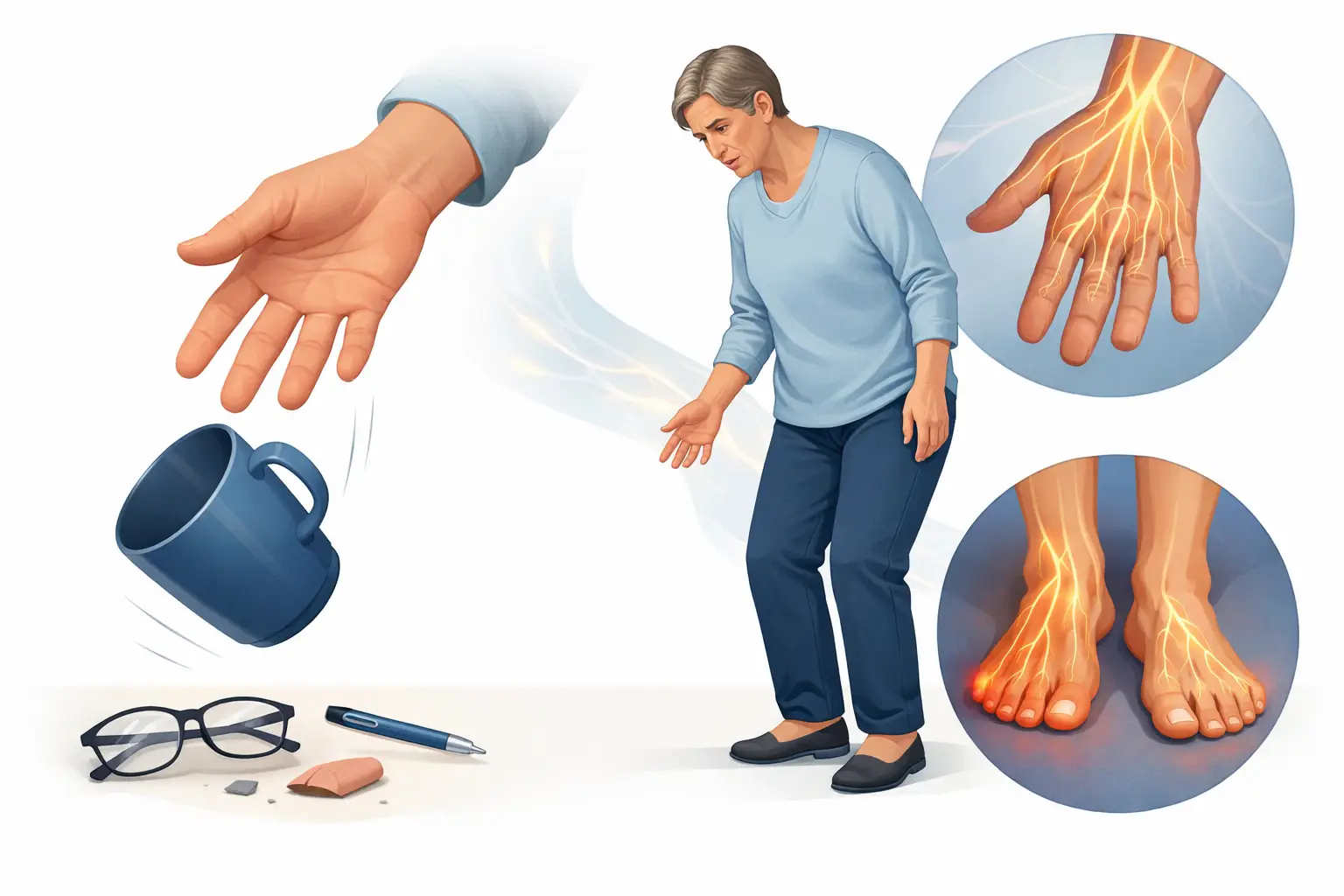
Dropping things more often can happen because of hand weakness, numbness, poor coordination, nerve compression, arthritis, medication effects, or neurological problems. Repeated episodes, especially when combined with tingling, weakness, pain, or balance changes, deserve medical attention.
If you are dropping things more often, it is easy to brush it off as clumsiness, stress, or getting older. But when it starts happening repeatedly – a coffee mug slipping, keys falling from your hand, trouble holding a pen, or a phone sliding out of your grip – it deserves a closer look. Changes in grip strength, hand sensation, coordination, and nerve function can all play a role, especially for adults over 45.
This symptom is not a diagnosis by itself. In some cases, the cause is minor and temporary, such as hand fatigue or poor sleep. In others, it may be related to nerve compression, medication effects, vitamin deficiencies, circulation changes, or an underlying neurological problem. The key is to notice the pattern rather than focusing on a single dropped object.
Key Takeaways
- Dropping objects repeatedly may involve weakness, numbness, coordination changes, or reduced grip awareness.
- Carpal tunnel syndrome and ulnar nerve compression are common nerve-related causes.
- Peripheral neuropathy, arthritis, medication effects, and spinal problems may also contribute.
- Vitamin B12 deficiency, diabetes, thyroid problems, and alcohol overuse are important medical considerations.
- Sudden weakness, facial symptoms, speech changes, or rapidly worsening coordination deserve urgent medical attention.
Why dropping things more often happens
Holding and controlling an object sounds simple, but it depends on several body systems working together. Your brain has to send the right signals. Your nerves must carry those signals to the hand. Your muscles need enough strength to respond. At the same time, sensory nerves in the fingers tell the brain how tightly you are gripping the object.
If any part of that system is off, your grip can become less reliable. That may show up as weakness, numbness, tingling, delayed reaction time, stiffness, or poor fine motor control. Some people describe it as objects seeming to “fall out” of their hands. Others say they feel like they are not fully aware of what their fingers are doing.
That difference matters. A person with true weakness may struggle to open jars, turn doorknobs, or carry grocery bags. A person with sensory loss may have normal strength but reduced awareness of pressure and position, making it easier to drop small items.
Common causes of dropping things more often
One of the most common explanations is nerve compression in the arm or hand. Carpal tunnel syndrome is a familiar example. It affects the median nerve and can cause numbness, tingling, hand weakness, and difficulty gripping objects. Symptoms often worsen at night or after repetitive hand use. Ulnar nerve compression, which affects the ring and little fingers, can also lead to clumsiness and weaker hand control.
Peripheral neuropathy is another possible cause. This term refers to damage or dysfunction in the peripheral nerves, often beginning in the feet but sometimes affecting the hands as well. Depending on the pattern, a person may notice tingling, burning, numbness, sensitivity changes, or reduced coordination. Diabetes is a well-known contributor, but it is not the only one. Alcohol use, certain medications, autoimmune conditions, and nutritional deficiencies can also be involved.
Vitamin B12 deserves special attention in adults 45+, particularly if numbness, tingling, fatigue, balance changes, or memory concerns are also present. B12 plays an important role in nerve health and red blood cell production. Low levels may contribute to neurological symptoms in some people, including reduced sensation or impaired coordination. That does not mean every case of hand clumsiness is caused by low B12, but it is one reason clinicians may order lab testing when symptoms are unexplained.
Arthritis can also contribute, especially osteoarthritis at the base of the thumb or in the finger joints. In that case, the issue may be pain, stiffness, and reduced hand mechanics rather than nerve damage. People sometimes notice they avoid gripping firmly because it hurts, which increases the chance of dropping things.
Medication side effects are another overlooked factor. Some drugs can cause dizziness, sedation, tremor, muscle weakness, or numbness. If the symptom started after a medication change, that timing is worth mentioning to a healthcare professional.
Less commonly, dropping objects may be related to disorders that affect the brain, spinal cord, or muscles. That includes conditions such as cervical spine problems, stroke, multiple sclerosis, or motor neuron disease. These are not the most likely explanation for occasional hand clumsiness, but they become more concerning when symptoms are progressive, one-sided, or accompanied by other neurological changes.
Symptoms that help narrow down the cause
What Dropping Objects May Suggest
The symptoms occurring alongside hand clumsiness often provide important clues about the underlying cause.
| Symptom Pattern | Possible Explanation | Examples |
|---|---|---|
| Numbness and tingling | Nerve compression or neuropathy | Carpal tunnel syndrome |
| Hand pain and stiffness | Joint-related problems | Thumb arthritis or osteoarthritis |
| Weak grip strength | Muscle or nerve weakness | Difficulty opening jars |
| Symptoms in both hands and feet | Peripheral neuropathy | Diabetes or vitamin deficiency |
| Neck pain with arm symptoms | Cervical nerve involvement | Cervical radiculopathy |
| Sudden one-sided weakness | Possible neurologic emergency | Stroke-related symptoms |
The most useful clue is usually what happens along with the dropping. If your hand feels numb or tingly, nerve involvement becomes more likely. If your hand is painful and stiff, joint problems may be part of the picture. If you feel weak in the shoulder, arm, or hand, the source may be higher up in the neck or nervous system.
Pay attention to whether the problem affects one hand or both. One-sided symptoms can point toward nerve compression, joint disease, or a central nervous system issue. Symptoms in both hands may suggest a systemic cause such as peripheral neuropathy, medication effects, or a nutritional problem.
Timing matters too. Symptoms that flare after typing, driving, knitting, or sleeping in certain positions often suggest compression-related nerve problems. Symptoms that steadily worsen over weeks or months deserve more prompt evaluation.
When dropping things more often may be a red flag
There are times when this symptom should not wait. Sudden hand weakness, facial drooping, speech trouble, severe headache, confusion, or arm numbness on one side can signal a medical emergency such as stroke. In that setting, immediate care is critical.
You should also seek prompt evaluation if dropping things more often is paired with rapidly worsening weakness, visible muscle wasting, major balance problems, loss of bladder or bowel control, or new neck pain with arm symptoms. These patterns may suggest more significant nerve or spinal involvement.
Even without emergency signs, a symptom that is persistent, progressive, or interfering with daily life should be assessed. Repeatedly dropping cookware, medications, or sharp objects is not just frustrating. It can become a real safety issue.
How clinicians evaluate the problem
A medical evaluation usually starts with history and physical examination. The clinician may ask when the symptom began, whether it affects one or both hands, what sensations you notice, and whether there is pain, stiffness, neck discomfort, or weakness elsewhere.
The physical exam often includes grip testing, reflexes, hand sensation, range of motion, and simple coordination tasks. In some cases, blood work may be ordered to look for contributors such as vitamin B12 deficiency, blood sugar problems, thyroid issues, or other metabolic concerns.
If nerve compression or neuropathy is suspected, nerve conduction studies or electromyography may be considered. If the neck or central nervous system seems involved, imaging may be appropriate. Not everyone needs extensive testing, but recurring unexplained symptoms usually deserve more than guesswork.
What you can do now
While medical evaluation helps identify the cause, it also helps to make practical adjustments. Notice whether certain activities trigger the symptom. Repetitive wrist positions, prolonged elbow bending, poorly controlled blood sugar, alcohol excess, and poor sleep can all make nerve-related symptoms harder to ignore.
If numbness or tingling is part of the picture, avoid assuming it is just aging. Age can increase the likelihood of nerve and joint changes, but it should not be used as a catch-all explanation. Earlier assessment can sometimes prevent a minor problem from becoming more disruptive.
Nutrition is another reasonable area to review, especially if your diet has changed, you have digestive conditions, or you take medications that may affect nutrient absorption. For some adults, discussing vitamin B12 status with a clinician makes sense when nerve-related symptoms are present. A supplement may be appropriate in certain cases, but it should match the actual need, the form being considered, and the broader clinical picture. More is not always better, and self-treating a neurological symptom without evaluation can delay the right diagnosis.
Supportive measures depend on the likely cause. Wrist splints may help some people with nighttime carpal tunnel symptoms. Hand therapy or physical therapy can be useful when weakness, overuse, or joint mechanics are involved. Better management of blood sugar and alcohol intake may matter when peripheral nerve function is affected. The right approach is highly individual.
Should supplements be part of the conversation?
For readers researching nerve-health support, supplements often come up early. That is understandable, particularly when symptoms seem mild and people want a practical next step. Still, supplements should be viewed as supportive tools, not a substitute for proper evaluation.
Vitamin B12 is one of the better-known nutrients linked with nerve function, but the evidence-informed question is not whether B12 is “good for nerves” in a general sense. It is whether low or borderline status is actually contributing to your symptoms. That is where testing, medication review, and medical context matter.
The NIH Office of Dietary Supplements explains that vitamin B12 plays an important role in neurological function and nervous system health.
Other products marketed for nerve health may include B-complex blends, alpha-lipoic acid, or benfotiamine. These ingredients are often discussed in consumer health spaces, but results vary, formulations differ, and quality matters. For a cautious health consumer, the better strategy is to start with the symptom pattern, identify likely causes, and then evaluate whether any supplement is reasonable for your situation.
Dropping objects once in a while happens to everyone. Dropping things more often, especially with numbness, tingling, weakness, pain, or balance changes, is different. Treat it as useful information from your body. The sooner you identify the pattern, the easier it is to have a more informed conversation with your clinician about what may be driving it.
Frequently Asked Questions
Why am I dropping things more often?
Hand clumsiness may relate to weakness, numbness, nerve compression, arthritis, medication effects, or neurological changes affecting coordination and grip control.
Can carpal tunnel syndrome cause people to drop objects?
Yes. Carpal tunnel syndrome may reduce grip reliability and hand sensation, especially when numbness and tingling affect the thumb, index, and middle fingers.
Can vitamin B12 deficiency affect hand coordination?
Low vitamin B12 may contribute to numbness, tingling, balance changes, reduced sensation, and neurologic symptoms that affect coordination in some adults.
When is dropping objects more concerning?
Sudden weakness, facial drooping, speech trouble, rapidly worsening symptoms, or major coordination loss deserve urgent medical evaluation.
Can arthritis make it easier to drop things?
Yes. Arthritis may reduce grip strength and hand mechanics because of pain, stiffness, and reduced joint function.
Medical Disclaimer: The information provided in this article is for educational purposes only and is not intended as medical advice. Dietary supplements are not a replacement for professional medical diagnosis or treatment. Always consult with a qualified healthcare professional before starting any new supplement, especially if you have pre-existing medical conditions or are taking prescription medications. Individual results may vary.

- Can Low B12 Cause Dizziness? - July 9, 2026
- B12 Deficiency and Cracked Corners of the Mouth - July 9, 2026
- Can Low B12 Cause Dry Mouth? - July 8, 2026