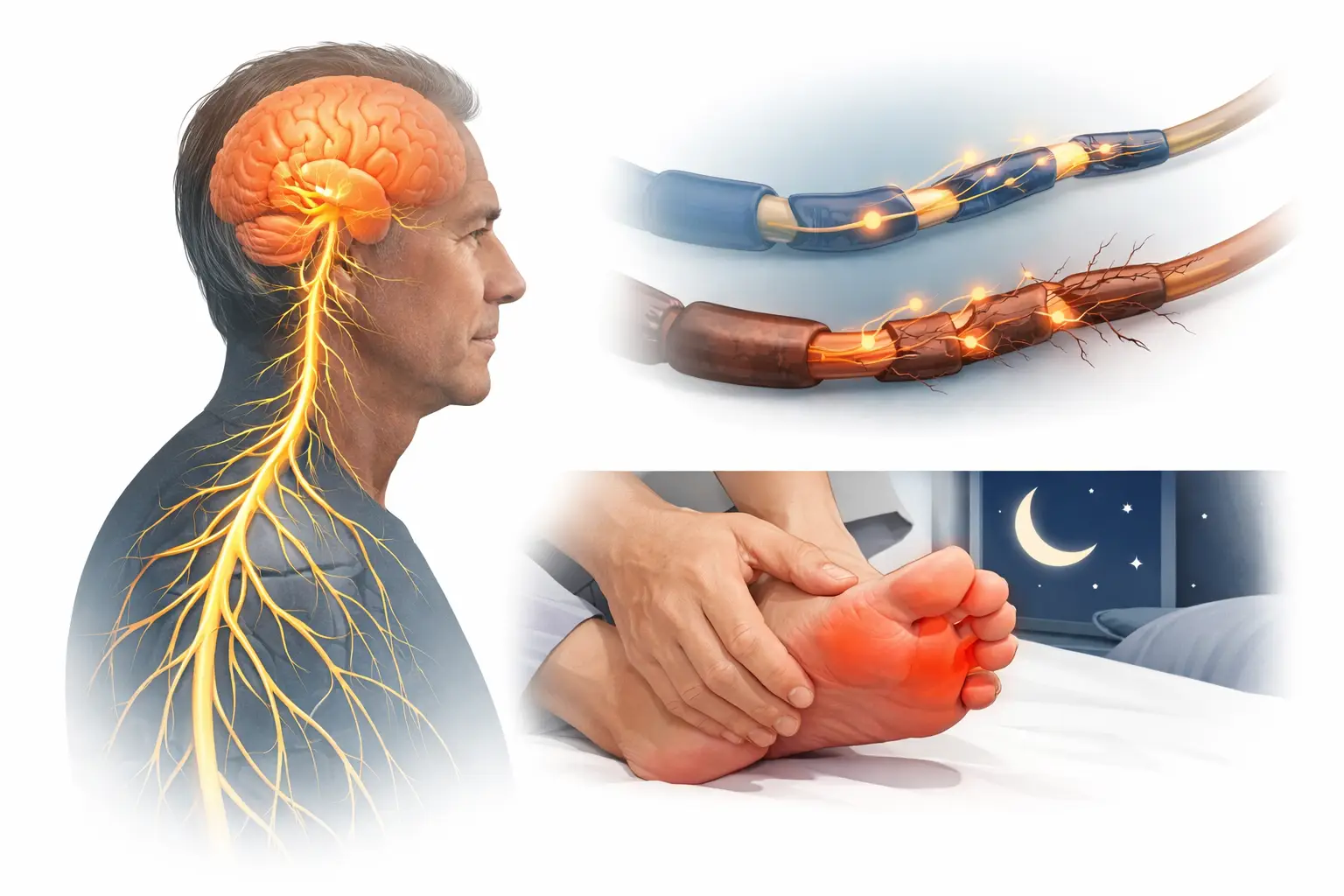
Aging can affect nerve health by slowing nerve regeneration, reducing circulation efficiency, altering nutrient absorption, and increasing the likelihood of conditions linked with neuropathy symptoms. Mild slowing of nerve function may occur naturally with age, but persistent numbness, burning pain, weakness, or balance decline should not automatically be dismissed as normal aging.
Aging changes nerves more than most people realize. If you have started noticing tingling in the feet, slower reflexes, occasional numbness, or a burning sensation that was not there years ago, you may be seeing how aging affects nerve health in real life. That does not automatically mean a serious neurologic disorder is present, but it does mean the nervous system deserves closer attention.
Nerves carry signals between the brain, spinal cord, skin, muscles, and organs. When they work well, movement feels coordinated, balance is steadier, and sensations such as temperature and touch are clear. With age, those signaling pathways can become less efficient. The change is often gradual, which is one reason people may dismiss early symptoms as just getting older.
Key Takeaways
- Aging may gradually affect nerve signaling, circulation, and nerve repair capacity.
- Tingling, numbness, burning feet, slower reflexes, and balance changes become more common with age.
- Diabetes, vitamin deficiencies, medication effects, spinal degeneration, and vascular disease often contribute alongside aging itself.
- Vitamin B12 absorption may decline with age, especially in adults using acid-reducing medications or metformin.
- Progressive weakness, repeated falls, severe burning pain, or one-sided symptoms deserve medical evaluation.
How aging affects nerve health over time
The aging process can influence nerves in several ways at once. Nerve fibers may regenerate more slowly, the protective myelin around nerves can become less efficient, and blood flow that supports nerve tissue may decline. Small changes in circulation, metabolism, and inflammation can add up over decades.
Aging also affects the parts of the body that support nerve function. Muscles lose mass, joints become stiffer, and balance control may weaken. That can make nerve-related symptoms more noticeable, even when the nerve damage itself is mild. A person may feel less stable walking in dim light, more sensitive to cold, or slower to recover after pressure on a hand or foot.
Not every older adult develops significant nerve problems. Genetics, medical history, nutrition, medication use, alcohol intake, blood sugar control, and overall cardiovascular health all influence what happens next. Age raises the risk, but it is rarely the only cause.
Why nerve symptoms become more common with age
One common reason is cumulative wear. Nerves are exposed to years of mechanical stress, repeated pressure, mild injuries, and metabolic strain. Over time, the body may not repair these insults as efficiently as it once did.
Another reason is that age increases the likelihood of conditions linked with nerve symptoms. Type 2 diabetes, prediabetes, spinal degeneration, vascular disease, thyroid disorders, and vitamin deficiencies all become more common in midlife and later adulthood. In practice, a person may assume aging alone is responsible when the real picture is more complicated.
Medication burden matters too. Many adults over 45 take multiple prescriptions or over-the-counter products. Some medicines can affect nerve function directly or indirectly by altering nutrient status, especially when used long term. That does not mean medications should be stopped without guidance, but it does mean new tingling or numbness deserves review.
Common age-related nerve changes to notice
Nerve changes do not always begin dramatically. For many people, symptoms start in the longest nerves first, which is why the feet are often affected before the hands. The pattern can feel subtle at first, then increasingly bothersome.
You might notice reduced vibration sense, a pins-and-needles feeling, mild numbness in the toes, or burning discomfort at night. Some people describe a sensation of socks bunching under the feet when nothing is there. Others notice they are less sure-footed on uneven ground or need brighter light to walk confidently.
Reflexes can slow with age even in otherwise healthy adults. That alone is not unusual. What deserves more attention is progression – symptoms that spread, become painful, interfere with sleep, affect balance, or are paired with weakness.
The role of blood flow, inflammation, and metabolism
Common Nerve Changes That May Become More Noticeable With Age
Some nerve-related changes may develop gradually with aging, while others may point toward underlying medical conditions that deserve evaluation.
| Possible Change | Why It May Happen | Common Examples |
|---|---|---|
| Slower nerve signaling | Age-related nerve conduction changes | Slower reflexes or response time |
| Reduced circulation support | Blood vessel aging and vascular strain | Cold feet or slower healing |
| Long-nerve vulnerability | Feet nerves are exposed to more metabolic stress | Tingling or numb toes first |
| Declining vitamin absorption | Lower stomach acid or medication effects | Possible low B12 symptoms |
| Balance instability | Reduced sensory feedback from the feet | Feeling less steady in darkness |
| Compression-related nerve irritation | Joint and tissue changes over time | Carpal tunnel or spinal irritation |
Nerves are metabolically active tissue. They depend on oxygen, nutrients, and steady blood supply. As blood vessels age, circulation may become less efficient, especially in people with smoking history, high blood pressure, elevated cholesterol, or diabetes.
Low-grade inflammation is another factor that researchers continue to study. Chronic inflammation can affect blood vessels, connective tissue, and nerve signaling. It is not usually something a person feels directly, but it may help explain why nerve sensitivity or discomfort increases with age.
Metabolic health is especially relevant. Persistently high blood sugar can damage nerves over time, even before diabetes is formally diagnosed. That is one reason adults with unexplained burning feet or numbness are often evaluated for glucose issues. When nerve symptoms appear gradually, the underlying driver may have been present for years.
Vitamin status and older nerves
Nutrition becomes more important, not less, with age. Certain vitamins play a direct role in nerve function, and deficiency can contribute to tingling, numbness, balance changes, and fatigue. Vitamin B12 is one of the most important examples, particularly in older adults.
The NIH Office of Dietary Supplements explains that vitamin B12 plays an important role in neurological function and nervous system health.
B12 absorption may decline with age because stomach acid production can change, and some common medications can further interfere with absorption. This is one reason low B12 can appear in adults who believe their diet is adequate. Poor intake is only one possible cause.
That said, not every nerve symptom is caused by B12 deficiency, and taking large amounts of supplements without testing is not always the best first step. The more evidence-informed approach is to match symptoms with proper evaluation. For readers comparing nerve-support products, this is where scientific caution matters. A supplement may support normal nutritional status, but it should not be viewed as a stand-in for diagnosis.
How aging affects nerve health differently in the feet and hands
The feet often show symptoms first because the nerves serving them are long and more vulnerable to metabolic and circulation-related stress. This length-dependent pattern is common in peripheral nerve dysfunction. A person may first notice numb toes, reduced temperature sensitivity, or burning soles after long periods of standing.
The hands can be affected too, but hand symptoms often raise additional questions. Aging increases the risk of nerve compression problems such as carpal tunnel syndrome, where a nerve becomes irritated by pressure at the wrist. In that case, numbness or tingling may be worse at night or during repetitive hand use.
Location matters because it helps shape the differential. Symptoms in both feet may suggest a systemic issue. Symptoms limited to one hand, one leg, or one side of the body may point toward compression, injury, or another non-aging cause that should not be ignored.
When symptoms are not just normal aging
It is easy to blame age for changes that deserve medical review. While mild slowing of nerve conduction can occur over time, progressive numbness, persistent burning pain, muscle weakness, or repeated falls should not be dismissed as normal.
A few patterns deserve prompt attention: sudden numbness, rapid onset weakness, new bowel or bladder changes, severe back pain with leg symptoms, or one-sided neurologic changes. These can signal problems far beyond routine age-related nerve decline.
Even less urgent symptoms are worth discussing if they affect sleep, walking, exercise tolerance, or daily tasks. Early evaluation can help identify reversible contributors such as low B12, blood sugar problems, thyroid imbalance, medication effects, or compression injuries.
Practical ways to support nerve health as you age
The most useful approach is usually broad and steady rather than dramatic. Blood sugar control, cardiovascular health, regular movement, and nutrient adequacy all support the environment nerves depend on. Walking, resistance training, and balance work can help preserve circulation, muscle support, and stability.
Foot care also matters more with age, especially for adults with diabetes or reduced sensation. Shoes that fit well, routine skin checks, and prompt attention to injuries can prevent small problems from becoming larger ones. If your feet feel numb, assuming you would notice every blister or pressure point is a mistake.
Nutrition deserves a practical review. Adults over 45 may want to ask whether they are getting enough B12, folate, vitamin D, and other nutrients tied to overall neurologic function. Testing is often more useful than guessing. For people exploring supplements, quality, dosage, and the reason for use matter more than flashy claims.
Sleep, alcohol intake, and smoking status also have real effects. Poor sleep can amplify pain sensitivity. Excess alcohol can irritate peripheral nerves. Smoking reduces blood flow and increases vascular strain, which is not helpful for nerve tissue already dealing with age-related change.
What realistic expectations look like
Nerve health support is rarely about quick fixes. If symptoms have been building for years, improvement may be slow and sometimes partial. Some people benefit most from identifying what is making symptoms worse rather than expecting complete resolution.
That may mean correcting a deficiency, improving glucose control, changing footwear, adjusting a medication plan with a clinician, or using targeted physical therapy. In other cases, the goal is maintaining function, reducing progression risk, and improving comfort.
For adults researching symptoms online, the key distinction is this: aging can contribute to nerve changes, but it should not be used as a catch-all explanation. The best next step is often a careful review of symptoms, timing, medical conditions, medications, and nutritional status. That kind of measured approach is less dramatic than miracle claims, but it is far more useful when your goal is protecting long-term nerve function.
Frequently Asked Questions
Does aging naturally affect nerve health?
Yes. Aging may gradually slow nerve regeneration, alter circulation, reduce sensory feedback, and increase vulnerability to neuropathy-related symptoms.
Why do nerve symptoms often begin in the feet?
The nerves serving the feet are long and more vulnerable to metabolic stress, circulation changes, and age-related wear over time.
Can vitamin B12 deficiency become more common with age?
Yes. Vitamin B12 absorption may decline with age, especially in adults using acid-reducing medications or metformin.
Are burning feet and numb toes normal aging?
Not always. Persistent burning pain, numbness, weakness, or balance problems deserve evaluation because aging is often only one part of the picture.
When should age-related nerve symptoms be medically evaluated?
Progressive numbness, repeated falls, severe burning pain, weakness, one-sided symptoms, or bladder changes deserve medical evaluation.
Medical Disclaimer: The information provided in this article is for educational purposes only and is not intended as medical advice. Dietary supplements are not a replacement for professional medical diagnosis or treatment. Always consult with a qualified healthcare professional before starting any new supplement, especially if you have pre-existing medical conditions or are taking prescription medications. Individual results may vary.

- Can Low B12 Cause Dizziness? - July 9, 2026
- B12 Deficiency and Cracked Corners of the Mouth - July 9, 2026
- Can Low B12 Cause Dry Mouth? - July 8, 2026