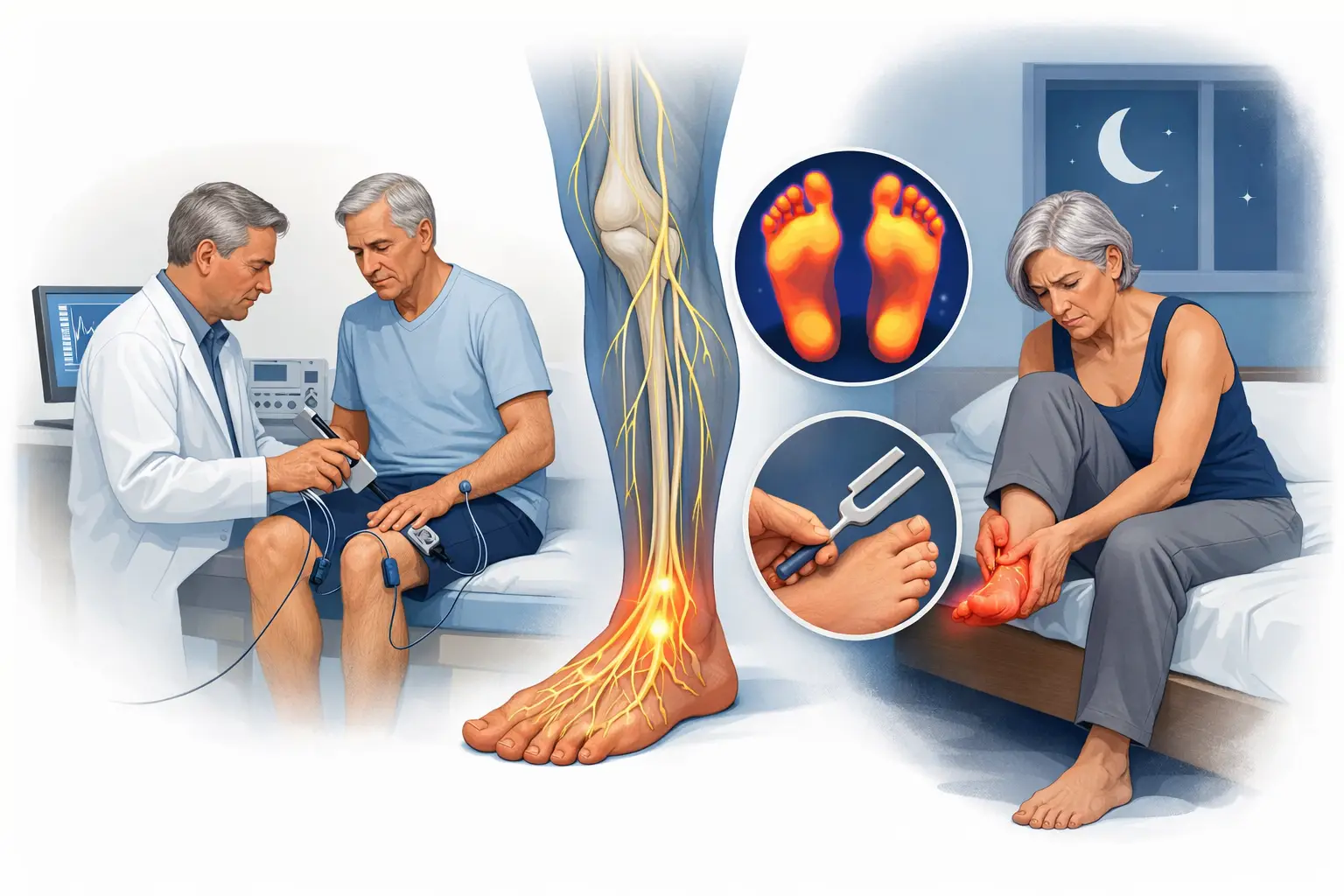
Neuropathy diagnostic tests may include blood work, neurological examination, nerve conduction studies, EMG testing, skin biopsy, autonomic testing, and imaging studies. The goal is to identify whether nerve damage is present, what type of nerves may be affected, and whether a treatable cause such as diabetes or vitamin B12 deficiency could be contributing.
Burning feet, tingling hands, and unexplained numbness can be easy to dismiss at first, especially if symptoms come and go. But when they persist, worsen, or start affecting balance and daily activity, neuropathy diagnostic tests can help clarify whether nerves are involved and what might be driving the problem.
For adults over 45, this matters because nerve symptoms often overlap with several common issues, including vitamin B12 deficiency, diabetes, thyroid disorders, medication effects, alcohol use, spinal problems, and circulation concerns. The challenge is that neuropathy is not one single diagnosis. It is a broad term for nerve damage or nerve dysfunction, and the right testing depends on the pattern of symptoms, medical history, and physical exam.
Key Takeaways
- Neuropathy testing is designed to identify nerve dysfunction and possible underlying causes.
- Blood work often checks for diabetes, vitamin B12 deficiency, thyroid disease, and nutritional issues.
- EMG and nerve conduction studies are useful for large-fiber neuropathy, but may miss small-fiber involvement.
- Small-fiber neuropathy sometimes requires skin biopsy or autonomic testing for better evaluation.
- Sudden weakness, rapid progression, balance decline, or bladder changes deserve prompt medical attention.
What neuropathy diagnostic tests are trying to find
The main goal of testing is not just to confirm that neuropathy exists. It is to identify the type of nerve problem, how severe it may be, and whether there is a potentially treatable underlying cause.
Peripheral neuropathy can affect sensory nerves, motor nerves, or autonomic nerves. Sensory nerve involvement often causes burning, tingling, pins-and-needles, numbness, or pain. Motor nerve involvement may lead to weakness, cramping, or muscle wasting. Autonomic nerve involvement can affect blood pressure, digestion, sweating, bladder function, or sexual function. Some people have one pattern, while others have a mix.
That is why testing is usually layered. A clinician will often start with the least invasive steps, then add more specialized studies if the symptoms, exam findings, or blood work suggest the need.
The first step is often a detailed history and exam
Before any machine-based testing, a clinician usually spends time on symptom timing, location, severity, and pattern. This part may sound basic, but it often shapes the entire workup.
For example, numbness that begins in both feet and slowly moves upward suggests a different process than sudden weakness in one leg. Symptoms worse at night may raise one set of questions, while symptoms triggered by standing, walking, or back position may point toward another explanation.
The physical exam typically checks reflexes, muscle strength, vibration sense, pinprick sensation, temperature sensation, coordination, and gait. Reduced ankle reflexes, loss of vibration sense in the feet, or balance problems can support the suspicion of peripheral nerve involvement. If findings do not fit a length-dependent nerve pattern, the clinician may look more closely at the spine, brain, or blood vessels instead.
Blood tests for neuropathy evaluation
Blood work is one of the most common parts of neuropathy diagnostic tests because it can reveal medical problems linked with nerve symptoms. In many cases, this is where an underlying cause is first identified.
Common tests may include blood glucose or A1C to check for diabetes or prediabetes, since elevated blood sugar is a major cause of peripheral neuropathy. Vitamin B12 testing is also frequently considered, especially in older adults, people taking metformin or acid-suppressing drugs, and those with fatigue, memory changes, balance issues, or anemia.
The NIH Office of Dietary Supplements explains that vitamin B12 plays an important role in neurological function and nervous system health.
Depending on the situation, a clinician may also order thyroid testing, kidney and liver function tests, complete blood count, folate levels, serum protein studies, inflammatory markers, or tests for autoimmune or infectious causes. If alcohol intake, poor diet, gastrointestinal disease, or absorption problems are concerns, nutritional assessment may become especially relevant.
There is a nuance here. A “normal” blood test does not always rule out a nerve problem, and a borderline result does not always explain symptoms by itself. Vitamin B12 is a good example. Some people with low-normal levels may need a closer look with additional markers, while others have symptoms caused by something else entirely. This is one reason self-diagnosis can be misleading.
Nerve conduction studies and electromyography
Common Neuropathy Diagnostic Tests and What They Evaluate
Different tests help evaluate different types of nerve involvement and possible underlying causes.
| Test | What It Looks For | Why It Matters |
|---|---|---|
| Blood glucose or A1C | Diabetes or prediabetes | Major neuropathy contributor |
| Vitamin B12 testing | Nutritional nerve dysfunction | May relate to numbness and balance issues |
| EMG and nerve conduction studies | Large-fiber nerve and muscle function | Helps distinguish nerve vs muscle problems |
| Skin biopsy | Small-fiber nerve density | Useful for burning or heat-sensitive pain |
| Autonomic testing | Sweating and blood-pressure regulation | Evaluates autonomic involvement |
| MRI or imaging studies | Spinal or structural nerve compression | Helps rule out non-neuropathy causes |
If the clinical picture suggests significant nerve involvement, nerve conduction studies and electromyography, often called EMG, may be recommended. These tests are among the most recognized neuropathy diagnostic tests because they directly assess nerve and muscle function.
Nerve conduction studies measure how quickly and effectively electrical signals move through peripheral nerves. Small electrodes stimulate the nerve, and the response is recorded. Slowed conduction may suggest myelin damage, while reduced response amplitude may point toward axonal loss.
EMG is often done alongside nerve conduction testing. A thin needle electrode is placed into selected muscles to evaluate electrical activity at rest and during contraction. This can help distinguish between nerve disorders, muscle disorders, and problems coming from the nerve root in the spine.
These tests are useful, but they have limitations. They are best at detecting large-fiber nerve problems. If someone has burning pain, temperature sensitivity, or symptoms suggestive of small-fiber neuropathy, EMG and nerve conduction studies may be normal even when symptoms are real. That can be frustrating, but it does not automatically mean nothing is wrong.
When small-fiber neuropathy is suspected
Small-fiber neuropathy affects the small sensory nerve fibers involved in pain and temperature. People often describe burning feet, sharp stinging pain, electric sensations, or altered heat sensitivity. In some cases, autonomic symptoms such as abnormal sweating, dizziness when standing, or digestive changes may also appear.
Because standard nerve conduction studies often miss small-fiber damage, clinicians may consider other methods. One option is a skin biopsy to measure intraepidermal nerve fiber density. This test can provide objective evidence of small-fiber loss.
Another possibility is autonomic testing, which may assess heart rate variability, sweating responses, or blood pressure changes with position. These studies are not necessary for every patient, but they can be helpful when symptoms strongly suggest small-fiber or autonomic nerve involvement.
Imaging and other specialized tests
Not every case of numbness or tingling comes from peripheral neuropathy. Sometimes a pinched nerve, spinal stenosis, herniated disc, or central nervous system issue creates similar symptoms. That is where imaging may enter the picture.
MRI of the spine may be considered if symptoms are asymmetric, involve weakness in a nerve root pattern, or are associated with neck or back pain. Brain imaging is less common in straightforward peripheral neuropathy, but it may be used if the symptoms or exam raise concern for stroke, multiple sclerosis, or another central cause.
In select cases, other tests may be considered. These include nerve biopsy, lumbar puncture, genetic testing, or vascular testing when circulation problems are part of the concern. These are usually reserved for complex, rapidly progressive, or unexplained cases rather than routine evaluation.
What results can and cannot tell you
A common misconception is that testing always leads to one clear answer. Sometimes it does. Diabetes, severe B12 deficiency, medication toxicity, or thyroid disease may become obvious once the workup is complete.
But some people are told they have idiopathic neuropathy, meaning no definite cause was found. This is more common than many realize, especially in older adults. That does not mean symptoms are imagined. It means current testing did not fully explain the nerve changes.
Test results also need context. Mild abnormalities may not account for severe symptoms, while significant nerve damage can exist before someone realizes how much sensation has been lost. A careful interpretation matters more than chasing a single number or test label.
Practical questions to ask before testing
If a clinician recommends testing, it is reasonable to ask what the test is looking for, how it may change next steps, and whether there are simpler evaluations to do first. A thoughtful workup should be targeted, not random.
It also helps to mention all medications and supplements you take, along with alcohol use, diet changes, digestive issues, prior surgeries, and family history of neurologic disease. These details can shape which labs are most useful and whether nutritional causes should be taken seriously.
For readers interested in nerve-health supplements, this is where caution is important. Supplements may play a supportive role in people with a documented nutrient deficiency or a diet-related shortfall, but they should not replace medical evaluation for unexplained numbness, weakness, or burning pain. A product cannot tell you whether your symptoms are coming from low B12, compressed nerves, diabetes, or something more urgent.
When to seek faster medical attention
Some nerve symptoms deserve prompt assessment rather than routine scheduling. Sudden weakness, one-sided facial changes, rapid progression, new trouble walking, loss of bladder or bowel control, or severe symptoms after an injury should not be treated as a wait-and-see issue.
Likewise, numbness with chest pain, shortness of breath, or sudden confusion requires immediate medical care. Not every tingling sensation is neuropathy, and not every neuropathy symptom is harmless.
For many people, the most useful mindset is simple: testing is a tool, not a verdict. The best neuropathy diagnostic tests are the ones chosen for your specific symptom pattern, health history, and exam findings. If symptoms are persistent, bringing clear notes to a medical visit can make that process faster and more productive.
Frequently Asked Questions
What tests are commonly used to diagnose neuropathy?
Common neuropathy diagnostic tests include blood work, neurological examination, EMG testing, nerve conduction studies, skin biopsy, autonomic testing, and imaging studies.
Can blood tests detect neuropathy?
Blood tests cannot directly confirm all neuropathy cases, but they may identify important contributors such as diabetes, vitamin B12 deficiency, thyroid disease, or nutritional problems.
Can EMG testing miss small-fiber neuropathy?
Yes. EMG and nerve conduction studies are better at detecting large-fiber nerve dysfunction and may appear normal in some people with small-fiber neuropathy.
Why is vitamin B12 testing important in neuropathy evaluation?
Low vitamin B12 may contribute to numbness, tingling, balance changes, weakness, fatigue, and other neurologic symptoms in some adults.
When should nerve symptoms be evaluated urgently?
Sudden weakness, rapid progression, severe balance decline, bowel or bladder changes, chest pain, or confusion deserve prompt medical evaluation.
Medical Disclaimer: The information provided in this article is for educational purposes only and is not intended as medical advice. Dietary supplements are not a replacement for professional medical diagnosis or treatment. Always consult with a qualified healthcare professional before starting any new supplement, especially if you have pre-existing medical conditions or are taking prescription medications. Individual results may vary.

- Can Low B12 Cause Dizziness? - July 9, 2026
- B12 Deficiency and Cracked Corners of the Mouth - July 9, 2026
- Can Low B12 Cause Dry Mouth? - July 8, 2026